
REVIEW · HOI AN COFFEE TOURS
Vietnamese Coffee Making Class in Hoi An
Coffee tells a story here. In central Hoi An, this small-group class gives you a hands-on look at Vietnamese roasting, slow-drip brewing, and unusual coffee recipes for $16 per person. I like the chance to make your own drink rather than simply order one, and I like the choice between egg, coconut, salt, and traditional Phin coffee. The main drawback is that three rich coffees in 60 to 90 minutes can mean a serious hit of sugar, dairy, and caffeine.
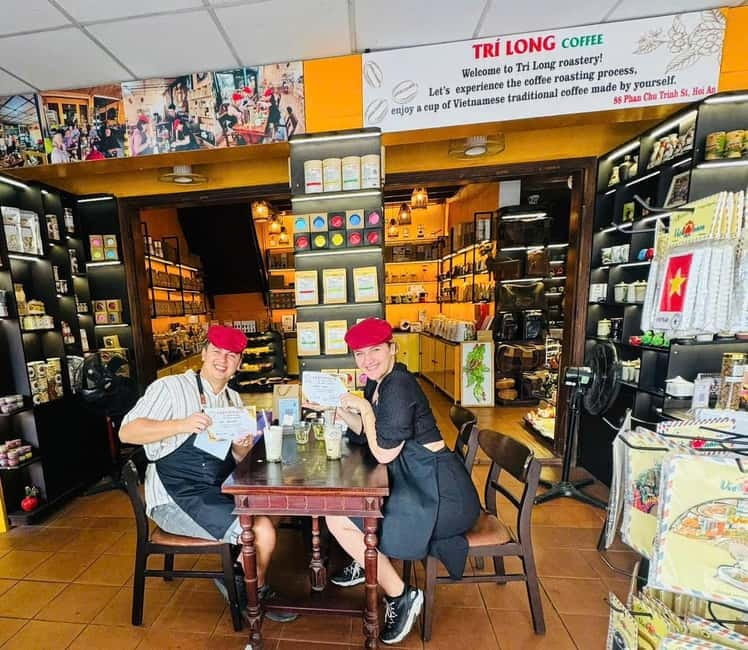
You meet at Trí Long Coffee, 88 Phan Chau Trinh Street, in downtown Hoi An. Look for the guide outside wearing a red hat. I also like the small group limit of 10, which should give you a fair chance to handle the tools and ask questions, though the class may leave you wanting more background about Vietnam’s coffee culture.
Key points to know before booking
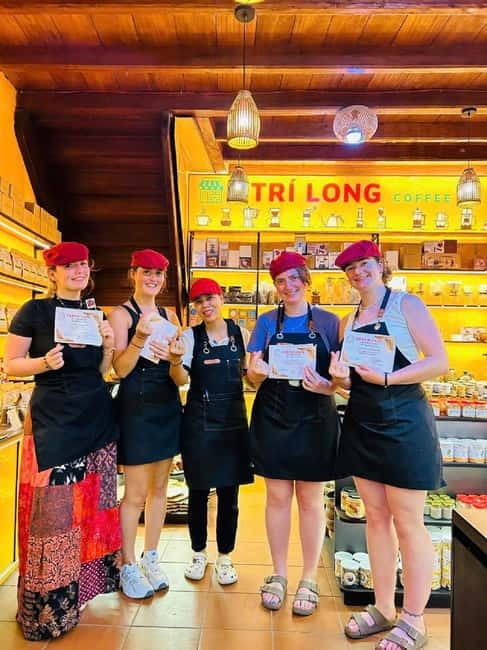
- Choose your coffee style: Make egg coffee, coconut coffee, Hue-style salt coffee, or traditional Vietnamese Phin coffee, depending on the session you choose.
- See beans change under heat: The roasting demonstration explains how raw beans become fragrant coffee and how roast levels affect taste.
- Make your own cup: Your booking includes coffee ingredients, tools, water, instruction, and at least one drink prepared by you.
- Expect a compact class: The activity lasts about one to one and a half hours, with two or three sessions available.
- Plan for plenty of caffeine: Three coffee recipes can be rich and strong in a short period. A chocolate drink may be available as a substitute for one cup.
- Easy central meeting point: There is no hotel pickup, so you need to reach Trí Long Coffee yourself.
Starting at Trí Long Coffee on Phan Chau Trinh Street
The class begins at Trí Long Coffee, at 88 Phan Chau Trinh Street in central Hoi An. This is a straightforward meeting arrangement, but pay attention to the detail that matters: the guide wears a red hat and waits outside the coffee shop.
You do not get hotel pickup or drop-off, so this activity works best when you are already exploring the old town or staying nearby. You will need to arrange your own way to the meeting point. The address is specific, which helps, but checking your route before the start time is still wise.
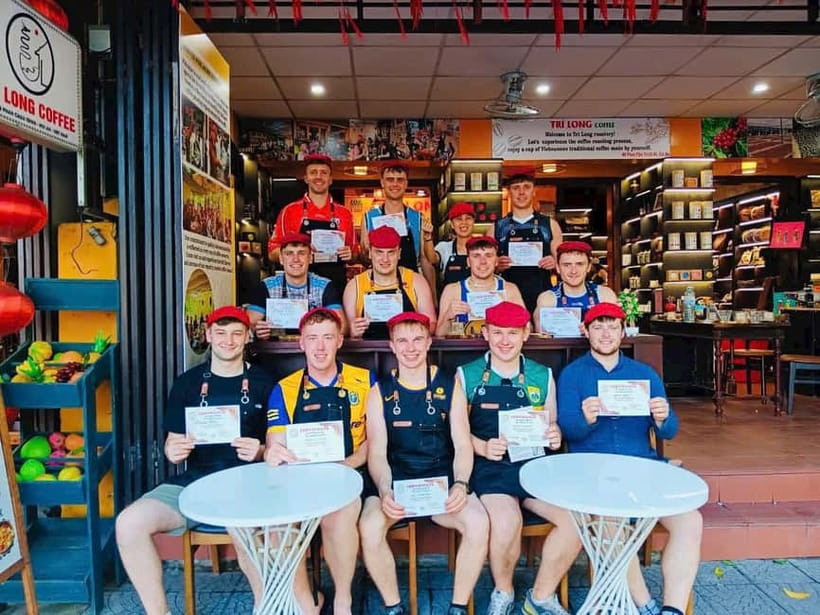
The instructor teaches in English. Since the group is limited to 10 people, you should have more direct access to the equipment than you would in a large demonstration. That matters here. Coffee making is easier to understand when you can see the grind, pour, filter, and texture at close range.
The venue is listed as wheelchair accessible. No special transport is included, so anyone needing accessible travel should still confirm that the route to the café works for their needs.
More Coffee Making Classes in Vietnam
- Hoi An: Hands-on Vietnamese Coffee Making Class with Long
★ 4.8 · 66 reviews - Hoi An: Vietnamese Coffee Making Course
★ 4.9 · 25 reviews - Coffee Class & Basket Boat Experience or Lantern Class -optional
★ 5.0 · 18 reviews
Roasting raw beans into a familiar cup
The roasting section gives the class its best bit of coffee education. You begin with raw beans and watch them change as heat brings out their aroma and flavor. The instructor explains different roast levels and how those levels affect the final drink.
That simple lesson helps you taste Vietnamese coffee with more care. A darker roast can produce a heavier, stronger cup, while a lighter roast may allow more of the bean’s own character to show. The class does not just hand you a finished drink. It connects the smell of the beans to what ends up in the cup.
The available information does not specify the exact coffee origin or roasting equipment, so do not expect a full technical course in professional roasting. Think of this as a clear introduction. You will get a practical sense of the process, not a coffee certification.
One point is worth keeping in mind: the roasting demonstration may be the part you enjoy most if you are curious about coffee itself. If you mainly want to prepare unusual Vietnamese drinks, the brewing sessions will probably hold your attention longer.
Learning the slow rhythm of Phin coffee
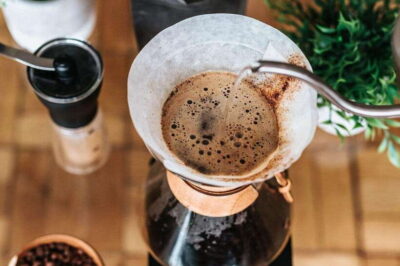
The Vietnamese Phin filter is a small metal brewer that sits directly over your cup. Coffee grounds go inside, water is added, and the drink slowly drips through. This is a different rhythm from a quick espresso machine or a standard drip coffee maker.
The instructor demonstrates how the filter works and explains the balance between bitterness and sweetness. You then get the chance to prepare a traditional cup yourself. That hands-on step is important because the Phin is simple but not entirely automatic. The coffee needs time to pass through the metal filter, and the result is usually bold and concentrated.
I like this part because it connects the drink to everyday Vietnamese coffee culture. You are not only tasting a recipe made by someone else. You are handling the traditional tool and seeing why a cup of Phin coffee takes patience.
The class includes ingredients and tools, as well as water. You also receive a cup of coffee made by yourself. The exact number of drinks depends on the session you select, so check the available option when booking.
Egg coffee, Hanoi’s creamy specialty
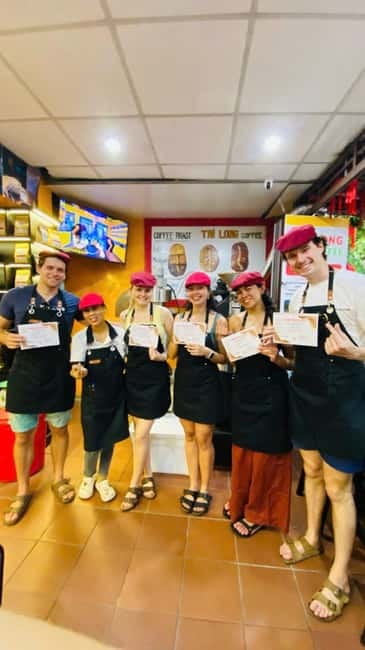
Egg coffee is the most dessert-like choice. The recipe combines coffee with egg yolks, condensed milk, and sugar. The mixture is whipped into a smooth, creamy topping or drink, creating a texture closer to a sweet custard than a plain black coffee.
The class shows you how the barista creates that texture. This is where the activity becomes more than a standard brewing lesson. You get to see how a few familiar ingredients can produce something that tastes completely different from ordinary coffee.
The flavor is rich and sweet, so I would choose egg coffee if you enjoy dessert drinks. It may not suit you if you prefer a light, unsweetened cup. The coffee itself can still have a strong taste, but the egg, condensed milk, and sugar soften it with a thick, velvety finish.
This is described as Hanoi capital egg coffee, so the class also gives you a taste of a specialty associated with Vietnam’s capital while staying in Hoi An. You do not need to travel north to try the basic preparation.
More Vietnamese Coffee Experiences in Hoi An:
- Authentic Vietnamese Coffee Making Experience in Hoi An
★ 5.0 · 13 reviews - Hoi An: Hand-on Making Vietnamese Coffee Class & Culture
★ 4.7 · 9 reviews - Hoi An Vietnamese Coffee Workshop: Hands-On Brewing Class
★ 5.0 · 3 reviews - Exploring Vietnamese Coffee Culture, Coffee Making in Hoi An
★ 3.7 · 3 reviews
Coconut coffee for a cooler, sweeter drink
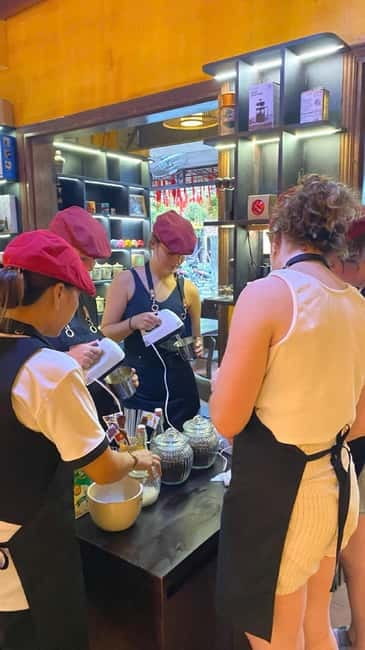
Coconut coffee takes the strong base of Vietnamese coffee and adds the nutty sweetness of coconut. The result is intended to be refreshing and aromatic, making it a good choice if a plain black Phin coffee sounds too intense.
The class teaches you how to combine the coffee and coconut elements rather than simply serving the finished drink. That lets you see how the sweetness and creamy texture change the coffee’s character.
This recipe may be the easiest choice for anyone who prefers tropical flavors or sweeter drinks. It is also a sensible option on a warm afternoon in Hoi An. The information provided does not specify whether the coconut is served hot, cold, or in a particular form, so the final texture may depend on the class format.
Compared with egg coffee, coconut coffee should feel less heavy to some people, though it is still not a plain cup. If you choose three sessions, adding this one to a Phin coffee gives you a clearer contrast in flavor and preparation.
Hue salt coffee and the science of less bitterness
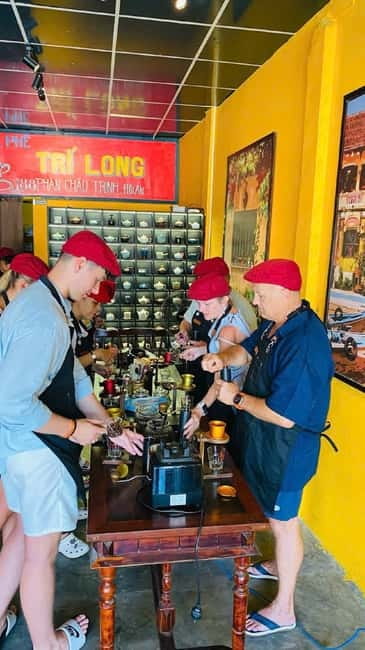
Salt coffee sounds strange until you understand the purpose of the salt. A small amount can reduce the impression of bitterness and bring out other flavors in the coffee. The class presents this as a Hue imperial specialty.
You learn how a pinch of salt changes the cup rather than simply being told that it is a local oddity. That makes this session especially useful for anyone who likes trying food and drink combinations that challenge expectations.
The trick is restraint. Salt coffee is not meant to taste like soup. The idea is to use enough to soften bitterness without taking over the drink. Since you make it yourself, the class gives you a chance to understand the balance.
I would choose this session if you like strong coffee but sometimes find dark roasts too bitter. It also suits anyone interested in how small changes affect taste. It may be less appealing if you dislike sweet, creamy drinks, since the exact recipe details beyond the salt are not specified.
One cup or three: choosing your session
You can choose a session with two or three coffee preparations. The more drinks you make, the more varied the lesson becomes, but the extra cups also change the pace and physical comfort of the class.
One participant who made three coffees found the combination very rich and highly caffeinated in a short time. A chocolate drink was offered as a substitute for the final coffee. That is a useful option to ask about if you want the full class but do not want three coffee drinks.
I would choose two preparations if you are sensitive to caffeine, have already had coffee that day, or want time to focus on the technique. Three makes sense if you want to compare several styles and are comfortable with sweet, creamy drinks.
A good pairing might be Phin coffee plus egg coffee. That gives you one traditional preparation and one distinctive specialty. Coconut plus salt coffee offers a different contrast, with coconut bringing sweetness and salt changing the balance of the coffee.
The activity lasts between one hour and 90 minutes. The shorter format may feel brisk if you choose several recipes, while the longer format should allow more time for the roasting demonstration and hands-on preparation. Starting times vary, so check availability before you make other Hoi An plans.
What the $16 price includes
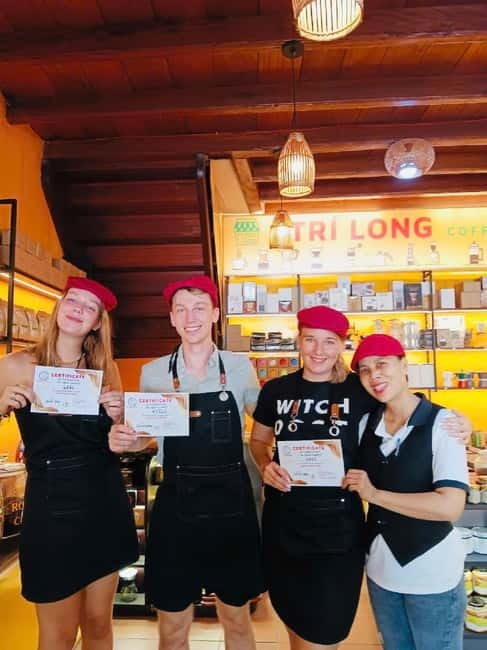
At $16 per person, the class offers good value if you want instruction rather than just a drink. The cost includes the coffee-making course, an English-speaking instructor, water, ingredients, tools, and a cup of coffee made by you.
That last point matters. You are paying for participation, not only for a café beverage. You get an explanation of roasting, a look at the Phin method, and the chance to prepare one or more recipes yourself.
The value is strongest for curious beginners, couples, small groups, and anyone who wants a short indoor activity in Hoi An. It is also a sensible rainy-afternoon plan. One recent booking used it exactly that way, turning wet weather into a pleasant coffee session.
The value is less clear if you already know Vietnamese coffee preparation or want a serious professional roasting course. The class is designed as a short introduction. One participant enjoyed the staff and the coffee but wished for more background information, so you should not expect a detailed lecture on coffee-growing regions, trade, farming, or advanced extraction.
Food is not included, and other expenses are your responsibility. The included drinks may be enough for most people, but anyone wanting a meal should plan that separately.
The atmosphere and teaching style
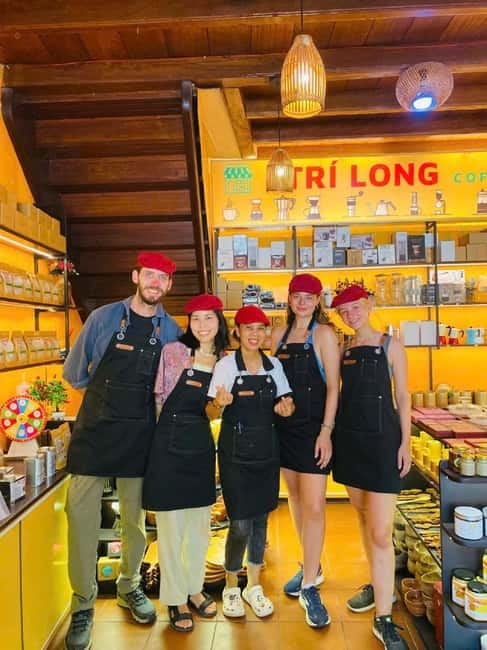
The staff have been described as friendly and capable, and the activity is built around making the drinks rather than watching from a distance. You can expect a practical lesson where the instructor explains the process and then lets you work with the ingredients and equipment.
The small group limit of 10 is a useful middle ground. It is large enough to create a social class but small enough that you should not be lost at the back. If you have questions, the English-speaking instructor can address them during the session.
The main limitation is the amount of background information. If you want detailed cultural context, ask questions as you go. You might learn more by asking why a particular roast is used, how the Phin filter changes the result, or how egg coffee became associated with Hanoi.
That approach can make the class more rewarding. The format gives you the basic tools, but your curiosity helps determine how much context you take away.
Who should book this Hoi An coffee class?
I would recommend it to you if you enjoy food workshops, want an easy activity in central Hoi An, or like trying local specialties in their place of origin. It is also a good choice if you prefer a short activity that fits around sightseeing.
Coffee fans will appreciate the roasting and Phin sections. Beginners may get the most from the class because the instructor explains the process and lets you practice without requiring previous experience.
Families and mixed-age groups may also find it useful, but the caffeine and sugar deserve attention. Younger participants or anyone avoiding coffee may prefer to ask about the chocolate drink option.
I would hesitate to recommend the three-coffee version to anyone who is sensitive to caffeine or heavy dairy and sweet flavors. Choose two drinks instead, and ask whether one can be replaced with a non-coffee option.
The class is also not the best match for someone seeking a long cultural lecture or an advanced barista workshop. Its strength is the compact, hands-on format.
Booking details that affect your day
You need to reach Trí Long Coffee yourself at 88 Phan Chau Trinh Street. There is no hotel pickup or drop-off, so build in enough time to find the café and locate the guide in the red hat.
The activity is offered in English and is wheelchair accessible. The group is limited to 10 people, which helps keep the preparation personal.
You can cancel up to 24 hours before the start time for a full refund. The reserve-now, pay-later option also gives you flexibility if your Hoi An schedule is still changing.
Check the available start times before booking, especially if you are arranging the class around meals, a walking tour, or an evening activity. The duration can range from one hour to 90 minutes, depending on the session.
Should you book it?
Book this class if you want to taste Hoi An through its coffee culture and prefer making a drink to simply ordering one. The roasting demonstration, Phin filter, egg coffee, coconut coffee, and salt coffee offer a useful range in a short period.
My practical advice is to choose two coffees unless you are a serious caffeine fan. Ask questions about the beans and brewing methods, and consider the chocolate substitute if three coffee drinks sound excessive.
For $16, the class is a fair buy for a friendly, hands-on introduction. It will not answer every question about Vietnamese coffee, but it gives you techniques, local flavors, and a better understanding of what is in your cup.
FAQ
Where does the coffee class meet?
It meets at Trí Long Coffee, 88 Phan Chau Trinh Street, in Hoi An.
How do I find the instructor?
Look for a guide standing outside the coffee shop wearing a red hat.
How long does the class last?
The activity lasts between one hour and 90 minutes.
How much does the class cost?
The listed price is $16 per person.
Is hotel pickup included?
No. Hotel pickup and drop-off are not included, so you need to reach the meeting point yourself.
Which types of coffee can I make?
You can choose from egg coffee, Vietnamese Phin filter coffee, coconut coffee, and salt coffee.
Is the class taught in English?
Yes. The instructor teaches in English.
What does the price include?
The price includes the coffee-making course, an English-speaking instructor, water, ingredients, tools, and a cup of coffee made by you.
Can I choose two or three coffee sessions?
Yes. You can choose a two-session or three-session format, depending on availability.
Can I cancel for a full refund?
Yes. You can cancel up to 24 hours in advance for a full refund.
More Coffee Making Classes in Hoi An
- Hoi An Buffaloes Riding/Coracle Boat Tour/Coffee Class with Lunch
★ 4.5 · 15 reviews - Hoi An Coffee Making Workshop
★ 5.0 · 7 reviews - Coffee Making and Banh Mi Class Hoi An
★ 5.0 · 5 reviews - Hoi An:Coffee Making Class (Coffee: egg, Salt, Coconut, …)
★ 5.0 · 5 reviews
Just added around Hoi An
- Vietnamese Egg Coffee Making Course in Hoi An★ 3.5 · 2 reviews
- Hoi An Vietnamese Coffee Workshop: Hands-On Brewing Class★ 5.0 · 3 reviews
- Hoi An Coffee Tasting And Old Town Discovering Tour★ 5.0 · 4 reviews
- Hoi An Coffee Making Workshop★ 5.0 · 7 reviews
- Authentic Vietnamese Coffee Making Experience in Hoi An★ 5.0 · 13 reviews
- Farming- Market- Lantern making- Coffee- Cooking (JHA4)★ 5.0 · 4 reviews
- Coffee Making and Banh Mi Class Hoi An★ 5.0 · 5 reviews
- Experience Making & Tasting Vietnamese Coffee in Hoi An★ 5.0 · 2 reviews
Hoi An Coffee Tours, compared.
Hands-on Vietnamese Coffee Making Class with Long
Read our review →
Coffee Class & Basket Boat Experience or Lantern Class -optional
Read our review →

Hoi An Buffaloes Riding/Coracle Boat Tour/Coffee Class with Lunch
Read our review →
Authentic Vietnamese Coffee Making Experience in Hoi An
Read our review →
Browse the lists this tour appears in