
REVIEW · TURKEY COFFEE TOURS
Istanbul: Turkish Coffee Making on Sand & Fortune Telling
Slow coffee, good stories, and a little fortune telling. This Istanbul workshop turns a familiar drink into a hands-on cultural lesson, with bean selection, hand grinding, sand brewing, and coffee-ground reading all packed into 90 minutes. I like the old-style copper cezve and hand mill, and I like that you leave with a cezve, cup, coffee, and recipe booklet. The main consideration is that the fortune telling is playful rather than a serious prediction, so it will not appeal to everyone.
The workshop takes place in a spacious, bright atelier between Galataport and Galata Tower, diagonally to the right of Arada Beyrut Cafe and across from Lavander Cafe. I also appreciate the relaxed pace, fresh Turkish tea, Turkish delights, and instructors who speak English, Turkish, or Russian. Some sessions may feel more intimate than expected, especially if attendance is small, while larger groups create more of a social atmosphere.
Key points at a glance
- Brew on hot sand: You use a traditional sand-filled roasting pan to control the heat while watching the coffee foam.
- Grind your own beans: The workshop begins with bean selection and hand grinding, giving you a real part in the process.
- Try menengiç coffee: This caffeine-free Turkish drink has a nutty flavor and offers a change from standard coffee.
- Learn from named instructors: Esin, Ilham, Dervan, Islam, Enes, and others have received praise for friendly teaching and lively fortune readings.
- Take home a practical gift set: Your package includes a cezve, cup, coffee, and a Turkish coffee booklet.
- Good value at $33: The price covers instruction, tastings, snacks, the brewing activity, fortune telling, and souvenirs.
Entering the bright atelier near Galataport
The location helps make this a useful stop during an Istanbul sightseeing day. The atelier sits between Galataport and Galata Tower, close to historic restaurants and other craft workshops. It is not described as a tiny cafe or a formal museum. Instead, you enter a spacious, high-ceiling studio where Turkish coffee shares the room with other hands-on activities.
The meeting point is specific but worth noting carefully. Look for a bright studio diagonally to the right of Arada Beyrut Cafe and directly across from Lavander Cafe. The clear landmark directions are helpful, but I would still allow a few extra minutes to find the entrance, especially if you are walking through this busy central part of the city.
The studio also hosts activities connected with perfume making, mosaic lamps, and jewelry. That gives the place a broader Turkish craft setting, rather than making the coffee lesson feel like an isolated tourist demonstration. You may see other classes in progress, which adds energy but can also mean the room is shared with other groups.
More Coffee Making Classes in Turkey
- Istanbul: Turkish Coffee Making and Fortune Telling Workshop
★ 4.9 · 1,308 reviews - Cappadocia: Sand-Brewed Turkish Coffee Workshop
★ 4.9 · 745 reviews - Istanbul: Turkish Coffee Making and Fortune Telling Workshop
★ 4.9 · 451 reviews
Choosing beans and turning the hand mill
The coffee lesson starts with a choice that many ordinary coffee stops skip: you select your beans. You then grind them yourself in an old-style hand mill.
That simple step matters. Turkish coffee requires a very fine grind, and using a hand mill shows you that the drink is built from several small actions rather than poured from a machine. You hear and feel the work as the beans break down. It is a little workout, as one enthusiastic participant put it, but the effort is brief and part of the fun.
The instructors guide you through the process with support in English, Turkish, or Russian. Several instructors have been praised for making the explanations clear without turning the class into a lecture. Esin received repeated appreciation for her kindness and patient teaching. Ilham was singled out for being helpful and for making the fortune reading enjoyable. Dervan was praised for holding attention during the presentation and for his coffee-ground interpretations.
The exact instructor can vary, so do not book solely to meet one particular person. The useful point is that the teaching style appears to be personal and social. You are encouraged to ask questions, chat, and take part instead of simply watching someone else make coffee.
Brewing coffee slowly on sand
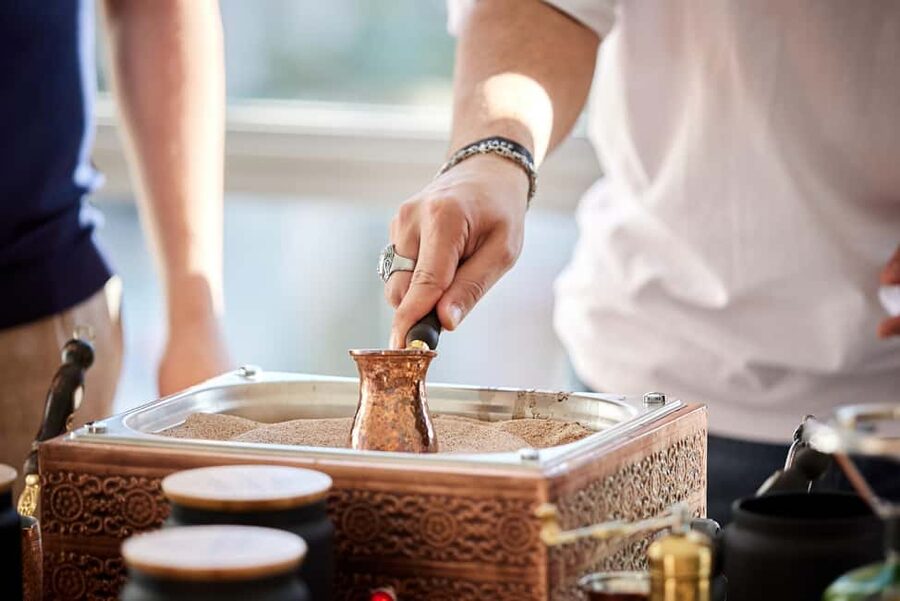
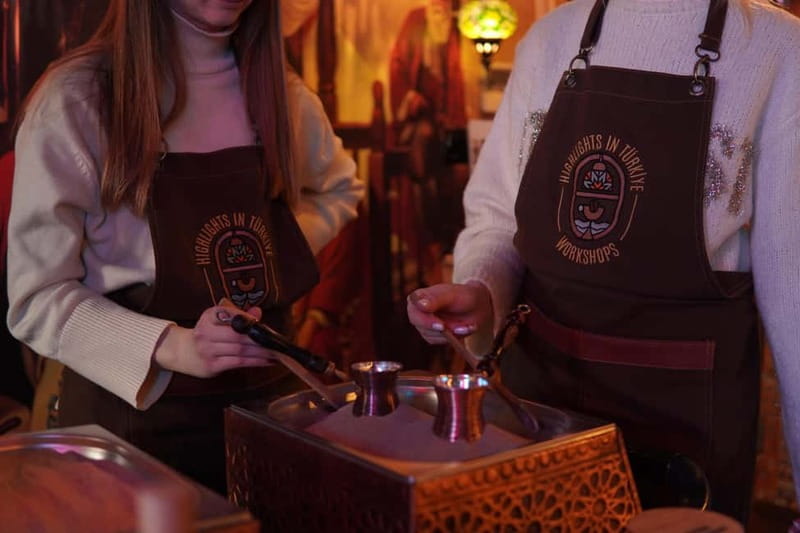
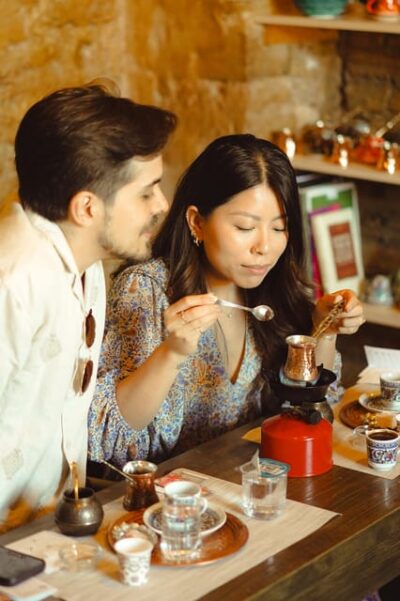
The central activity is brewing Turkish coffee over sand. You place the coffee pot in a traditional roasting pan filled with heated sand and learn how to manage the pot as the coffee warms.
Sand brewing is slower and more visual than a modern stovetop method. You watch the surface, wait for the foam, and learn when to remove the cezve before the coffee boils over. The instructor helps you handle the copper pot, so you do not need prior coffee-making skills.
The foam is an important part of the ritual. Good Turkish coffee is served with a foamy top, and the workshop focuses on foam control rather than treating it as a minor detail. The process rewards patience. If you rush, the coffee can boil too quickly and lose the careful texture you are trying to create.
I like this part because it gives you a skill you can repeat at home. The gift cezve and coffee package are not just decorative souvenirs. They connect directly to what you have learned, though you will need your own suitable heat source later because the class uses the special sand setup.
Fresh Turkish tea and local treats accompany the session, along with Turkish delights and snacks. The food is a small addition, but it helps the class feel hospitable rather than purely instructional.
Tasting menengiç coffee and learning the ritual
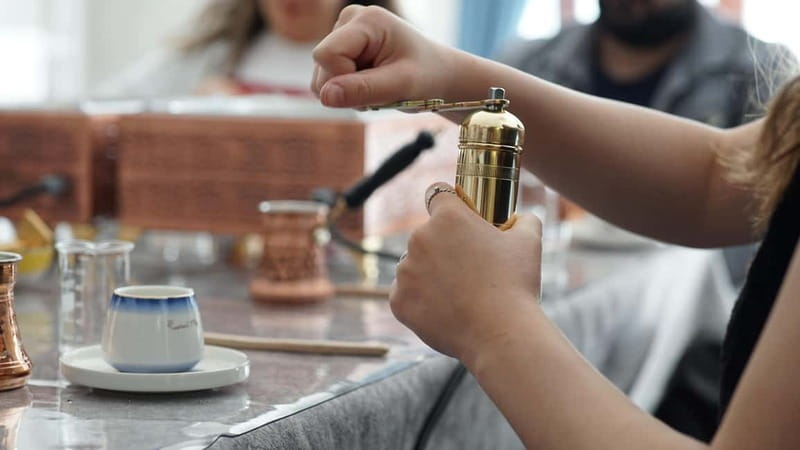
The workshop also introduces menengiç coffee, a traditional Turkish drink with a nutty flavor and no caffeine. It is a useful addition because it shows that Turkish coffee culture is not limited to one roast or one recipe.
You may find the taste quite different from the coffee you first brew. Menengiç coffee can be a better fit if you enjoy mild, nutty flavors or want to avoid caffeine. The experience is not only about finding a new favorite drink. It also gives you a wider view of the drinks served in Turkey and the different ways people gather around them.
The class explains Turkish coffee as a social custom as well as a method of preparation. The cup is meant to slow conversation. Once the coffee is served, the important part is not simply finishing it. You sit, talk, and let the ritual create a pause in the middle of an Istanbul day.
That relaxed mood is one of the strongest reasons to book this activity. It is not built around speed or a long list of sights. You spend time with the coffee, the instructor, and the people sharing the room.
More Turkish Coffee Experiences in Turkey:
- Turkish Coffee on Sand Workshop: Fortune Telling & Gift Set
★ 5.0 · 309 reviews - Istanbul Turkish Coffee Making & Fortune Telling Workshop
★ 5.0 · 173 reviews - Istanbul: Sand Brewed Turkish Coffee Workshop in Old Town
★ 4.9 · 142 reviews - Antalya:Turkish Coffee Workshop + Fortune Telling + Gift Set
★ 5.0 · 127 reviews
Closing the cup and reading the grounds
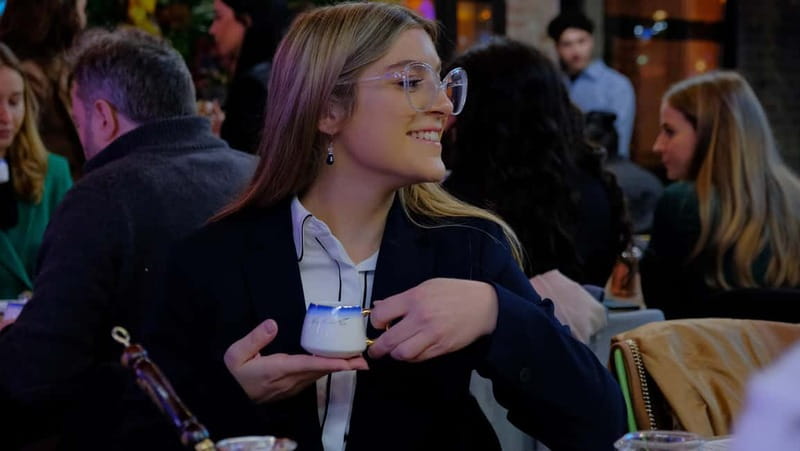
After you drink the coffee, you turn the cup over and let the grounds settle. The instructor then reads the shapes and symbols left inside.
This fortune-telling ritual is clearly presented as entertainment and conversation. It is a lighthearted way to end the workshop, and it gives the group an easy reason to talk with one another. You can also try to interpret some signs yourself before the instructor explains possible meanings.
The fortune reading has been one of the most praised parts of the experience. Dervan, Ilham, Esin, and Kamran were each appreciated for making this part lively and personal. Some people found their readings strikingly accurate, while you should treat that as part of the fun rather than a promise of supernatural certainty.
If you are uncomfortable with fortune telling, you can still enjoy the coffee-making portion. The activity is not described as a serious religious practice or formal prediction session. It is a familiar social custom, handled with humor and good conversation.
One useful tip: do not drink every last drop if you want a clear set of grounds for reading. Leave the sediment at the bottom, close the cup as instructed, and follow the guide’s directions. The ritual depends on those grounds remaining in the cup.
What the $33 price really covers
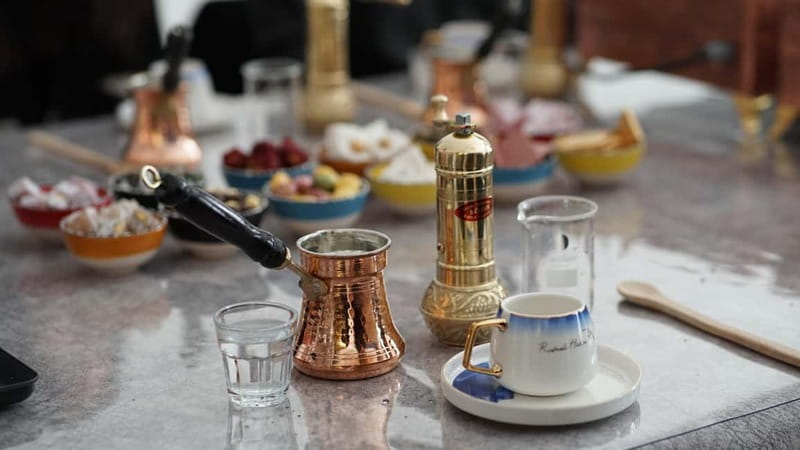
At $33 per person, this is more than a coffee tasting. Your fee includes the 90-minute lesson, premium Turkish coffee beans, sand brewing, hand grinding, Turkish tea, Turkish delights and snacks, the menengiç coffee experience, fortune telling, and a take-home package.
The gift set is the main value builder. You receive a traditional coffee pot, a cup, ground coffee, and a special booklet covering Turkish coffee history and brewing techniques. If you were already planning to buy a cezve and coffee in Istanbul, the workshop combines that purchase with instruction and a cultural activity.
The value is less convincing if you only want a quick drink. You can find coffee for far less in Istanbul, and the fortune reading may not interest you. But for someone who wants an activity with a physical souvenir and a skill to take home, $33 is a fair price.
The booklet adds useful context after the class. You can refer back to the recipe and method rather than relying on memory. The cup and cezve also make the experience easy to share with friends or family after your return.
How the 90 minutes are likely to feel
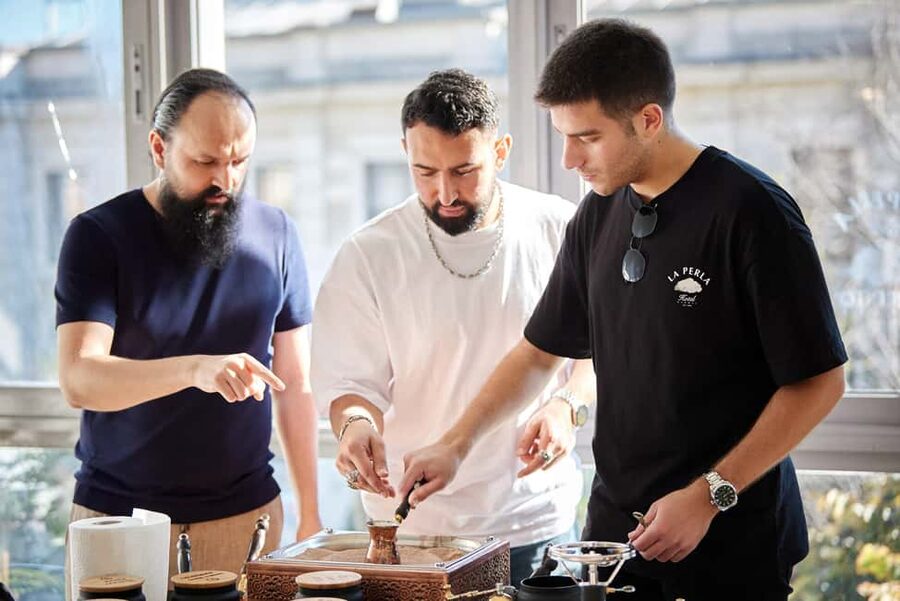
The activity is scheduled for 90 minutes, though one session was described as lasting closer to two hours. That longer timing may reflect a relaxed group, extra conversation, or a particularly lively presentation. If you have a strict appointment afterward, leave some breathing room.
A typical flow should include:
- An introduction to Turkish coffee and its UNESCO-listed cultural heritage
- Bean selection and hand grinding
- Instruction in sand brewing and foam control
- Tasting Turkish coffee, tea, snacks, and possibly menengiç coffee
- A cup-closing ritual and coffee-ground reading
- Distribution of the take-home gift set
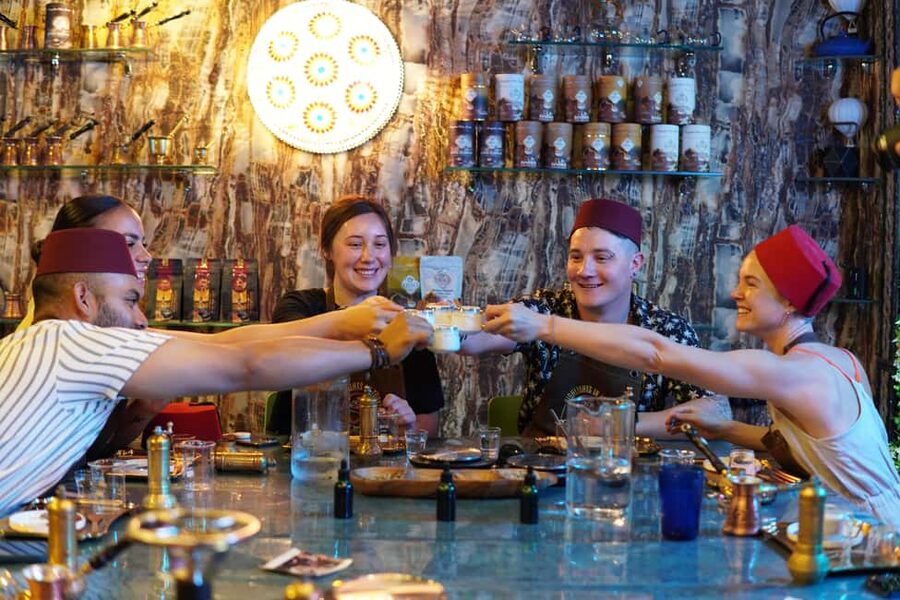
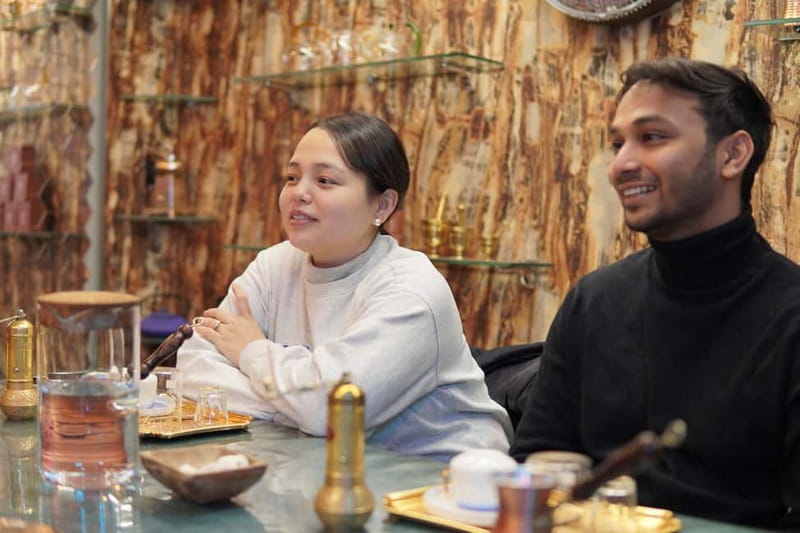
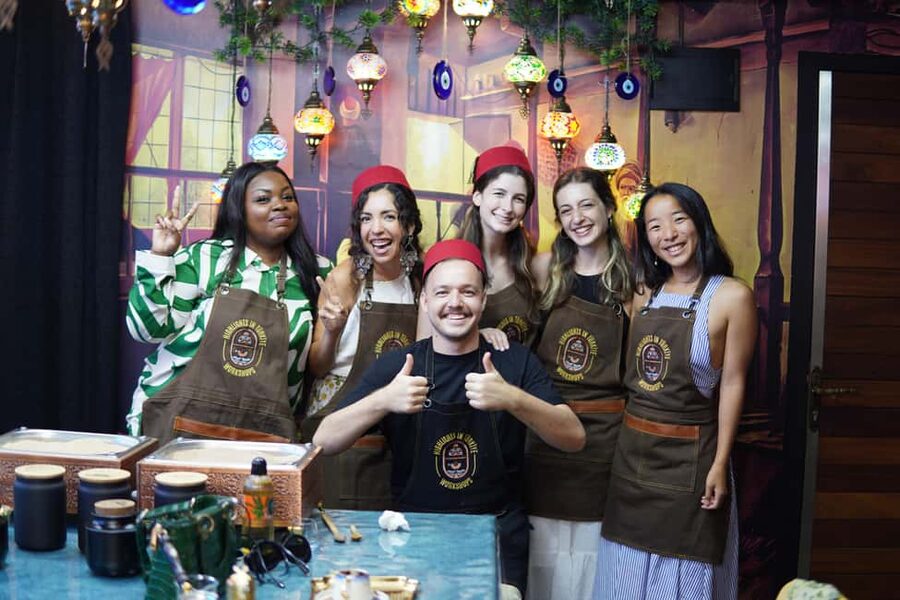
The group atmosphere can vary. One booking became a small private-style session for two people, while other sessions brought together people from several countries. A small group allows more direct help with grinding and brewing. A larger group may feel more social and give the fortune-telling portion more laughs.
The instructors are a major part of the experience. Esin was praised for sharing stories and spending time with participants. Sami was described as helpful, while Enes was appreciated for answering questions. Islam received strong praise for his presentation style, and Kamran was valued as an excellent host. Names may change with the schedule, but the repeated pattern is clear: the human connection is as important as the coffee.
Who will enjoy this most
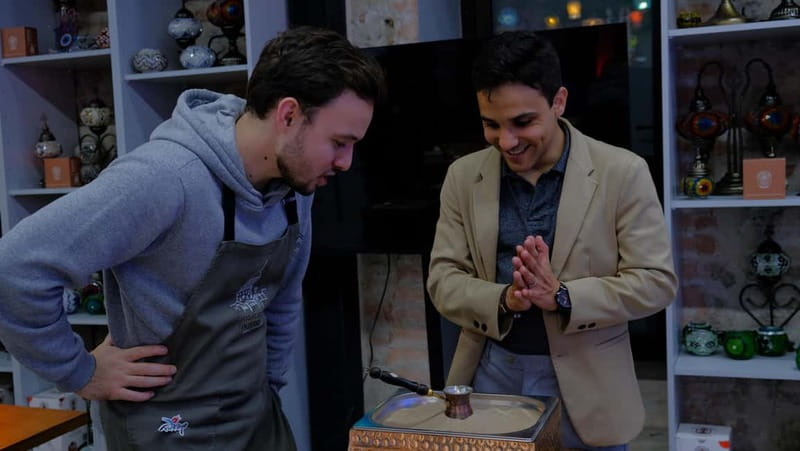
I would recommend this workshop to coffee drinkers, culture-focused visitors, couples, friends, and solo visitors who like an activity with conversation. It is also a good choice if you want a break from walking between Istanbul’s major sights.
Families may enjoy the hand mill, snacks, and fortune reading, though the supplied information does not specify a minimum age. Anyone using a wheelchair should find the activity suitable because the workshop is listed as wheelchair accessible.
This is also a practical choice for people with different coffee preferences. You can learn the standard method, try a caffeine-free menengiç drink, and ask questions in English, Turkish, or Russian.
You may want to skip it if you dislike group activities, do not enjoy sweet treats or coffee, or have no interest in a playful fortune ritual. The session is designed around participation. You will get more from it if you are willing to hold the grinder, brew the coffee, and join the conversation.
Small details that can improve your visit
Arrive with the meeting point in mind rather than relying only on a phone map. The studio is near well-known cafes, but the entrance may be easier to spot by comparing both landmarks: Arada Beyrut Cafe and Lavander Cafe.
Wear something comfortable for standing and handling the grinder. The activity is not physically demanding, but hand grinding takes effort and the class is hands-on.
Keep your schedule flexible after the 90-minute booking. The published duration is clear, but the social pace can stretch if the group is engaged. This is not the right activity to squeeze into a ten-minute gap before another reservation.
If you plan to carry the gift set for the rest of the day, remember that it includes a cezve and cup. They are useful souvenirs, but they are also breakable items that deserve careful packing.
Free cancellation is available up to 24 hours before the activity for a full refund, and you can reserve now while paying later. That is helpful when your Istanbul plans are still changing. Starting times depend on availability, so check the schedule before building the rest of your day around it.
Should you book the Turkish coffee workshop?
Book it if you want more than a cup of coffee. The best parts are the hand grinding, sand brewing, personal instruction, menengiç tasting, and the friendly fortune ritual. The included cezve, cup, coffee, and booklet make the $33 price easier to justify.
I would especially choose this workshop during a first Istanbul visit when you want a calm cultural activity near Galataport and Galata Tower. It gives you a story, a small skill, and useful souvenirs rather than only another photograph.
Skip it if your main goal is a fast caffeine stop or if fortune telling feels awkward. For everyone else, this is a warm, social way to learn why Turkish coffee is treated as a ritual, not just a beverage.
FAQ
Where does the Turkish coffee workshop take place?
It takes place in a spacious, bright atelier in Istanbul between Galataport and Galata Tower. The studio is diagonally to the right of Arada Beyrut Cafe and directly across from Lavander Cafe.
How long does the experience last?
The listed duration is 90 minutes. One session was described as lasting closer to two hours, so it is sensible to allow extra time if your schedule is tight.
Which languages are available?
The instructors speak English, Turkish, and Russian.
Is the workshop wheelchair accessible?
Yes, the activity is listed as wheelchair accessible.
What is included in the price?
The experience includes coffee beans, sand brewing, a hand-operated grinder, a traditional cezve, Turkish tea, Turkish delights and snacks, menengiç coffee, a Turkish coffee booklet, and a take-home gift set with a cezve, cup, and coffee.
Can I cancel the booking?
Yes. You can cancel up to 24 hours in advance for a full refund. Reserve now and pay later is also available.
Just added around Turkey
- Turkish Coffee and Traditional Turkish Dessert Cooking★ 4.6 · 8 reviews
- Walking Tour from Taksim to Galata (inc. Turkish Coffee Tasting)★ 5.0 · 10 reviews
- Istanbul Turkish Coffee Cooking and Tasting with Locals at Home★ 5.0 · 3 reviews
- Istanbul Home Style Turkish Coffee Making and Fortune Telling★ 5.0 · 4 reviews
- Home Style Turkish Coffee Making and Fortune Telling★ 5.0 · 10 reviews
- Antalya: Turkish Coffee Brewing on Sand & Fortune Telling★ 4.9 · 7 reviews
- Istanbul: Turkish Coffee Trail★ 3.6 · 16 reviews
- Cappadocia Off-Road Jeep Safari Experience with Free Coffee★ 4.9 · 19 reviews
Turkey Coffee Tours, compared.
Turkish Coffee Making and Fortune Telling Workshop
Read our review →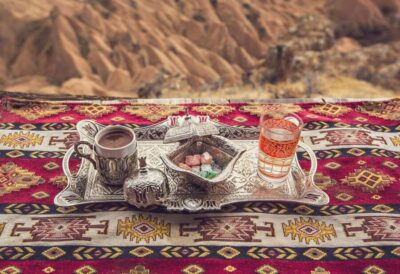
Turkish Coffee Making and Fortune Telling Workshop
Read our review →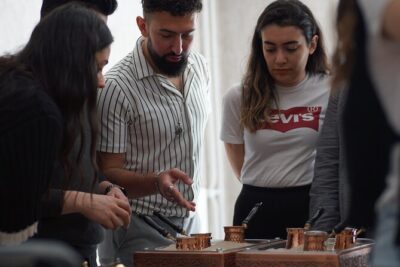
Turkish Coffee on Sand Workshop: Fortune Telling & Gift Set
Read our review →
Istanbul Highlights: Guided Tour with Turkish Tea or Coffee
Read our review →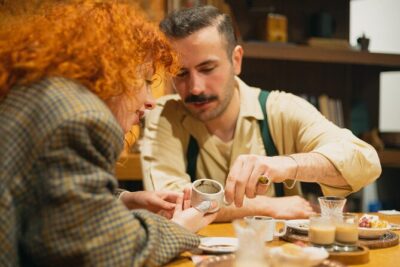
Istanbul Turkish Coffee Making & Fortune Telling Workshop
Read our review →
Sand Brewed Turkish Coffee Workshop in Old Town
Read our review →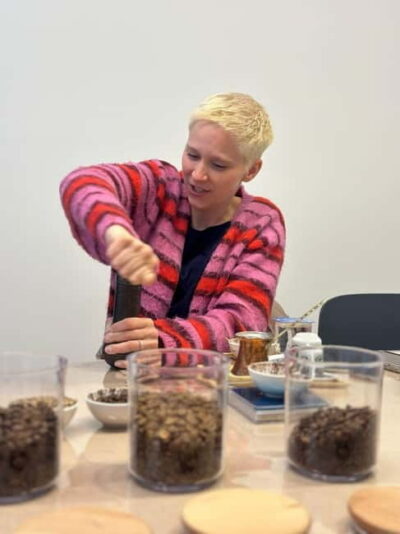
Turkish Coffee Workshop + Fortune Telling + Gift Set
Read our review →Browse the lists this tour appears in