
REVIEW · THAILAND COFFEE TOURS
Chiangmai Coffee Farm Tour
Coffee tastes better when you make it. This half-day outing takes you about an hour from Chiang Mai to an organic coffee farm near Doi Saket, where you pick cherries, roast beans, brew your own cup, and plant a coffee tree. I like the hands-on farm work and the chance to see coffee as a crop, not just a café drink. I also like the small maximum of 12 people, which should make the activities easier to follow. The main drawback is the long van ride for a five-and-a-half-hour program, especially since the hot springs mentioned along the route are a passing sight rather than a scheduled visit.
The welcome drink, coffee flower tea, gives the morning a proper local touch. You will also make a small souvenir from dried coffee cherries, adding a creative stop to what could otherwise be a simple plantation tour. The program changes with the season and weather, so you should expect some flexibility rather than a rigid list of promised activities.
At $58.41 per person, this is not the cheapest way to see rural Chiang Mai, but it includes pickup, transport, insurance, a guided farm experience, several tastings, and practical coffee activities. With a 4.9 rating from 34 reviews and 97 percent recommending it, the strongest appeal is clear: you get to do the work yourself instead of merely walking past coffee plants.
Key points at a glance
- Pick coffee cherries in the Doi Saket mountains: You get a direct look at how coffee begins, with seasonal conditions shaping what is available to collect.
- Roast and brew your own beans: The most useful part for coffee fans is tasting how roasting and brewing methods change flavor.
- Try coffee flower tea: This unusual welcome drink gives you something beyond the usual cup of brewed coffee.
- Make a souvenir from dried cherries: The farm uses part of the coffee plant that is often discarded or overlooked.
- Plant a coffee tree: The final activity connects your visit to the future of the farm.
- Travel in a group of no more than 12: A small group matters when you are handling cherries, roasting beans, and asking questions.
From Chiang Mai to a coffee farm near Doi Saket
The day begins with hotel pickup at about 8:30 a.m. A company staff member drives the van, taking you from Chiang Mai toward Pang Hai So in Thep Sadet, Doi Saket. The farm is described as about one hour from Chiang Mai Old City, though road conditions and pickup stops can affect the total time.
That drive is part of the experience, not just a transfer. You pass Doi Saket Hot Springs and see countryside life outside the city. The hot springs are mentioned as something you pass on the way, so do not plan on a bathing stop or a full visit unless the operator confirms a change.
You will also see local rural life around Chiang Mai. That may mean more to you than another city attraction if you want a sense of how the province changes once the cafés and traffic thin out. The drive also explains why this tour takes roughly five and a half hours even though the farm visit itself is not an all-day affair.
Pickup is offered, and the tour ends back at the meeting point. The published meeting point is PangHai-So, at 44 5 Tambon Thep Sadet, Amphoe Doi Saket, Chiang Mai 50220. If you are relying on hotel pickup, confirm the arrangement after booking, since confirmation is subject to availability and may arrive within 48 hours.
More Coffee Farm Tours in the world:
- Award Winning Farm Tour: Coffee, Chocolate and Unique Gifts
★ 5.0 · 484 reviews - La Herradura Coffee Farm: tour in Europe’s only plantation
★ 4.8 · 430 reviews - Big Island: Volcanoes, Waterfalls, & Coffee Farm Day-Trip
★ 4.9 · 414 reviews
A welcome drink with an unusual coffee connection
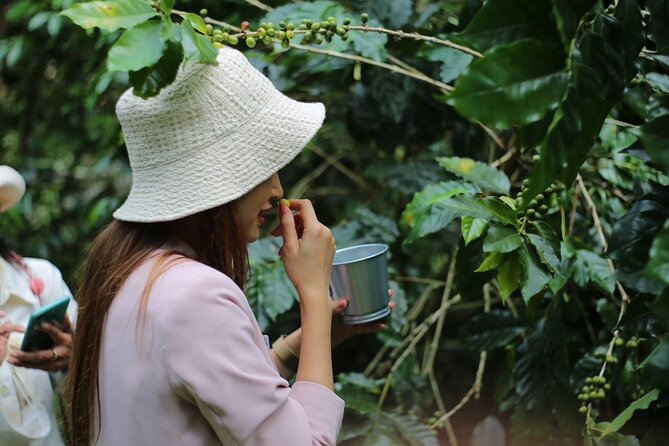
At the farm, you begin with a welcome drink made from coffee flower tea. This is a small detail, but it sets the tone well. You are not simply handed a standard coffee before being shown around. Instead, you are introduced to another part of the coffee plant and its use.
The drink also gives you a useful reminder: coffee farming is about more than roasted beans. The flowers, cherries, dried fruit, and trees all have a place in the farm’s story. If you are curious about flavor, this is a good moment to pay attention to the difference between flower tea and coffee made from roasted seeds.
The farm grows its own coffee organically and describes its work as being done with care. That does not turn the visit into a formal agricultural class, but it does give the activities a clear purpose. You can see the link between farming decisions and the final drink in your cup.
Picking coffee cherries by hand
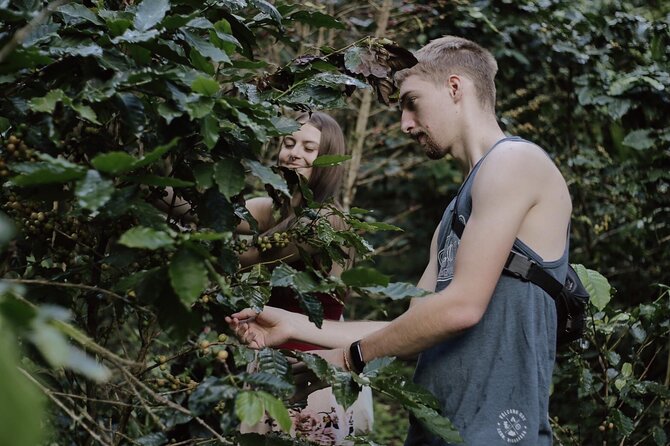
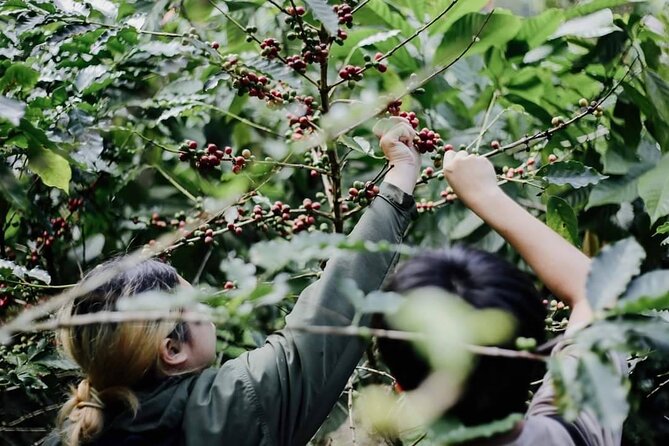
Next comes the part that makes this feel like a working farm visit: you collect coffee cherries. The amount and condition of the crop will depend on the season, so you should not expect the same picking experience at every time of year.
Coffee cherries are the fruit surrounding the seeds that later become coffee beans. Picking them gives you a quick lesson in how much work comes before roasting. It also makes the later stages more understandable. Once you have handled the fruit, the roasted coffee no longer seems like an abstract product from a shelf.
This activity should suit families, couples, and anyone who likes practical demonstrations. It is also a good fit for coffee enthusiasts who want to connect tasting with production. The physical work appears light, but the farm setting may involve uneven ground. The supplied information does not give specific accessibility details, so ask the operator if mobility is a concern.
Turning dried cherries into a small souvenir
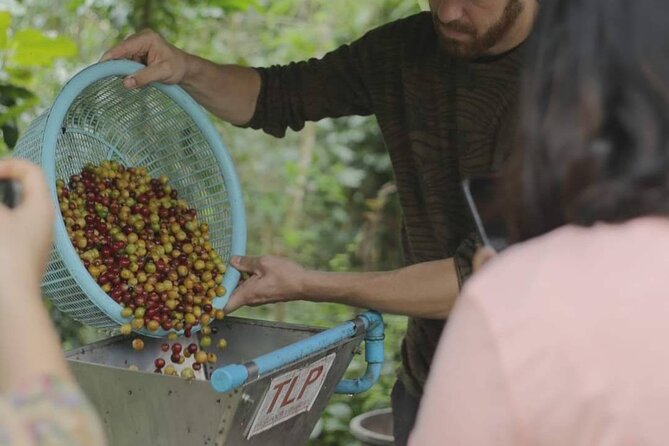
The farm then explains coffee processing and uses dried cherries to create souvenirs. This is a pleasant change of pace from picking and tasting. You get to work with a coffee byproduct and leave with something connected to the place.
The souvenir activity also adds a little context about waste. Coffee production creates more than the bean that ends up in your cup, and using dried cherries gives the material another purpose. Do not expect a large or valuable keepsake. The value is in making something yourself and remembering the farm process.
Because the program can change with the season and local conditions, the exact form of this craft activity may vary. The operator may replace parts of the program when weather or farm conditions require it.
A few more coffee tours around the world worth a look
- Hanoi Coffee Experience: 6 Brews, 9 Recipes & 3 Liquor Tastings
★ 5.0 · 2,945 reviews - Medellin: Coffee Tour with Transport, Snacks and Tastings
★ 4.7 · 1,357 reviews - Istanbul: Turkish Coffee Making and Fortune Telling Workshop
★ 4.9 · 1,308 reviews - Hanoi Coffee Workshop: Taste Salt, Coconut and Egg Coffee
★ 5.0 · 1,286 reviews
Roasting your own coffee in the mountains
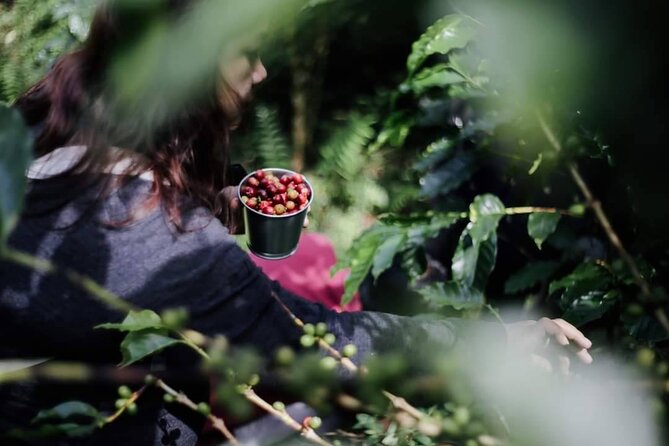
The most engaging part for many people will be roasting your own beans. You get to see how green coffee changes as heat brings out its familiar color and aroma. The process is simple enough to be part of a group activity, yet important enough to show why coffee from the same farm can taste different after different roasting choices.
A review of the experience highlights how roasting and brewing can change flavor. That is useful advice for you to keep in mind during the tour. Do not rush the tasting. Pay attention to how the coffee smells, how strong it tastes, and how the brewing method affects the cup.
The information provided does not specify the roasting equipment or the exact roast levels available. That means you should treat this as an introductory farm activity rather than a professional barista class. You will gain a practical sense of the process, but you should not expect a formal coffee certification or advanced technical training.
Brewing and drinking coffee made by your group
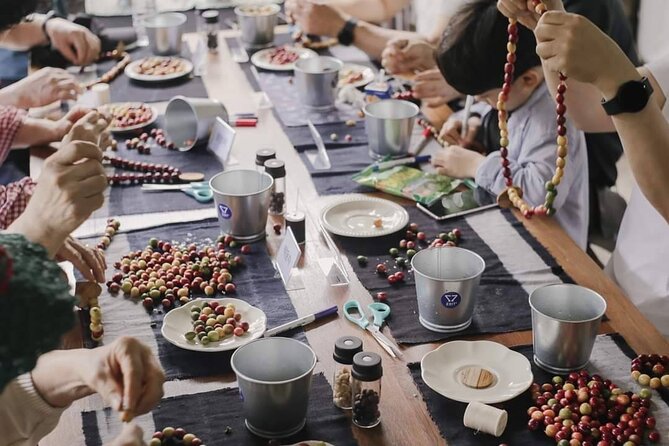
After roasting, you brew coffee using the beans prepared by the group. This is where the morning’s activities come together. You have picked the fruit, learned about processing, handled dried cherries, and roasted the beans. Now you taste the result.
The farm also serves fresh coffee grown there. Comparing your brewed cup with the farm’s coffee gives you a simple way to notice how technique affects flavor. The attraction is not just the caffeine. It is the chance to connect a finished drink with the work that produced it.
If you already know a lot about coffee, you may find the instruction fairly basic. If you normally buy coffee without thinking about farming or roasting, you will probably get more from this section. The experience works best when you are willing to taste slowly and ask questions.
One account also praises an organic meal connected with the experience. Since meal details are not clearly set out in the main program, confirm whether food is included on your date and whether any dietary needs can be accommodated. Do not assume the $58.41 price covers a full meal unless the operator confirms it.
Planting a coffee tree before you leave
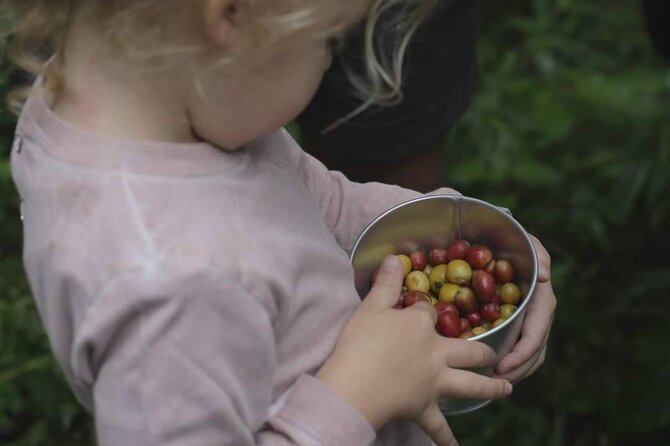
The final activity is planting coffee trees. This gives the visit a satisfying ending because you are not only taking something from the farm. You are also contributing to its next growing cycle.
The activity is symbolic as well as practical. A coffee cherry takes time to become part of a future harvest, and planting a tree makes that waiting visible. It is a good final step after tasting coffee made from beans that have already completed the process.
You should understand that planting one tree does not make you a coffee farmer. Still, it gives the day a stronger connection to the land than a quick tasting would. For children, it can be the most memorable activity. For adults, it adds meaning without turning the tour into a lecture.
What the $58.41 price really buys
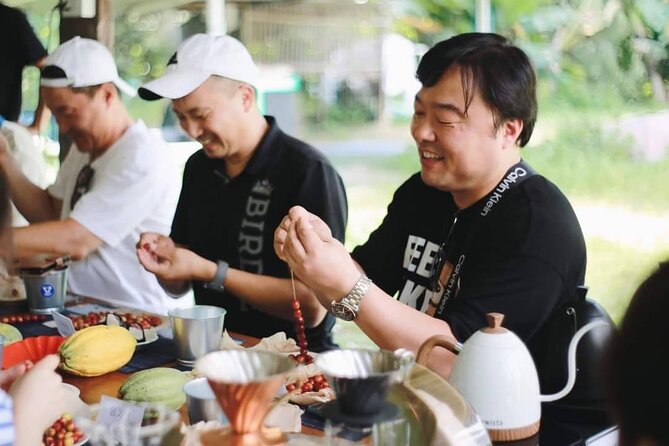
At $58.41 per person, the cost is reasonable if you value participation more than sightseeing. The price covers a roughly five-and-a-half-hour outing, hotel pickup offered by van, insurance, the farm program, drinks, coffee activities, and the tree-planting experience.
You are paying for access to a working organic farm and for staff time during several activities. A cheaper coffee tasting in Chiang Mai might give you more cups for less money, but it will not necessarily show you the crop, picking, processing, roasting, and planting in one morning.
The value is weaker if you want a quiet scenic visit with plenty of free time. The drive takes a meaningful portion of the day, and the program includes a series of activities rather than a relaxed café stop. You should also allow for seasonal changes, since some parts may be adjusted or replaced.
The maximum group size of 12 helps justify the cost. Coffee roasting and brewing are easier to understand when the group is not too large, and a smaller group should give you a better chance to take part rather than simply watch.
Who will enjoy this coffee farm tour
I would choose this experience if you:
- Like coffee and want to understand how it is grown and processed
- Prefer hands-on activities to a standard sightseeing stop
- Want to see rural areas outside Chiang Mai Old City
- Enjoy tasting unusual drinks such as coffee flower tea
- Are happy with a half-day outing and van transport
- Like the idea of planting a tree during your visit
You may want another activity if you dislike group tours, have little interest in coffee, or want a full visit to Doi Saket Hot Springs. The springs are part of the route description, but not a scheduled stop. This is also not the right choice if you need a tightly fixed program, since the farm adjusts activities according to season and conditions.
The experience has a high rating of 4.9 from 34 reviews, with 97 percent recommending it. Those numbers suggest consistent satisfaction, especially with the combination of coffee, nature, and practical work. They do not remove the need to check current weather and pickup arrangements before setting out.
Practical details before you book
The tour requires good weather. If poor conditions force cancellation, you are offered another date or a full refund. You can cancel for a full refund up to 24 hours before the start time, but cancellations and changes made less than 24 hours before departure are not accepted for a refund.
Wear clothing suitable for a farm setting and choose shoes you can use outdoors. The supplied details do not set a dress code or list required equipment, so keep your clothing simple and practical rather than treating this as a city café excursion.
The tour is mobile-ticket friendly, and confirmation is provided within 48 hours, subject to availability. Since the day begins with a hotel pickup at about 8:30 a.m., keep your morning free and be ready in the lobby before the agreed time.
Should you book the Chiangmai Coffee Farm Tour?
Book it if you want coffee served with a sense of place. The strongest parts are the coffee flower tea, hand-picking cherries, roasting and brewing your own beans, and planting a tree. Those activities give you a better understanding of coffee than a standard tasting alone.
Skip it if you want a short city activity or a guaranteed visit to the hot springs. The journey takes time, the program can change with the season, and meal details should be confirmed in advance. For coffee lovers, curious families, and anyone who enjoys getting their hands busy, the price offers solid value and a memorable morning outside Chiang Mai.
FAQ
How long does the Chiangmai Coffee Farm Tour last?
The experience lasts approximately five hours and 30 minutes.
Where does the tour take place?
The farm is in Pang Hai So, Thep Sadet, Doi Saket, Chiang Mai, about one hour from Chiang Mai Old City.
Is hotel pickup available?
Yes. Hotel pickup is offered, with collection arranged at about 8:30 a.m. by company van.
What coffee activities are included?
You can pick coffee cherries, learn about processing, roast coffee, brew coffee with the beans you roasted, and drink fresh coffee from the farm.
What is the welcome drink?
The welcome drink is coffee flower tea.
Can I plant a coffee tree during the experience?
Yes. Planting coffee trees is listed as the final activity.
Is transportation included?
Pickup is offered, and the tour uses a company van. The program also includes insurance.
How many people can join the tour?
The group has a maximum of 12 participants.
What happens if the weather is poor?
The experience requires good weather. If it is canceled because of poor weather, you can receive a different date or a full refund.
Just added around the world
- Vietnamese Coffee Making Class in Hoi An★ 5.0 · 4 reviews
- Venice Delights: Coffee & Food Experience Walking Tour★ 5.0 · 2 reviews
- Yerevan: Private Coffee Tour with 2 Café Stops★ 5.0 · 2 reviews
- Vietnamese Coffee 101 Workshop★ 5.0 · 11 reviews
- Ubud: Waterfall, Holy Water Temple,Swing&coffee plantation★ 5.0 · 9 reviews
- Vancouver: Street Art & Craft Coffee Walking Tour w/ Tasting★ 4.8 · 11 reviews
- Vienna: Guided Viennese Coffee-House Tour★ 5.0 · 2 reviews
- Coffee pleasure walking tour★ 5.0 · 12 reviews
Thailand Coffee Tours, compared.
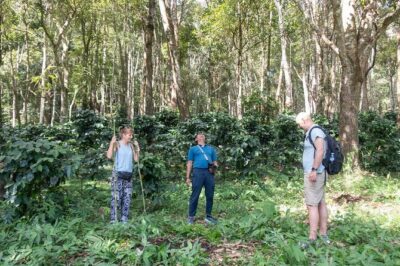
Off the Map Chiang Mai Jungle Coffee Trek Roast and Brew
Read our review →
From Bangkok: Don Wai Market, Wat Samphran & Lotus Café Tour
Read our review →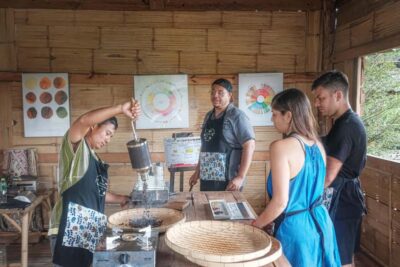
Chiang Mai Coffee Full Day Tour: Trek, Brew & Roast Journey.
Read our review →
Private Floating Market, Train Market and After Rain Cafe Tour
Read our review →
Doi Inthanon Day Trip:Twin Pagodas,Soft Hiking,Coffee Plantation
Read our review →
Zipline & Coffee with Waterfall Views in Koh Samui
Read our review →
Chiang Mai : Thep Sadet & Coffee Plantation Full Day Hiking
Read our review →Browse the lists this tour appears in