
REVIEW · DA NANG COFFEE TOURS
Da Nang Coffee Making Workshop
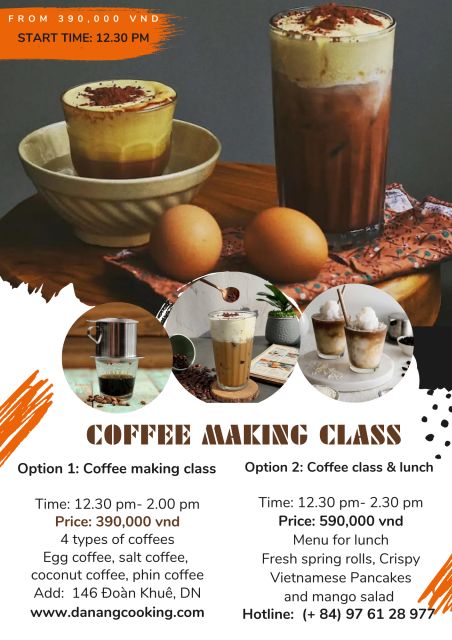
Coffee is a fine way to meet Vietnam. In Da Nang, this workshop turns a familiar drink into a hands-on cultural lesson, with four Vietnamese coffee styles to prepare and taste. I like the clear instruction from guides such as Jane, and I like that you leave with recipes you can use at home. The only catch is the caffeine: finishing every cup can feel like a small coffee festival in your bloodstream.
The clean, modern setting suits a rainy morning, a slow afternoon, or a break from sightseeing. You can choose a 90-minute coffee class for $17, or add lunch and a cooking lesson for a longer session. The larger options offer better value if you want a full food experience, but coffee fans should know that pickup and drop-off are not included.
Key points to know before you book
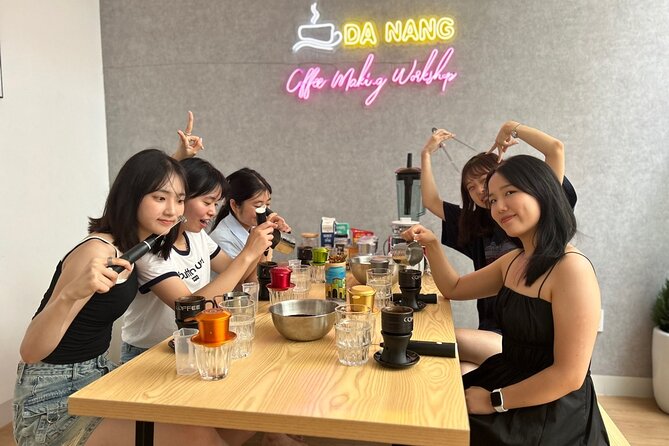
- Four classic Vietnamese coffees: Prepare phin coffee, egg coffee, salt coffee, and coconut coffee.
- Jane is a favorite guide: She is praised for clear English, humor, patience, and easy-to-follow instruction.
- Three formats fit different days: Pick the 90-minute coffee class, a 2.5-hour coffee class with lunch, or a four-hour cooking and coffee session.
- You get practical skills: The workshop uses simple tools rather than an expensive machine, and recipes may be provided as a PDF.
- Small groups help: The class is social without feeling like a large production.
- Plan around the caffeine: You may make three full coffees and a smaller first coffee, so arriving with some food in you is sensible.
Why Vietnamese coffee deserves its own class

Vietnamese coffee is not simply strong coffee poured over ice. Its character comes from the brewing method, the ingredients added to it, and the relaxed café culture built around it.
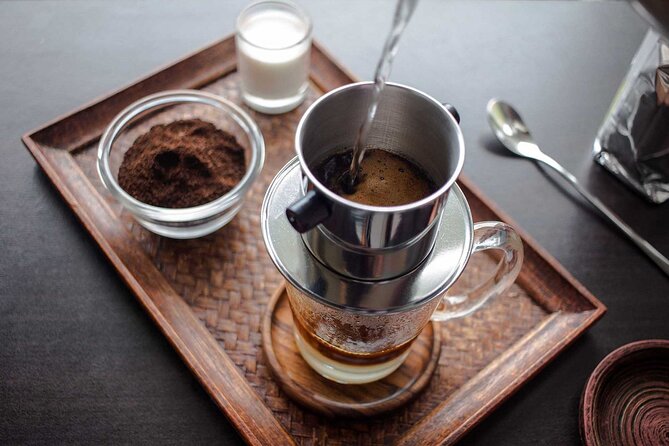
The traditional phin filter sits directly on top of your glass or cup. Hot water passes slowly through ground coffee, producing a concentrated brew. It is simple, compact, and easy to repeat at home. You do not need a costly espresso machine, which is one of the best reasons to take this class rather than only ordering drinks in a café.
The workshop also shows how Vietnamese coffee changes when you add egg, salt, or coconut. Egg coffee brings a sweet, creamy topping. Salt coffee uses a salty cream that softens the coffee’s bitterness. Coconut coffee adds a cool, sweet texture and a different kind of richness.
I like this format because you are not only sipping finished drinks. You see how each drink is built, then adjust your understanding of Vietnamese coffee by tasting the results side by side.
More Coffee Making Classes in Vietnam
- Hanoi Coffee Workshop: Taste Salt, Coconut and Egg Coffee
★ 5.0 · 1,286 reviews - Hanoi: Salt Coffee Workshop Awake Your Senses With 6 Brews
★ 5.0 · 792 reviews - Fun & Easy Vietnamese Coffee Workshop in Hồ Chí Minh City
★ 5.0 · 293 reviews
Choosing the right class length
The basic coffee-making class lasts 90 minutes. It is the cleanest choice if your Da Nang schedule is tight, and it gives you enough time to make four styles without turning the lesson into a long production.
Available start times for this option are 10:00 am, 1:00 pm, and 3:30 pm. The morning class works well before a sightseeing afternoon. The later sessions can fill a gap between lunch and dinner, though you may want to think twice about drinking several coffees late in the day.
The coffee and lunch option takes 2.5 hours. It begins at 12:00 noon or 2:30 pm, with lunch before the coffee lesson. At $17 as the stated activity price, this is a good choice if you want food as part of the experience rather than a stand-alone drink class.
The longest option combines coffee making with Vietnamese cooking and lasts four hours. It starts at 9:30 am. This is the best fit if you want a fuller introduction to local food, but it takes a serious portion of your day.
The schedules and menus are specific. On Monday, Wednesday, and Friday, the cooking menu includes Quang noodles, fish sauce chicken wings, green papaya salad with shrimp, and deep-fried spring rolls. On Tuesday, Thursday, Saturday, and Sunday, you make beef noodle soup, crispy Vietnamese pancakes, green mango salad with shrimp, and fresh spring rolls.
That rotating menu gives you a reason to choose your day carefully. If one dish matters to you, check the weekday menu before booking.
Starting with the phin filter
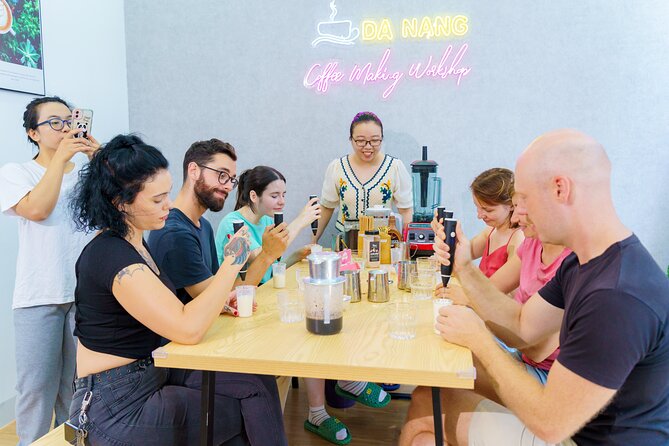
The class begins with the basic Vietnamese coffee method, the phin. This small metal filter is not hard to use, but the result depends on small choices: how the coffee is placed, how much water is added, and how slowly it drips.
Your guide leads you through the steps rather than leaving you to guess. That matters because the phin is slower than a standard pour-over and produces a concentrated cup. You learn the method that supports the other drinks, not just a recipe for one beverage.
Some class participants described the first coffee as a smaller starter serving, followed by three full coffees. That is a useful point to keep in mind. The exact serving size can vary, but you should expect to taste plenty of coffee during 90 minutes.
The phin lesson is also the most useful part for home use. Egg foam and coconut mixtures may need special ingredients, but a phin is compact, inexpensive, and easy to pack. If you want one souvenir skill from the class, this is probably it.
Egg coffee, salt coffee, and coconut coffee
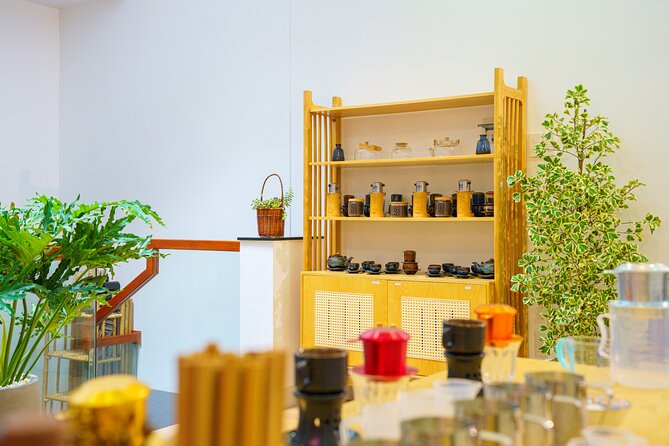
After the plain coffee, the class moves into the more distinctive drinks. Each one shows a different side of Vietnamese café culture.
Egg coffee is the most dessert-like. The coffee stays bold underneath, while the egg mixture adds sweetness and a soft, creamy layer. The workshop explains how to prepare it, so you are not simply given a glass and told to enjoy it.
Salt coffee sounds odd until you taste the balance. The salt does not turn the drink into seawater. Used in the cream, it can reduce the impression of bitterness and make the coffee taste rounder. Several participants singled it out as a favorite, and it is one of the drinks most likely to surprise someone who normally avoids black coffee.
Coconut coffee is cooler and sweeter in character. It gives you a different texture from egg coffee and a gentler introduction to strong Vietnamese coffee. Making all four styles in one sitting lets you compare them instead of trying to remember separate café visits.
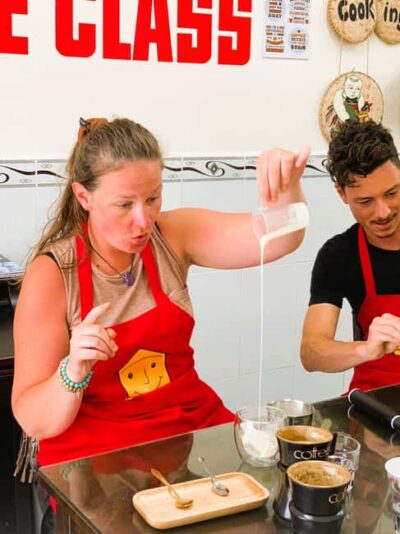
The teaching is hands-on. You take part in the mixing and preparation, then drink what you make. That simple loop, prepare, taste, adjust your understanding, is why the class feels more useful than a short talk about coffee.
Same place, a different cup:
- Hanoi Coffee Experience: 6 Brews, 9 Recipes & 3 Liquor Tastings
★ 5.0 · 2,945 reviews - Hanoi: Master the Art of 4-6 Signature Vietnameses Coffees
★ 5.0 · 517 reviews - Egg coffee & Course on 4 traditional types of Viet coffee
★ 4.9 · 487 reviews - Hanoi: Vietnamese Street Food Tour with Egg Coffee
★ 4.9 · 315 reviews
The guides make the difference
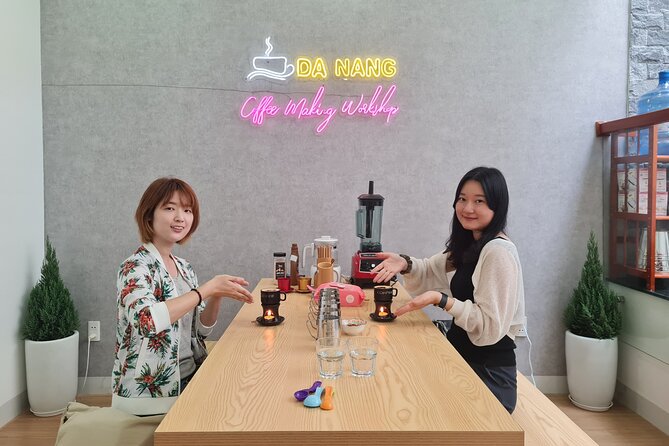
Jane receives especially strong praise for her humor, patience, and clear explanations. She explains the origins and flavor of the beans, the regions connected with Vietnamese coffee, and the story behind each drink.
Her style appears to be friendly rather than formal. That helps if you are not confident in the kitchen or if you know little about coffee. The class is conducted in English, and the instructions are designed to be followed as you work.
One useful detail is the guide’s willingness to adapt. A participant with lactose intolerance was given an alternative, although you should still mention dietary needs before starting. The menu contains eggs and milk, so this is not a dairy-free or egg-free activity by default.
Another guide named in the feedback is Viet, who was praised for explaining each step in detail. The main takeaway is that the quality of the class depends partly on the person leading your session, but the repeated praise for the teaching style is encouraging.
The small-group setup also helps. You can ask questions, compare your drinks with other people, and chat with the group without losing the personal feel of the lesson. Solo visitors can fit in easily, while couples and families have enough shared activity to keep everyone involved.
Lunch and the longer cooking option
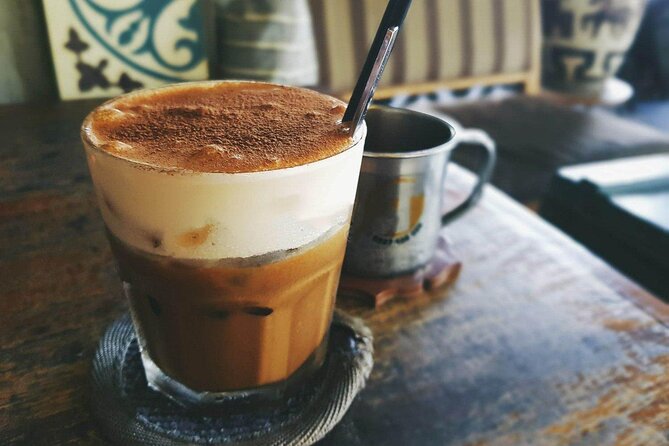
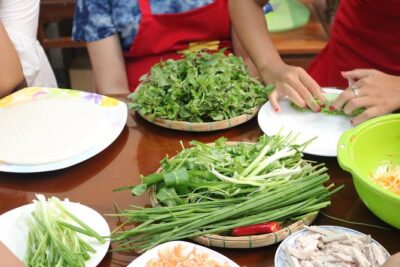
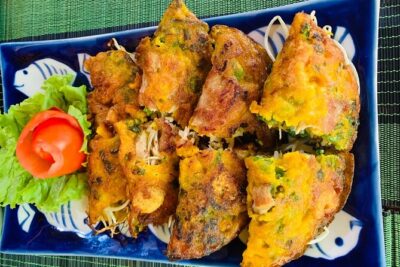
The lunch add-on turns the class into more than a coffee stop. Before making the drinks, you eat fresh spring rolls, crispy Vietnamese pancakes, and a mango salad with shrimp and pork. A vegetarian option is available.
This matters for two reasons. First, the food makes the session more substantial. Second, eating before the coffee tasting helps with the heavy caffeine load. One sensible piece of advice is not to arrive on an empty stomach, especially if you plan to drink each coffee you prepare.
The four-hour option goes further, with a set cooking menu that changes by day. It can be a good choice if you want to learn recognizable Vietnamese dishes while also making coffee. It is less suitable if you only want a quick cultural activity between other plans.
The cooking class also gives you more time with the guide and group. If you enjoy practical activities, this may be the strongest value of the three formats. If you mainly care about coffee, the 90-minute class is enough.
Is $17 good value in Da Nang?
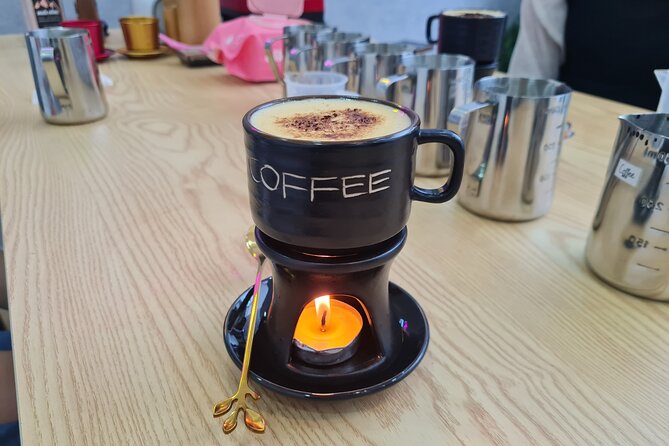
At $17 per person, the basic workshop offers solid value. You get coffee-making tools during the lesson, instruction in four drinks, an English-speaking guide, and the chance to consume what you prepare.
The price is easier to justify because the skill is repeatable. You are not paying only for a tasting. You learn a method you can use at home, and a PDF with recipes may be supplied afterward. That gives the activity a useful afterlife once your holiday ends.
The lunch package adds food and more time, while the cooking version adds a full meal-making session. The exact value depends on your appetite for activities. I would choose the short class for a first visit to Da Nang and the longer format for anyone who enjoys cooking as much as eating.
Pickup and drop-off are not included. You need to reach the meeting point yourself, so allow extra time and check the exact location before setting off. The experience is wheelchair accessible, which is helpful, though transport assistance is not part of the price.
Practical tips for a better coffee class
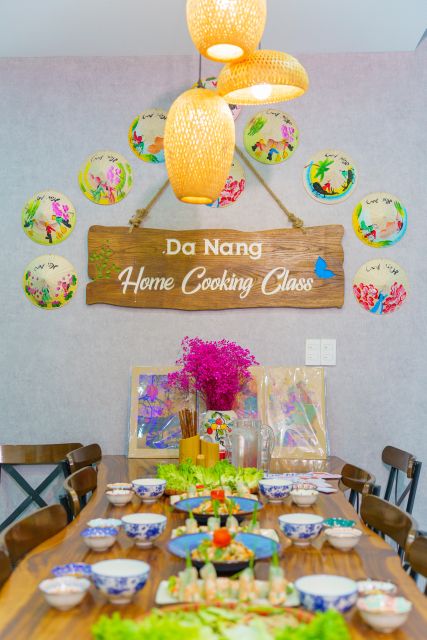
Come with some food in your stomach. The workshop can involve several servings, and one cup may be smaller while the others are full drinks. If you are sensitive to caffeine, taste rather than finish every glass.
Tell the guide about dietary needs before the lesson. Eggs and milk are part of the menu, but an alternative was arranged for a participant with lactose intolerance. Do not assume every ingredient can be changed without notice.
Wear something comfortable for a hands-on activity. The setting is described as clean and modern, and the tools are prepared for the class, but you are still mixing, brewing, and handling ingredients.
If you want to recreate the drinks later, pay close attention during the phin section. Egg coffee and coconut coffee are fun, but the filter method is the foundation. Take notes if a recipe PDF is not automatically offered in your session.
A rainy day is an especially good time to book. The class gives you a warm indoor activity with food, conversation, and a practical result. It also avoids wasting a planned sightseeing morning when weather turns poor.
Who will enjoy this Da Nang experience?
I would recommend the workshop to coffee drinkers, curious eaters, solo visitors, couples, and anyone seeking a cultural activity that does not require a full day. You do not need prior cooking or coffee experience.
It also suits people who want a social class without committing to a large group. The atmosphere is relaxed, and the guide’s humor helps keep the instruction from feeling like a technical lecture.
Families may enjoy the preparation, though the caffeine and the egg and milk ingredients are worth considering for children. People who dislike sweet drinks may prefer the phin coffee and salt coffee over the egg and coconut versions.
This is not the right choice if you want a quiet café visit, a coffee-farm excursion, or a tour with hotel transport. It is a workshop in central Vietnam, focused on preparation, tasting, and conversation rather than countryside scenery.
Final call: should you book it?
I would book the 90-minute class if you want an affordable, useful activity in Da Nang. The combination of four drinks, a friendly English-speaking guide, simple equipment, and take-home recipes gives it more substance than a standard tasting.
Choose the lunch option if you want food and coffee in one sitting. Choose the four-hour cooking version if learning Vietnamese dishes matters as much as learning coffee.
The main warning is caffeine, not quality. Pace yourself, eat first, and tell the guide about dietary needs. For $17, this is an easy recommendation for anyone who wants to understand why Vietnamese coffee is more than a strong morning drink.
FAQ
How long does the Da Nang Coffee Making Workshop last?
The coffee-only class lasts 90 minutes. The coffee and lunch option lasts 2.5 hours, while the coffee and cooking class lasts four hours.
How much does the workshop cost?
The listed price is $17 per person.
Which coffees will I make?
You will learn to make Vietnamese phin coffee, egg coffee, salt coffee, and coconut coffee.
Is lunch included?
Lunch is included with the coffee-making class and lunch package. The lunch menu includes fresh spring rolls, crispy Vietnamese pancakes, and mango salad with shrimp and pork. A vegetarian option is available.
Is the cooking class included in every option?
No. Cooking is included only in the four-hour coffee-making and cooking class.
What language is the workshop conducted in?
The instructor and guide speak English.
Is the workshop wheelchair accessible?
Yes, the activity is listed as wheelchair accessible.
Can I cancel the booking for a refund?
You can cancel up to 24 hours in advance for a full refund. Reserve-now-and-pay-later booking is also available.
Just added around Vietnam
- Vietnamese Coffee Making Class in Hoi An★ 5.0 · 4 reviews
- Vietnamese Coffee 101 Workshop★ 5.0 · 11 reviews
- Hoi An Vietnamese Coffee Workshop: Hands-On Brewing Class★ 5.0 · 3 reviews
- Vietnamese Egg Coffee Making Course in Hoi An★ 3.5 · 2 reviews
- Hoi An Coffee Tasting And Old Town Discovering Tour★ 5.0 · 4 reviews
- Hoi An Coffee Making Workshop★ 5.0 · 7 reviews
- Authentic Vietnamese Coffee Making Experience in Hoi An★ 5.0 · 13 reviews
- Farming- Market- Lantern making- Coffee- Cooking (JHA4)★ 5.0 · 4 reviews
Da Nang Coffee Tours, compared.
Da Nang Cooking Class with Coffee Tasting and Market Visit
Read our review →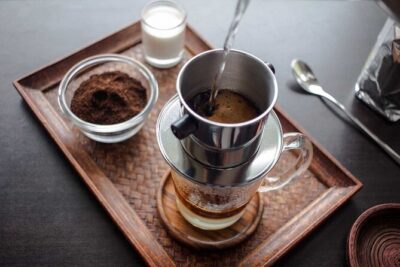

[Free E-sim] Da Nang Coastal Charm Half Day Cafe Tour
Read our review →
Da Nang Coffee Making and Vietnamese Home Cooking Class
Read our review →
Coffee Workshop: Make 6 Kinds of Vietnamese Coffee
Read our review →Browse the lists this tour appears in