
REVIEW · ANTIGUA COFFEE TOURS
Experience: Organic Coffee, Avocados, Honey & More!
Fresh coffee begins with a berry. This small farm outing from Antigua lets you follow that path by picking, roasting, grinding, and brewing coffee yourself. I like the warm family welcome from Maykol, also called Michael, and the chance to make guacamole and tortillas rather than simply watch a demonstration. The one drawback is that the tour depends on good weather and includes walking on a working farm.
It is also a smart way to leave Antigua’s center without giving up much time. The farm is about a short drive away, the group is capped at 10 people, and the morning combines food, local life, and practical lessons about compost, bees, and organic growing. If you want a polished sightseeing circuit, this may feel informal. If you want a personal farm visit, that is the point.
Key things to know before you go
- You make your own coffee: Handle the beans from harvest through roasting, grinding, and brewing.
- The food is part of the lesson: Prepare guacamole and corn tortillas, then eat them with farm-grown avocado.
- Bees get more than a passing mention: Learn why pollinators matter and taste the farm’s honey.
- Sustainability is practical here: See four composting methods and learn how to make fertilizer at home.
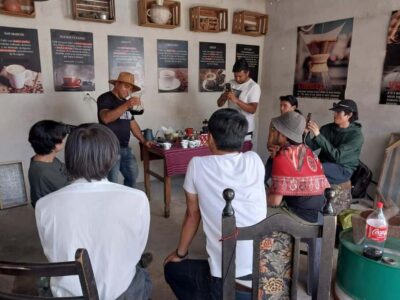
- The group stays small: With no more than 10 people, it is easier to ask questions and take part.
- Transport is included: Meet at Casa del Jade in Antigua at 9:30 a.m. and return there after the farm visit.
A short ride from Antigua to San Pedro Las Huertas
Your morning starts at Casa del Jade, in the El Jaulón building at 4a Calle Oriente 10, Antigua Guatemala. The listed start time is 9:30 a.m., and the host provides transportation to and from the farm.
The drive passes through San Pedro Las Huertas, a town outside Antigua. You do not stop for a formal town visit, but the ride gives you a quick look beyond the city streets before the farm portion begins. This matters because the tour is not just a talk inside Antigua. You are going into the community where the family grows, makes, and experiments with food.
The transfer is one of the practical strengths of the experience. You do not need to arrange a taxi to a rural address or work out your own return. Past visitors have also noted that Maykol is punctual and that the vehicle is clean and comfortable. One family even rode in the back of the truck, though you should not assume that will be part of every departure.
The full outing lasts about two to three hours. The farm portion itself is described as a walking tour lasting about an hour and a half, with transport added around it. That makes this easy to fit into a busy Antigua schedule, especially if you have a volcano trip, cooking class, or afternoon city walk planned.
A few more coffee tours around the world worth a look
- Hanoi Coffee Experience: 6 Brews, 9 Recipes & 3 Liquor Tastings
★ 5.0 · 2,945 reviews - Medellin: Coffee Tour with Transport, Snacks and Tastings
★ 4.7 · 1,357 reviews - Istanbul: Turkish Coffee Making and Fortune Telling Workshop
★ 4.9 · 1,308 reviews
Coffee from red berry to morning cup
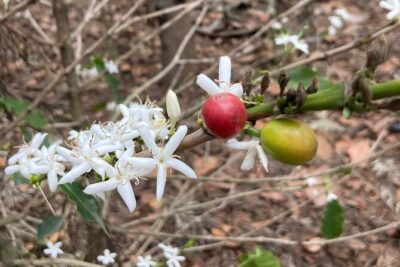
Coffee is the main thread running through the visit. At the plantation, you learn about the plants and taste coffee while seeing how the crop moves from the tree toward the cup.
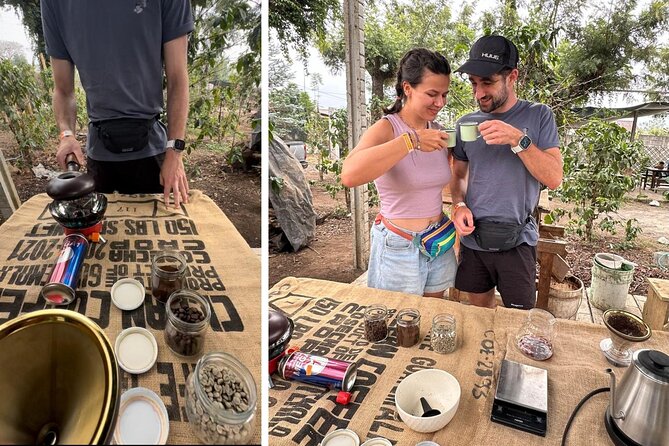
The best part is the hands-on sequence. Depending on the season and the farm’s current conditions, you may pick coffee berries, handle the beans, roast a small amount, grind it, and brew your own cup. This is not a quick sample poured from a thermos. You get a clearer sense of how much work hides behind an ordinary cup of coffee.
Roasting is especially useful because it turns an abstract farming lesson into something you can smell, watch, and taste. Grinding and brewing finish the process in a satisfying way. Coffee lovers will appreciate the detail, but you do not need to be an expert. Maykol’s teaching style is aimed at ordinary people who want to understand what they drink.
The exact amount of harvesting may vary. Coffee is seasonal, and the experience description includes tasting and working with coffee without promising that every visitor will pick a large quantity of beans. Still, the farm offers enough stages of the process to make the lesson worthwhile even when picking conditions change.
I also like the way this section connects agriculture with labor. You see that coffee is not simply a Guatemalan souvenir or a menu item. It is a crop that must be grown, collected, prepared, roasted, and brewed with care. By the end, your next cup may seem a little less automatic.
Avocados, tortillas, and a farm lunch without the fuss
After the coffee, you walk by the avocado plantation. The farm’s avocados are used in the food activity, so the trees are not scenery added to the route. They connect directly to what you eat a few minutes later.
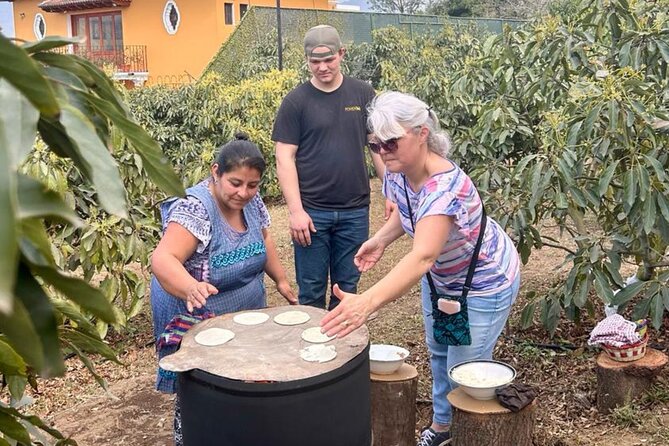
When avocados are in season, you help make guacamole. The experience also includes making corn tortillas, with Sarah helping guide the tortilla portion. You shape the dough, cook or prepare the tortillas as directed, and then eat them with the fresh avocado mixture.
This is one of the strongest parts of the tour for families. Children can take part with their hands, and adults get a simple food lesson that feels more memorable than watching someone else cook. Several families found that children tried coffee or avocado here even when they normally avoided them at home.
The food is not presented as a formal restaurant meal. Think of it as a fresh farm snack and shared activity. That distinction is useful when planning your day. You will taste avocado, tortillas, coffee, and honey, but you should not book this expecting a large lunch or a long sit-down meal.
The tortilla activity also adds a cultural layer without turning into a staged show. You are learning a basic kitchen skill from the family and eating what you helped prepare. That direct connection is a big reason this short tour feels personal.
Bees, honey, and the working farm ecosystem
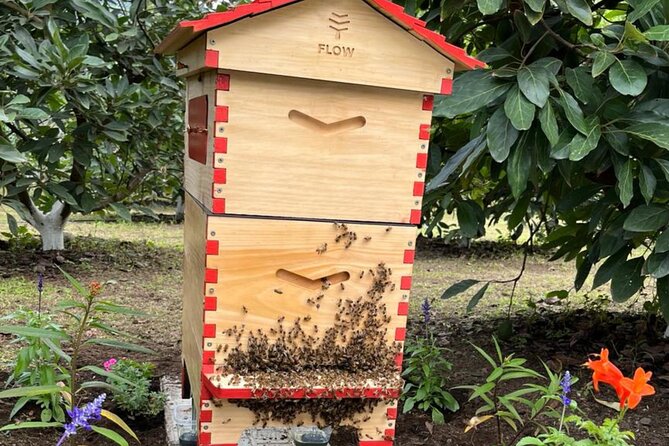
The bee portion explains why pollinators matter to crops such as avocados and coffee. You learn about the farm’s efforts to provide a safe setting for bees and other helpful insects.
You also see the technology used to obtain honey and taste the finished product. The honey is a small detail, but it rounds out the farm lesson. Coffee, fruit, tortillas, and honey each show a different part of how land can support food production.
This is not an intensive beekeeping course, and the description does not promise that you will open a hive or handle bees. The value is in understanding the connection between insects, flowers, fruit, and harvest. If you are curious about gardens or food production, this section gives useful context without requiring specialist knowledge.
The host’s enthusiasm is important here. Maykol does not treat sustainability as a slogan. He explains how pollinators fit into the farm’s daily operation, along with the choices that help the land produce food over time.
Same place, a different cup:
- Hanoi Coffee Workshop: Taste Salt, Coconut and Egg Coffee
★ 5.0 · 1,286 reviews - Vienna for Food Lovers: Cafés, Markets & Austrian Cuisine
★ 5.0 · 1,063 reviews - Big Island Highlights: Coffee, Volcano, Black Sands & Waterfall
★ 5.0 · 1,054 reviews - Hanoi: Salt Coffee Workshop Awake Your Senses With 6 Brews
★ 5.0 · 792 reviews
Four compost methods and the practical side of sustainability
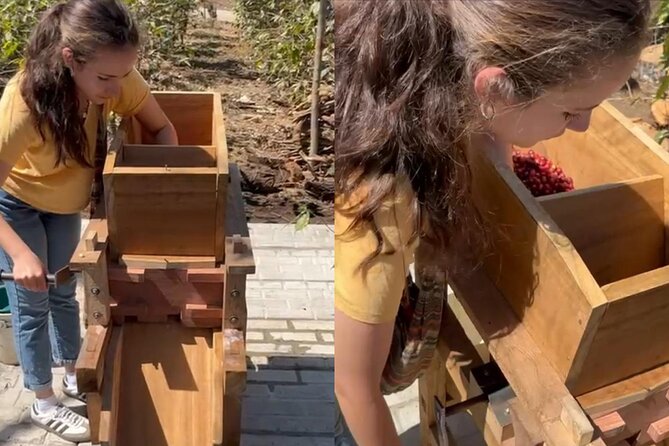
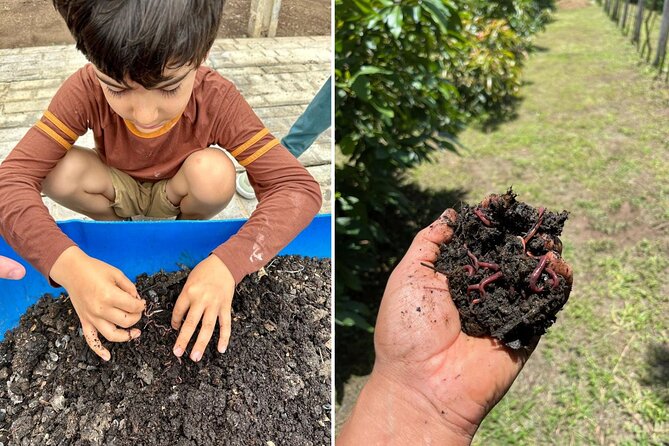
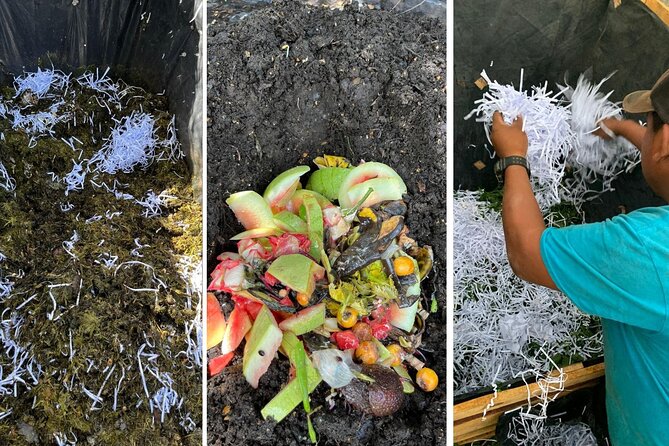
The most educational part for many people is the composting lesson. You see four different organic compost methods and learn how you can make them yourself.
That makes the discussion more useful than a broad speech about saving the planet. You get examples to compare and ideas that may work in your own garden or household. The tour also explains how the farm is working toward organic production, including the use of available resources and natural systems.
The farm covers about two acres, according to the experience details shared by the host through past visits. It includes coffee, avocados, composting, livestock, bees, and other small-scale projects. You will not see a giant commercial operation. Instead, you see how a family uses limited land in several connected ways.
This scale is worth keeping in mind. Some parts may look experimental or still in progress because the farm is growing and developing new projects. That can be a benefit if you enjoy seeing ideas in action, but it may disappoint you if you expect a finished agricultural attraction with fixed exhibits.
The family story is woven into the property, too. Maykol explains how the farm relates to his family and local community, which gives the sustainability talk a human reason for being there. You are not simply hearing rules about compost. You are seeing how those choices support a family business and a long-term plan for the land.
A family host makes the visit feel personal
Maykol is the owner and main host, and he leads much of the visit himself. His style comes across as patient, friendly, and eager to answer questions. That matters in a small group because a quiet or rigid guide could make the same activities feel awkward.
Family members may also be involved. Sarah helps with tortillas, and Maykol’s daughter Elisa has joined some visits. Farm dogs such as Bingo or Gunner, along with cats, may be around the property. These animals are part of the relaxed family atmosphere, not a guaranteed feature of the tour.
You may also hear about the family’s future plans for the farm, including possible lodging projects. Treat those as a glimpse into the property’s direction, not as part of the current package.
The personal approach is a real strength, but it comes with a tradeoff. This is not a large operator with a scripted timetable and a backup presenter for every activity. The experience can feel more flexible and human, while the exact flow may depend on the season, the weather, and what is happening on the farm that morning.
Who will get the most from the $59 price
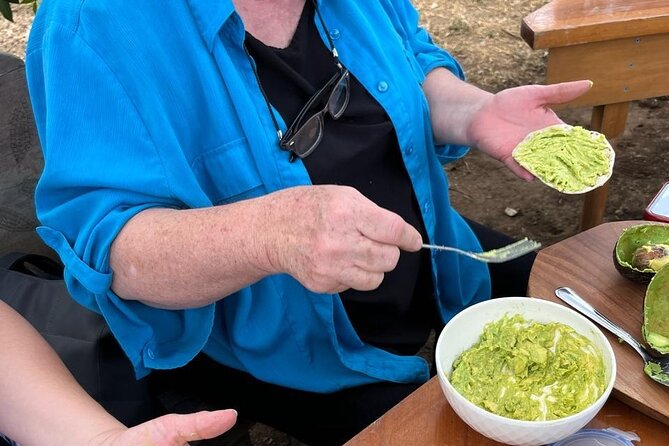
At $59 per person, this tour costs more than a simple Antigua transfer or a coffee tasting. The value comes from the number of activities packed into a short visit: transport, a guided farm walk, coffee preparation, avocado tasting, tortilla making, guacamole, honey, composting, and a look at organic farming methods.
I think the price makes the most sense if you take part in everything. If you only want to drink coffee and stroll through trees, there are cheaper ways to spend a morning. If you want a hands-on activity with food, a small group, and a local family, the package is stronger.
The maximum group size of 10 helps protect that value. You have a better chance to ask Maykol about coffee, compost, or bees without being lost in a crowd. The experience can also suit a solo visitor, since the host’s personal style helps keep the visit engaging even when you arrive alone.
Families should consider it carefully, but the signs are good. Children as young as six have taken part in roasting, grinding, tortilla making, and farm activities. The property gives children room to move and interact, though this remains a working farm rather than a dedicated playground.
Couples, food lovers, amateur gardeners, coffee drinkers, and people interested in local business will likely find the strongest fit. The tour also works well for anyone who wants to support a family-run operation rather than spend another morning in a commercial attraction.
What to bring and how to plan the morning
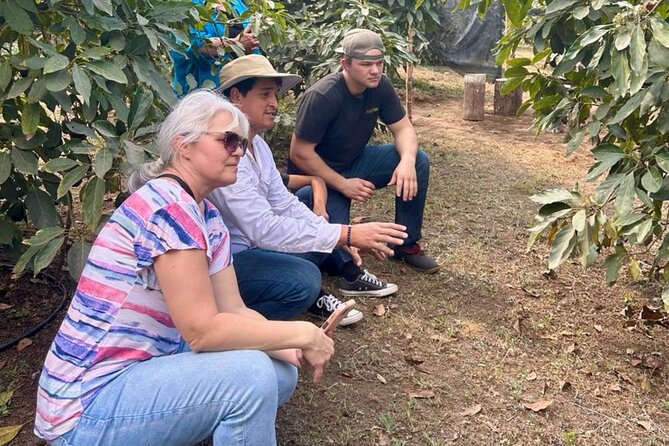
Wear shoes suitable for a walking tour on a farm. The route includes time outdoors around coffee and avocado plants, so comfortable clothing is sensible. Good weather is important, since the experience can be canceled or rescheduled if conditions are poor.
Arrive at Casa del Jade before the 9:30 a.m. start. The meeting point is specific, and the return is to the same general meeting point in Antigua. If you have a tight afternoon booking, allow some extra room beyond the advertised two to three hours.
You can cancel for a full refund if you do so at least 24 hours before the start time. Changes or cancellations made later are not accepted for a refund, and the activity may also be moved or refunded if the minimum number of participants is not reached.
It is sensible to tell the operator about questions or needs before the tour. The experience is designed for most participants, but the farm setting and walking portion may be less convenient for someone who needs a fully paved, step-free route. No special accessibility details are provided, so ask before booking if that matters to you.
Should you book Little Green Farm?
I would book this if you want Antigua to be more than churches, ruins, and cafés. The tour gives you a direct look at how a local family grows food, works with bees, manages compost, and shares its farm with visitors.
The strongest reason to go is the combination of participation and personality. You do not just hear about coffee, avocados, honey, or sustainability. You handle ingredients, prepare food, and taste the results while Maykol explains why each part matters.
Skip it if you want a formal museum-style presentation, a large meal, or a guaranteed list of seasonal farm tasks. Book it if you like small groups, practical lessons, fresh food, and a host who clearly cares about the land and his family’s work. For $59, it is a good-value morning for curious visitors who want a more personal side of Antigua.
FAQ
Where does the tour begin?
It begins at Casa del Jade, Edificio El Jaulón, 4a Calle Oriente 10, Antigua Guatemala 03001.
What time does the tour start?
The listed start time is 9:30 a.m.
Is transportation included?
Yes. Transportation is provided from the meeting point to the farm and back to the meeting point in Antigua.
How long does the experience last?
The total experience lasts approximately two to three hours. The walking portion at the farm is listed as about one hour and 30 minutes.
What food and drinks are included?
You can taste coffee and farm honey, and the experience includes avocado, guacamole when in season, and corn tortillas that you help make.
How large is the group?
The activity has a maximum of 10 participants.
Just added around the world
- Vietnamese Coffee Making Class in Hoi An★ 5.0 · 4 reviews
- Venice Delights: Coffee & Food Experience Walking Tour★ 5.0 · 2 reviews
- Yerevan: Private Coffee Tour with 2 Café Stops★ 5.0 · 2 reviews
- Vietnamese Coffee 101 Workshop★ 5.0 · 11 reviews
- Ubud: Waterfall, Holy Water Temple,Swing&coffee plantation★ 5.0 · 9 reviews
- Vancouver: Street Art & Craft Coffee Walking Tour w/ Tasting★ 4.8 · 11 reviews
- Turkish Coffee and Traditional Turkish Dessert Cooking★ 4.6 · 8 reviews
- Vienna: Guided Viennese Coffee-House Tour★ 5.0 · 2 reviews
Antigua Coffee Tours, compared.
From Antigua or Guatemala : Coffee & Culture Full-Day Tour
Read our review →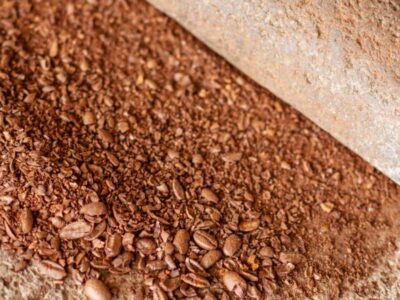
Browse the lists this tour appears in