
REVIEW · VIETNAM COFFEE TOURS
Buon Ma Thuot: Coffee Farm Tour (Bean to Brew) with Pickup
Coffee is the reason to leave town. This 90-minute visit takes you from Buon Ma Thuot’s city center to a working farm, where you can see Arabica and Robusta trees, try basic coffee-care tasks, and taste the final drink. I like the hands-on farm work and the chance to compare traditional irrigation with newer methods. I also like that the tour ends with coffee brewed by machine or filter, served black or with milk.
The main consideration is timing. Outside the coffee harvest season, you will not see harvesting or drying, although the other farm activities still run. The short format also means this is an introduction rather than a full farming course, and the driver may not speak English, so translation by phone can help.
Key points at a glance
- A real farm visit near Buon Ma Thuot: You leave the city center and reach a quiet coffee-growing area without giving up half a day.
- Arabica and Robusta together: You learn why the two varieties matter in Vietnam’s coffee country.
- Practical work with local people: Pruning, bud breaking, weeding, fertilizing, and cleaning around the tree turn a simple tour into a working lesson.
- Wet-dry processing explained: You see how coffee moves from fruit to bean and why processing affects flavor.
- A proper cup at the end: Choose black coffee or coffee with milk, brewed by machine or traditional filter.
- Good value at $25: Pickup, drop-off, guidance, farm activities, and tasting are included, with a few clear limits.
Leaving Buon Ma Thuot for coffee country
Pickup is available from your hotel in central Buon Ma Thuot, or you can meet at Buon Ma Thuot Square. The driver contacts you through your phone number or WhatsApp before departure, which is useful in a city where hotel locations can be written in several different ways.
If your accommodation is more than three kilometers from the center, you need to reach the square at least five minutes before the start. That small detail matters. It is better to arrange your meeting point before the day of the tour than to leave the driver searching for a distant hotel.
The ride to the farm is short enough to fit neatly into a morning or afternoon. James from the United States described the plantation as only a short ride from town, but far enough into the countryside to feel like a change of scene. That is the appeal here: you get a rural break without committing to a full-day excursion.
Transport is included both ways. Gabriel from Denmark also found the driver careful, friendly, and willing to adjust the return plan, including a stop near a lake and a direct ride to his homestay. Those extras should not be treated as guaranteed, but they show why it is worth communicating clearly with the driver.
The vehicle and driver are part of the practical experience. Long received special praise for being helpful, and another driver was described as smiling, responsible, and driving a clean car. English ability can vary, though. You should have a translation app ready if your driver does not speak English.
More Coffee Farm Tours in Vietnam
- Coffee Farm Tour with Roasting & Tasting Workshop – Da Lat
★ 5.0 · 126 reviews - Dalat’s countryside|Coffee Plantations Tour beyond Elephant falls
★ 5.0 · 59 reviews - Dalat Countryside Motorbike Day Tour–Coffee Farms & Pagodas
★ 5.0 · 53 reviews
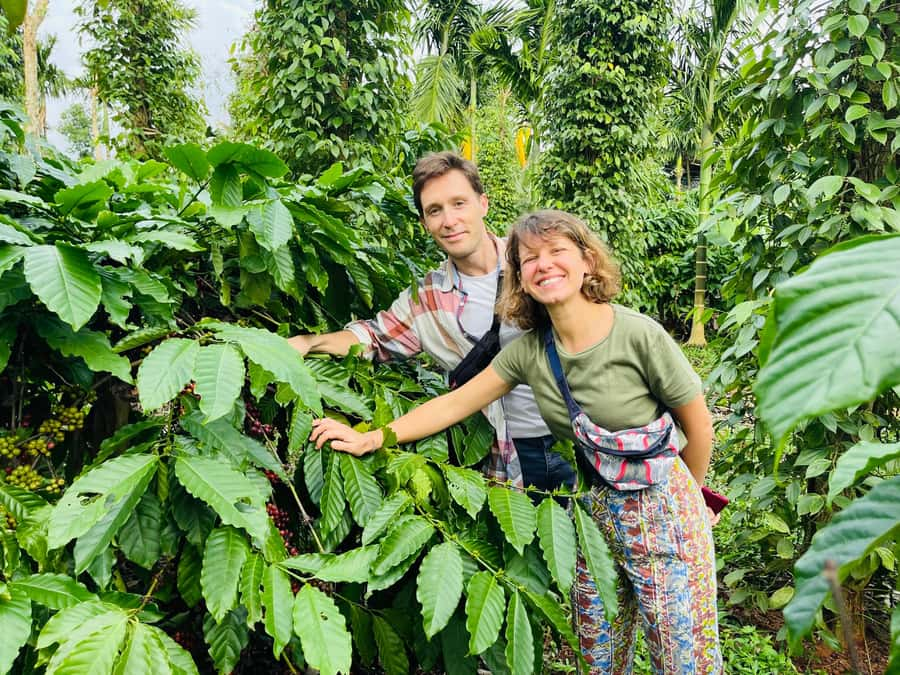
Walking among Arabica and Robusta trees
At the farm, the guide introduces you to Arabica and Robusta coffee. Buon Ma Thuot is widely known as Vietnam’s coffee center, and this visit gives that reputation a physical setting: coffee trees, farm paths, irrigation equipment, and the work needed between one harvest and the next.
The guide explains the coffee garden while you walk through it. The setting is described as calm and attractive, with flowers and open countryside adding to the visit. Lynsey from the United Kingdom especially enjoyed the farm’s setting at sunset, while Anja from Germany spent extra time drinking coffee among the flower fields after the main tour.
The two coffee varieties give the guide a useful way to explain differences in farming and taste. You are not simply handed a cup and told that local coffee is good. You see the plants first, then follow the process toward the finished drink.
The tour is especially useful if you normally experience coffee only at a café. A café shows you the final product. This farm visit shows you the work behind it, from maintaining the tree to caring for the soil and managing water.
Trying the work: pruning, weeding, and feeding the trees
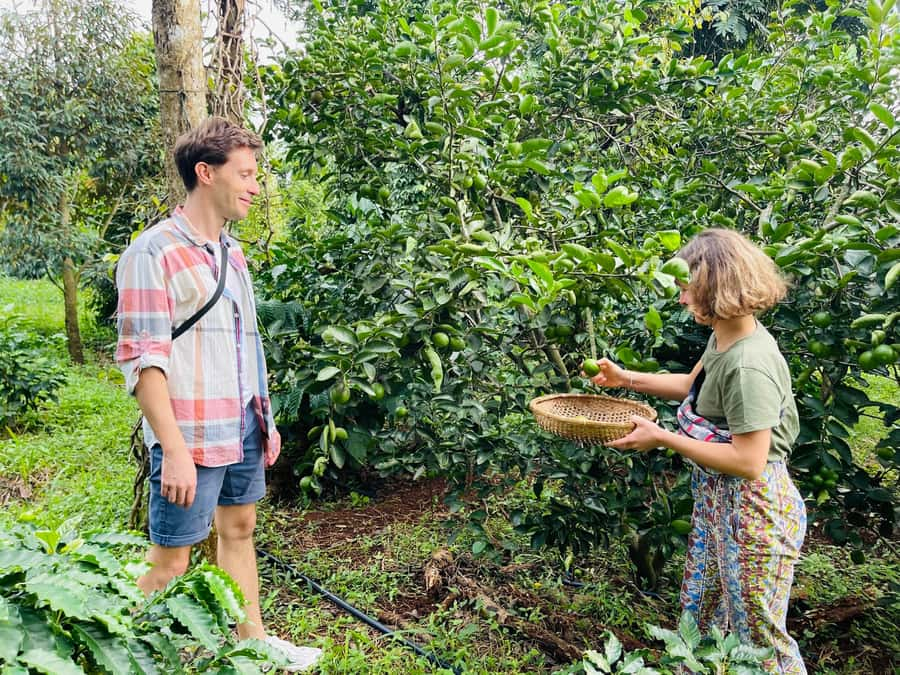
One of the strongest parts of the experience is the chance to take part in ordinary coffee-care tasks. Under guidance from local people, you may help with pruning, bud breaking, proper weeding, seasonal fertilization, and cleaning the basin around each coffee tree.
These jobs may sound modest, but they explain why coffee farming is not simply a matter of planting trees and waiting for beans. The condition of the tree, the soil around it, and the timing of farm work all affect the crop. You get a better sense of the steady labor required before a coffee cherry ever reaches a processing area.
The cleaning of the tree basin is particularly helpful as a teaching point. It connects the plant to water, fertilizer, weeds, and soil care in a way that is easy to understand while standing beside the tree. The work is simple enough for a short activity, but it gives the tour a stronger local connection than a walk with only a spoken explanation.
The guide may also compare organic and conventional farming. This is not presented as a separate lecture, but as part of the discussion about fertilizer, weeds, and farm management. If you are interested in sustainability, ask questions here. The activity directly supports local businesses in Buon Ma Thuot, and the tour gives you a clearer idea of what responsible coffee production involves.
Still, keep your expectations sensible. This is a 90-minute introduction. You will try selected tasks, not spend a full day working through every stage of the farming calendar.
Traditional irrigation and the importance of water
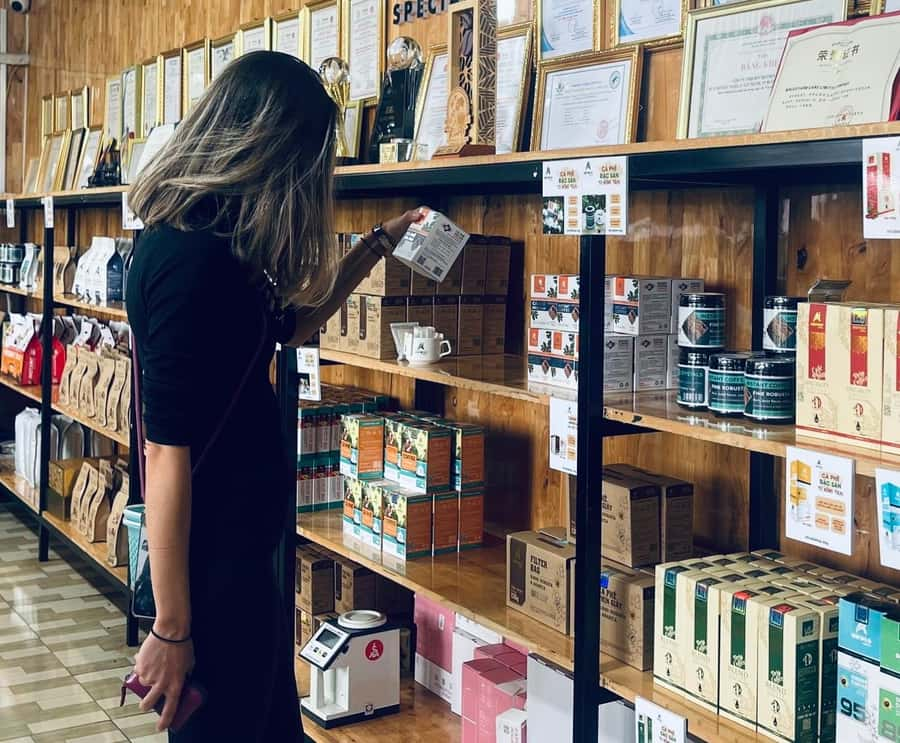
The farm visit also includes an introduction to traditional irrigation systems, with instructions for operating them. You learn how irrigation works and why newer irrigation technology can benefit coffee farming.
This part adds useful context because water management is easy to overlook when you are focused on tasting coffee. The health of the trees depends on more than sun and soil. Farmers must also provide water in a practical and timely way.
The traditional system gives you something physical to understand. Instead of hearing only about irrigation in theory, you receive instructions on how it operates. The guide then explains the benefits of irrigation technology, giving you a basic comparison between established local methods and newer approaches.
The information supplied for this tour does not promise a large demonstration or a long technical session. Think of irrigation as one focused part of the farm tour. If water use is a major interest for you, ask the guide to spend extra time on it when possible.
More Specialty Coffee Tours in Vietnam
- Experience specialty coffee with sustainable coffee farmers
★ 4.9 · 91 reviews - Vietnamese Bread & Brew: Banh Mi Baking Class & Specialty Coffee
★ 5.0 · 76 reviews - Buon Ma Thuot: Bean to Brew Coffee Farm Tour with Tasting
★ 4.3 · 11 reviews - Ho Chi Minh City: Vietnamese Specialty Coffee Journey
★ 5.0 · 4 reviews
From coffee fruit to processed bean
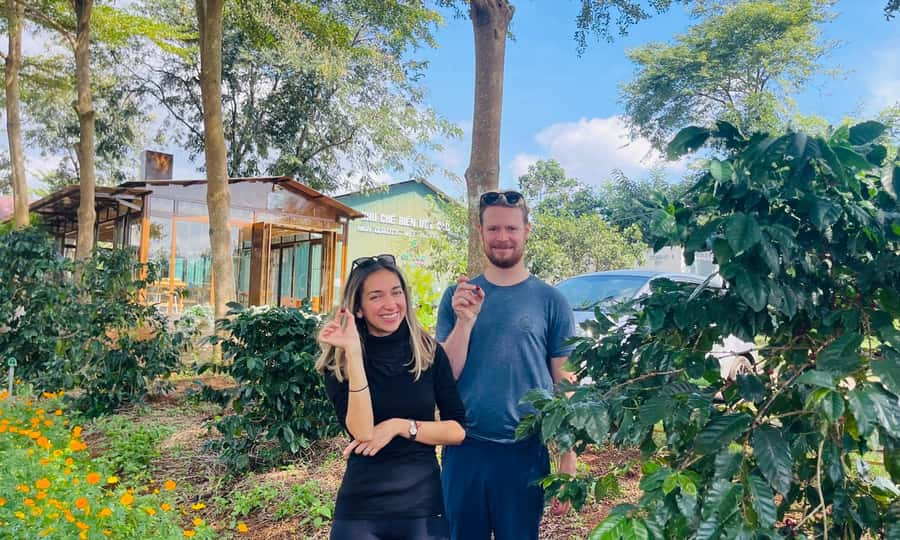
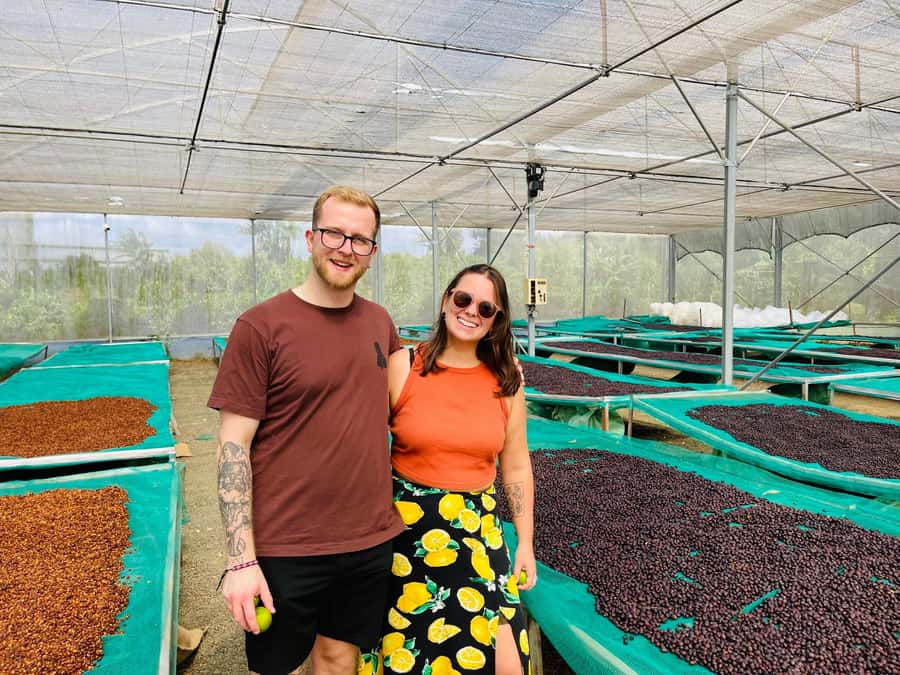
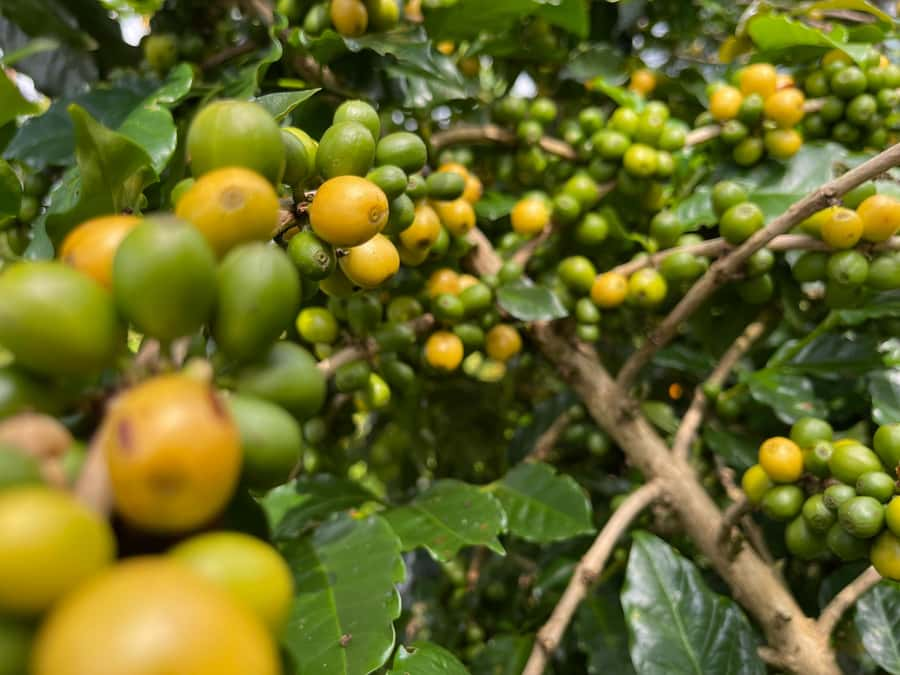
The processing lesson follows the coffee from the farm toward the cup. You learn about a wet-dry method used to produce flavorful specialty coffee, including the steps that affect the beans after they leave the tree.
This is where the visit becomes more than a pleasant farm walk. Coffee quality is shaped by processing as well as growing conditions. The tour connects the work in the garden with what happens afterward, helping you understand why two coffees can taste different even when they come from the same broad region.
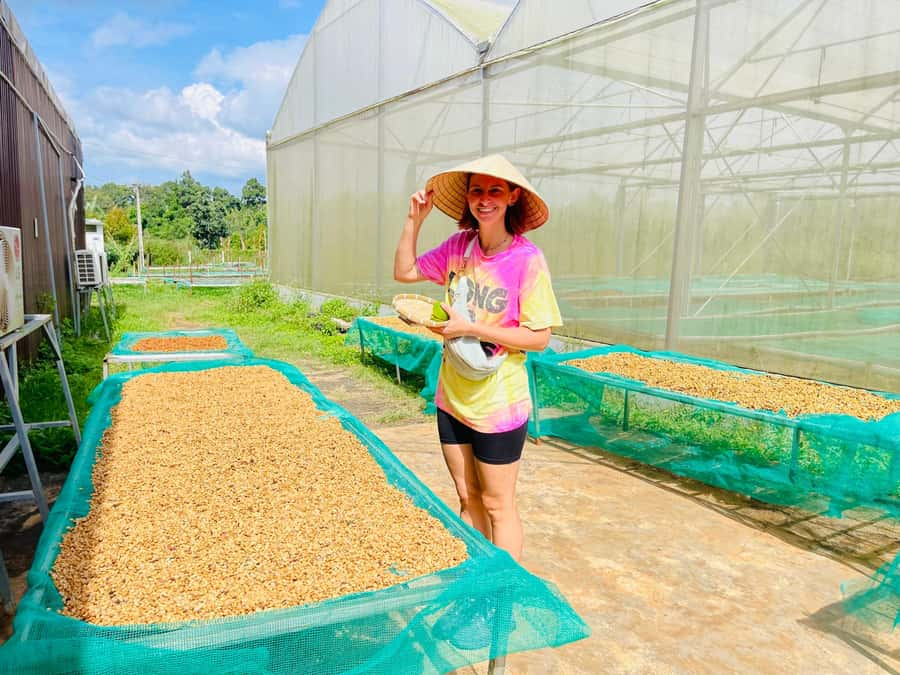
Harvesting and drying are seasonal activities. If you visit outside the harvest period, those parts will not take place. You will still receive the farm tour, coffee-care activities, irrigation information, processing explanation, and tasting, but you should not book the experience expecting to pick coffee cherries at any time of year.
For many people, that seasonal limitation is minor. The care and processing lessons remain relevant year-round. For others, seeing harvest work is the main reason to visit a coffee farm. If that is your priority, confirm the timing before booking.
The final cup: filter, machine, black, or milk
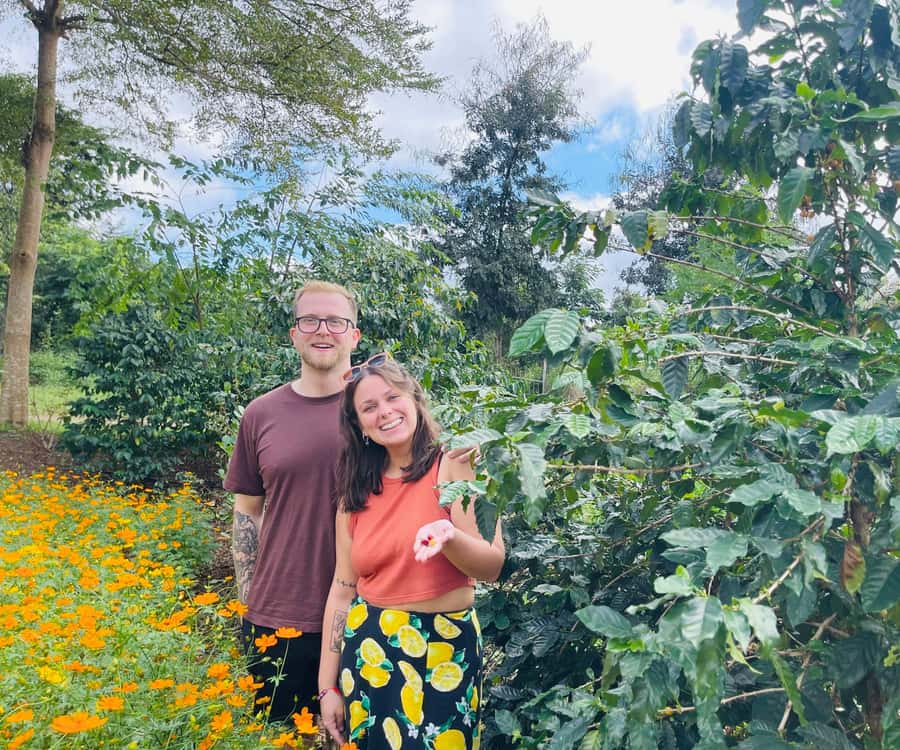
The reward at the end is a tasting of specialty coffee. You can have it black or with milk, prepared by machine or filter. That choice makes the tasting approachable for different preferences, though black coffee is the better option if you want to focus on the bean’s character.
The aroma and flavor are linked to the Central Highlands setting, including the local sun, wind, and mountain environment. The language used to describe the coffee is enthusiastic, but the useful point is simpler: you taste the finished drink immediately after learning how it is farmed and processed.
Lynsey ordered coffee tasters to take home and was impressed by the quality. Packaged coffee is not included, so any coffee you buy is a personal expense. That is worth remembering if you want souvenirs. You can taste first, then decide what to purchase rather than buying an unfamiliar bag in town.
Anja also found specialty coffees to bring home, and the flower-field setting added time to enjoy the drink after the formal tour. The farm appears to be as much a place to slow down with a cup as it is a place for technical instruction.
The coffee service may be the most memorable part for casual visitors. You do not need to be an expert to enjoy it, and you still gain something from the tasting even if you skip the more technical details.
What the $25 price really covers
At $25 per person, the value is good if you want transport and a guided farm activity without arranging separate taxis. The price covers hotel pickup and drop-off within the stated central area, expert guidance on farming and processing, the specialty coffee tasting, and the costs listed in the plan.
You are paying for access to a working coffee setting, not just a café drink. The hands-on tasks and irrigation lesson give the visit more substance than a standard tasting. For a short break from Buon Ma Thuot, the combination is practical.
The limits are clear. Personal expenses are not included, and packaged coffee costs extra. A 90-minute duration also means the tour cannot cover every stage in great detail. If you want a larger plantation visit, several tasting flights, or a full meal, this is not that kind of outing.
The experience has a 4.6 rating from 24 reviews, with repeated praise for the farm setting, friendly staff, clear English from guide Ngan, and flexible pickup arrangements. I would treat the rating as a useful sign of consistency, while still keeping the language issue and seasonal harvest limitation in mind.
Who will enjoy this short farm experience
I would choose this tour if you want a compact, local activity between sightseeing plans. It suits coffee drinkers, curious families, first-time visitors to Central Vietnam, and anyone who wants to see more than the city center.
It is also a good match for people who like learning by doing. You do not just listen to a talk. You handle basic coffee-care work, receive instructions on irrigation, follow the processing story, and finish with a cup.
It may be less suitable if you want a long agricultural program or a guaranteed harvest experience. The tour does not promise harvesting outside the season, and the short duration leaves little room for a broad trip around the region.
The visit is wheelchair accessible, and instruction is available in English and Vietnamese. Pickup is included around central Buon Ma Thuot, while people staying farther out need to use the square meeting point.
Alcohol, drugs, and making fires are not allowed. Those rules are simple, but they matter on a working farm.
Should you book the Buon Ma Thuot coffee farm tour?
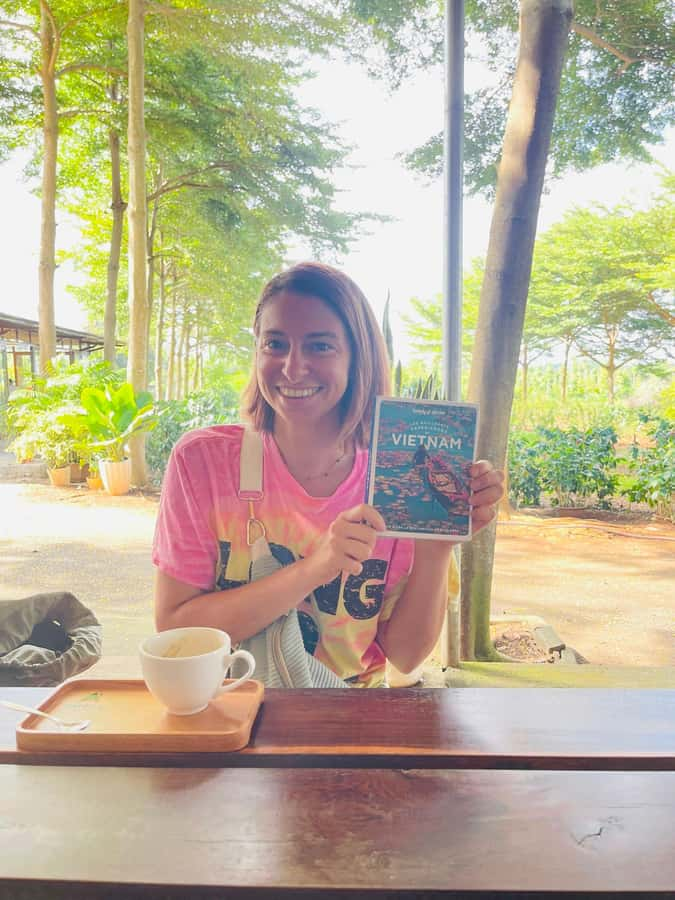
I would book it if you have a spare 90 minutes and want a useful taste of why Buon Ma Thuot is Vietnam’s coffee capital. The best reasons are the hands-on coffee care, the explanation of wet-dry processing, the irrigation lesson, and the fresh tasting at the end.
Book with the season in mind. If you visit during harvest, you may see harvesting and drying. Outside that period, you still get a worthwhile farm lesson, but not the full bean-picking experience.
At $25, included transport makes this an easy choice for most visitors staying in central Buon Ma Thuot. Bring a translation app for the driver if needed, ask about current harvest conditions, and leave room in your budget for packaged coffee. If you want a friendly, practical introduction rather than a long plantation expedition, this is a solid pick.
FAQ
Where does the Buon Ma Thuot coffee tour start?
You can be picked up from your hotel in central Buon Ma Thuot or meet at Buon Ma Thuot Square.
How long does the experience last?
The scheduled duration is 90 minutes. One participant reported that the complete outing took between one and a half and two hours, depending on the arrangements.
Is hotel pickup included?
Yes. Hotel pickup and drop-off are included for locations around central Buon Ma Thuot.
What if my hotel is more than three kilometers from the city center?
You need to go to Buon Ma Thuot Square and arrive at least five minutes before departure.
How will the driver contact me?
The driver will contact you using the phone number or WhatsApp number provided for the booking.
What languages are available?
Instruction is available in English and Vietnamese. Driver communication may vary, so a translation app can be useful.
Will I see coffee harvesting?
You will see harvesting and drying only if you visit during the coffee harvest season. Other scheduled activities continue outside the harvest period.
What coffee activities will I try?
You may take part in pruning, bud breaking, weeding, seasonal fertilization, and cleaning the basin around coffee trees.
What can I drink at the end?
You can choose black coffee or coffee with milk. It may be brewed by machine or with a filter.
Is packaged coffee included?
No. Packaged coffee for sale is not included, and any purchase is a personal expense.
Just added around Vietnam
- Vietnamese Coffee Making Class in Hoi An★ 5.0 · 4 reviews
- Vietnamese Coffee 101 Workshop★ 5.0 · 11 reviews
- Hoi An Vietnamese Coffee Workshop: Hands-On Brewing Class★ 5.0 · 3 reviews
- Vietnamese Egg Coffee Making Course in Hoi An★ 3.5 · 2 reviews
- Hoi An Coffee Tasting And Old Town Discovering Tour★ 5.0 · 4 reviews
- Hoi An Coffee Making Workshop★ 5.0 · 7 reviews
- Authentic Vietnamese Coffee Making Experience in Hoi An★ 5.0 · 13 reviews
- Farming- Market- Lantern making- Coffee- Cooking (JHA4)★ 5.0 · 4 reviews
Vietnam Coffee Tours, compared.
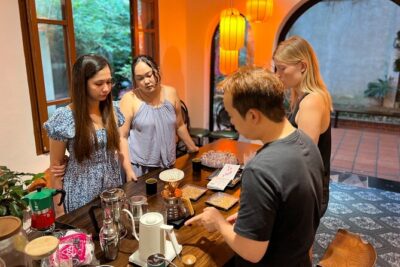
Hanoi Coffee Experience: 6 Brews, 9 Recipes & 3 Liquor Tastings
Read our review →
Hanoi Coffee Workshop: Taste Salt, Coconut and Egg Coffee
Read our review →
Salt Coffee Workshop Awake Your Senses With 6 Brews
Read our review →

Master the Art of 4-6 Signature Vietnameses Coffees
Read our review →
Egg coffee & Course on 4 traditional types of Viet coffee
Read our review →
Da Nang Cooking Class with Coffee Tasting and Market Visit
Read our review →Browse the lists this tour appears in