

REVIEW · HOI AN COFFEE TOURS
Experience Making & Tasting Vietnamese Coffee in Hoi An
Coffee can be a small window into Vietnam. This two-hour workshop in Hoi An goes beyond drinking a sweet cup at a café: you learn how Robusta and Arabica differ, watch coffee roasting, and prepare four local styles yourself. I especially like the hands-on format and the chance to taste egg coffee, coconut coffee, traditional phin coffee, and espresso in one sitting.
I also like the small group limit of 10 people and the workshop’s social purpose. The class is connected with a charity, and disabled staff help explain the process with demonstrations and boards. The main consideration is simple: you must make your own way to Sua Vegan Restaurant, and the class ends at that same meeting point.
Key points to know before booking

- Four coffees in about two hours: You prepare and taste phin, egg, coconut, and espresso coffee.
- Egg coffee has a Hoi An connection: The drink is presented as having been invented here in 1946.
- Small group size: A maximum of 10 participants should allow room for questions and practical work.
- Coffee education comes first: You learn about Vietnam’s coffee industry, Robusta, Arabica, and roasting.
- A thoughtful local touch: Welcome tea, seasonal fruit, and a lantern souvenir are included.
- Easy but independent meeting point: The workshop begins and ends at Sua Vegan Restaurant, with no hotel transfers.
Starting at Sua Vegan Restaurant in Hoi An
Your meeting point is Sua Vegan Restaurant on Đường Lê Hồng Phong Nối Dài, in Cẩm Phổ, Hoi An. The experience begins and ends here, so you do not need to arrange a second pickup location or worry about finding a final drop-off point.
There is no hotel pickup or return transport. I would allow extra time to reach the restaurant, especially if you are coming from another part of Hoi An. The activity is near public transportation, and a mobile ticket is accepted, which keeps the arrival process fairly simple.
The group is limited to 10 people. That matters in a coffee workshop. You are not just watching a guide prepare drinks at the front of a room. You need enough space to handle equipment, follow each step, and ask why one coffee is prepared differently from another.
The setting also has a charitable purpose. The class is explained and demonstrated by disabled staff, using boards and practical instruction. That gives the session a human side beyond the coffee itself. You are paying for a class, but your visit also supports a place where staff can share their skills and work directly with visitors.
More Coffee Tastings in Vietnam
- Hoi An Coffee Tasting And Old Town Discovering Tour
★ 5.0 · 4 reviews - Hanoi Coffee Experience: 6 Brews, 9 Recipes & 3 Liquor Tastings
★ 5.0 · 2,945 reviews - Da Nang Cooking Class with Coffee Tasting and Market Visit
★ 5.0 · 310 reviews
Welcome tea and the story of Vietnamese coffee
The class begins with welcome tea, a gentle way to settle in before the coffee starts. The introduction then turns to Vietnam’s coffee industry and its development.
This part is useful because Vietnamese coffee is often reduced to a strong drink with condensed milk. There is more to it. The class gives you context for the ingredients, preparation methods, and coffee types you will use later.
You are also introduced to the story of egg coffee. The drink is presented as a Hoi An invention from 1946, and it remains one of the most unusual coffee styles associated with Vietnam. Its appeal comes from the contrast between bold coffee and a creamy egg mixture. You will not simply order it from a menu. You will learn how it is made and taste the result while the method is still fresh in your mind.
I like this approach because it links the drink to place and time. Hoi An is not just a backdrop for a cooking-style activity. The coffee itself becomes part of your understanding of the city.
The opening talk may be less exciting for children who only want to start mixing ingredients. Still, it helps explain why four cups can look and taste so different even when coffee is the common base.
Learning the difference between Robusta and Arabica
A central part of the class is learning how to distinguish Vietnam’s two main coffee types, Robusta and Arabica. This is a practical lesson rather than a tasting of a single finished drink.
You learn that coffee is not one uniform product. The beans differ, and those differences affect the cup. The workshop gives you a basic vocabulary for noticing taste and strength instead of treating every dark coffee as the same.
Vietnam is strongly associated with Robusta, while Arabica is known around the world as another major coffee type. The class lets you compare the two in a direct way. That is useful later when you drink the phin coffee, espresso, coconut coffee, and egg coffee.
I would pay close attention here, even if you already drink coffee at home. The lesson can help you understand why Vietnamese coffee often feels intense and why sweet or creamy additions work so well with it.
The class does not promise a professional barista qualification, and it is not meant to replace a serious coffee course. Its strength is accessibility. You get enough information to make sense of the drinks without being buried under technical language.
Watching the beans roast before making coffee
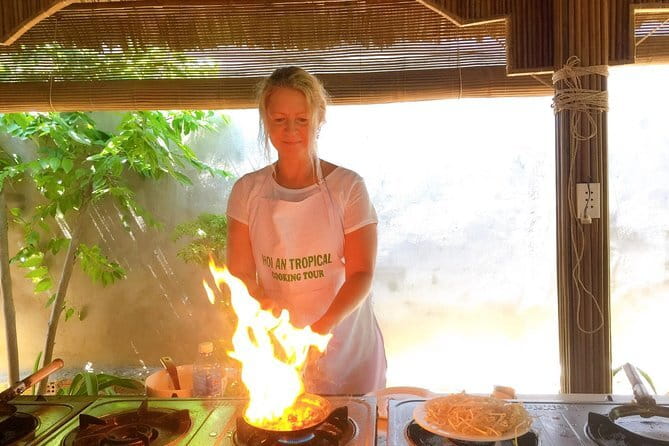
The roasting demonstration adds a stage that many casual coffee tastings skip. You watch the coffee roasting process before moving on to preparation.
That order makes sense. Roasting changes the beans from a raw agricultural product into something ready to grind and brew. Seeing the process helps you understand that flavor is shaped before the coffee reaches the filter or cup.
This is a demonstration, not necessarily a chance for you to operate the roasting equipment yourself. If you are booking because you want a full professional roasting lesson, keep your expectations modest. The main hands-on work comes when you prepare the four drinks.
Still, watching the roasting gives the class a clear rhythm. First comes the background, then the beans, then the brewing. It also breaks up the tasting with something visual and active.
For anyone interested in coffee culture, this may be one of the most valuable parts. You are not only learning a recipe. You are seeing one step in the chain that leads from bean to drink.
More Vietnamese Coffee Experiences in Hoi An:
- Hoi An: Hands-on Vietnamese Coffee Making Class with Long
★ 4.8 · 66 reviews - Hoi An: Vietnamese Coffee Making Course
★ 4.9 · 25 reviews - Authentic Vietnamese Coffee Making Experience in Hoi An
★ 5.0 · 13 reviews - Hoi An: Hand-on Making Vietnamese Coffee Class & Culture
★ 4.7 · 9 reviews
Making traditional phin coffee
The first signature drink is cà phê phin, the traditional Vietnamese drip coffee. A phin is a small brewing filter placed over a cup. Coffee drips slowly through it, producing a strong serving that is usually enjoyed at an unhurried pace.
The workshop supplies the equipment and ingredients, so you do not need to bring anything apart from your curiosity. The practical value is clear: once you understand the method, you can recognize it in cafés across Vietnam.
The phin coffee is also a useful baseline for the rest of the class. It lets you taste the coffee in a more direct form before it is changed by coconut, egg, or an espresso machine.
Watch the pace of the drip. It is slower than pressing a button on a modern coffee maker, and that is part of the point. Vietnamese coffee encourages you to wait, watch, and let the cup form gradually.
If you are used to light coffee, the traditional cup may taste powerful. That is not a fault, but it is worth knowing. The class is a good place to try it because you can compare it with the other preparations immediately.
Preparing Hoi An egg coffee
Cà phê trứng, or egg coffee, is the signature drink of the experience. It is also the drink most closely tied to the local story, since the class presents it as having been invented in Hoi An in 1946.
The method creates a creamy topping for strong coffee. You learn the process rather than receiving a finished glass, so you can see how the texture develops and how the ingredients work together.
Egg coffee may sound strange if you have never tried it. In practice, the attraction is the contrast between a dessert-like top and the darker coffee below. It is closer to a small sweet treat than a plain morning brew.
I would suggest tasting it slowly. The first sip may give you cream, sweetness, and coffee all at once. Stirring may change the balance, so you can compare the layers and decide which style you prefer.
This is also where the class feels most distinctive. You can find coffee everywhere in Hoi An, but learning to make the city’s special egg coffee gives the drink a stronger connection to your visit.
Mixing coconut coffee and making espresso
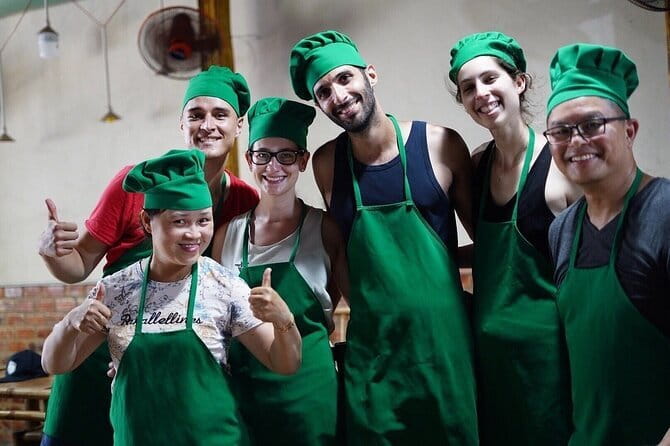
Cà phê dừa, or coconut coffee, brings a cooler, sweeter style to the table. Coconut changes the body and flavor of the drink, making it different from the darker phin preparation and the creamy egg version.
The class lets you make and taste this coffee yourself. That is useful because coconut coffee can be very different from what you expect depending on how it is blended and served. The workshop gives you a direct comparison rather than asking you to rely on a menu description.
You also prepare cà phê espresso. This makes the class broader than a lesson focused only on traditional Vietnamese methods. Espresso introduces a more familiar café style and gives you another way to think about strength, texture, and extraction.
The four drinks create a useful tasting sequence:
- Phin coffee shows the traditional drip method.
- Egg coffee adds a creamy, sweet topping.
- Coconut coffee changes the drink with a tropical ingredient.
- Espresso brings in a machine-made style.
You may have a favorite by the end, but the real value is the comparison. One cup alone can seem unusual. Four cups reveal how preparation and added ingredients shape the result.
Because the duration is about two hours, the class has enough time for making, tasting, and explanation without becoming an all-day commitment. Coffee-heavy activities can become tiring, so the fruit served during the session is a welcome balance.
Seasonal fruit and a lantern to take home
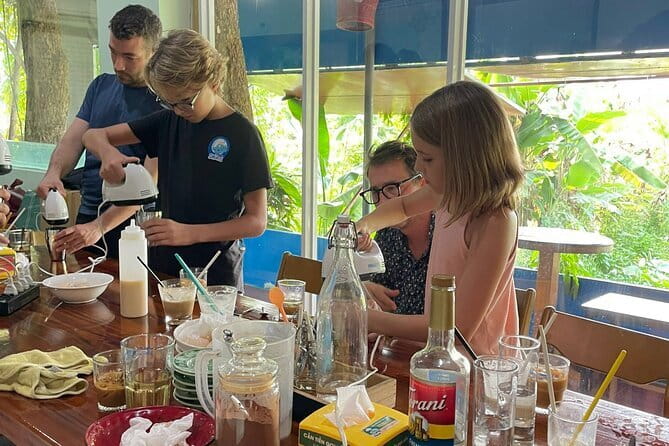
Seasonal fruit is included alongside the coffee. This is a small detail, but it improves the pacing of the workshop. Sweet coffee, egg mixtures, coconut, and espresso can be a lot in one sitting, and fruit offers a fresher break.
You also receive a lantern souvenir. It is a fitting memento from Hoi An, a town strongly associated with lanterns, and it is more personal than leaving with only a printed recipe.
The souvenir does not make the class better on its own. What matters is that it gives the experience a local finish. You make the drinks, share the tasting, and take home a small reminder of the afternoon or morning.
What the $30 price gives you
At $30 per person, this is not the cheapest way to drink coffee in Hoi An. You can buy a cup at a local café for far less. The price needs to be judged as the cost of a guided activity, not as the cost of four beverages.
You receive a welcome tea, coffee instruction, a roasting demonstration, all ingredients and equipment, four coffee preparations, seasonal fruit, and a lantern souvenir. You also have a coffee specialist leading the session and a small group capped at 10 people.
I see the strongest value in the participation. You are paying to learn methods you can recognize and perhaps repeat, not only to sample drinks. The charitable connection adds another reason to choose the workshop if you want your spending to support a local social purpose.
The value is less convincing if you dislike coffee, cannot tolerate strong or sweet drinks, or want a broad Vietnamese cooking class. This is a focused coffee experience. Its subject is narrow, even though the four styles provide variety.
Who should book this coffee workshop?
I would recommend it to coffee drinkers, curious first-time visitors, and anyone who wants a short activity between Hoi An sightseeing plans. The two-hour length works well when you want something structured but do not want to surrender an entire day.
It also suits people who prefer small-group activities. With no more than 10 participants, you should have a better chance to follow the demonstrations and take part directly than in a large class.
Families may find the making process engaging, though the experience is centered on coffee and includes several drinks. The workshop is also a good choice if you want a meaningful souvenir and a social experience connected to local staff.
I would be more cautious if you need hotel transportation. You must reach the restaurant yourself, and the tour does not include pickup or drop-off. Service animals are allowed, and the meeting point is near public transportation, but the supplied information does not specify the exact facilities inside the restaurant.
The experience has a strong cultural and charitable angle, too. The staff’s use of demonstration boards and practical instruction means the class is not only about polished coffee presentation. You are taking part in a workplace where disabled people explain and share their skills.
Booking, timing, and cancellation advice
Your confirmation is provided at the time of booking, and the ticket is mobile. The activity returns to the same meeting point at Sua Vegan Restaurant.
Free cancellation is available when you cancel at least 24 hours before the start time. A cancellation made less than 24 hours before the start time is not refundable, and changes inside that period are not accepted. The cut-off follows Hoi An local time, so check the start time carefully if you are arranging several activities.
The provider is DN Tour. Since the group limit is 10 people, booking ahead is sensible if your Hoi An schedule is fixed.
Should you book it?
Book this workshop if you want more than a quick coffee stop. You will learn the difference between Robusta and Arabica, watch roasting, prepare four distinct drinks, and taste the results in a small group.
The strongest reasons to go are the egg coffee lesson, the practical phin demonstration, and the charitable setting where disabled staff help lead the instruction. The main drawbacks are the lack of hotel transport and the fact that coffee takes up the whole activity.
For $30, I think the experience offers fair value for coffee lovers and curious food-minded visitors. If you only want a cheap cup, use a café. If you want to understand why Vietnamese coffee is prepared in so many different ways, make the trip to Sua Vegan Restaurant and take your time with the tasting.
FAQ
How long does the Vietnamese coffee workshop last?
The experience lasts approximately two hours.
Where does the workshop begin and end?
It begins at Sua Vegan Restaurant Hoi An on Đường Lê Hồng Phong Nối Dài, Cẩm Phổ, Hoi An, Quảng Nam 560000, Vietnam. The activity ends back at the same meeting point.
Which Vietnamese coffees will I make?
You will make and taste four types: traditional cà phê phin, cà phê trứng or egg coffee, cà phê dừa or coconut coffee, and espresso coffee.
Is hotel pickup included?
No. Hotel pickup and drop-off are not included. You need to reach the meeting point yourself.
How many people can join the workshop?
The activity has a maximum of 10 participants.
Can I cancel for a full refund?
Yes, if you cancel at least 24 hours before the experience start time. Cancellations or changes made less than 24 hours before the start time are not accepted for a refund.
More Food and Drink Tours in Hoi An
- Vienna for Food Lovers: Cafés, Markets & Austrian Cuisine
★ 5.0 · 1,063 reviews - Hanoi: Vietnamese Street Food Tour with Egg Coffee
★ 4.9 · 315 reviews - Hungry in Vienna? A Food Lover’s Coffee & Market Walk
★ 4.9 · 276 reviews - Poás Volcano and Coffee Tour with Tasting and La Paz Falls
★ 4.0 · 137 reviews
More Coffee Tastings in Hoi An
- Medellin: Coffee Tour with Transport, Snacks and Tastings
★ 4.7 · 1,357 reviews - Seattle Coffee Tour: Capitol Hill Cafes, Tastings & Local Stories
★ 5.0 · 489 reviews - Buggy Ride Into the jungle with cave coffee & chocolate tasting
★ 5.0 · 465 reviews - Private Walking Tour, Food Tasting and Bosnian Coffee in Sarajevo
★ 5.0 · 255 reviews
Just added around Hoi An
- Vietnamese Coffee Making Class in Hoi An★ 5.0 · 4 reviews
- Hoi An Vietnamese Coffee Workshop: Hands-On Brewing Class★ 5.0 · 3 reviews
- Vietnamese Egg Coffee Making Course in Hoi An★ 3.5 · 2 reviews
- Hoi An Coffee Tasting And Old Town Discovering Tour★ 5.0 · 4 reviews
- Hoi An Coffee Making Workshop★ 5.0 · 7 reviews
- Authentic Vietnamese Coffee Making Experience in Hoi An★ 5.0 · 13 reviews
- Farming- Market- Lantern making- Coffee- Cooking (JHA4)★ 5.0 · 4 reviews
- Coffee Making and Banh Mi Class Hoi An★ 5.0 · 5 reviews
Hoi An Coffee Tours, compared.
Hands-on Vietnamese Coffee Making Class with Long
Read our review →
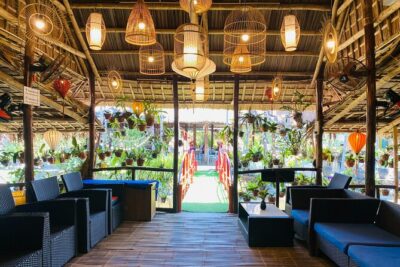
Coffee Class & Basket Boat Experience or Lantern Class -optional
Read our review →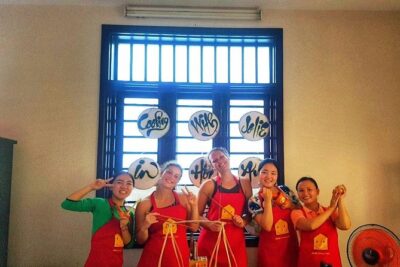

Hoi An Buffaloes Riding/Coracle Boat Tour/Coffee Class with Lunch
Read our review →
Authentic Vietnamese Coffee Making Experience in Hoi An
Read our review →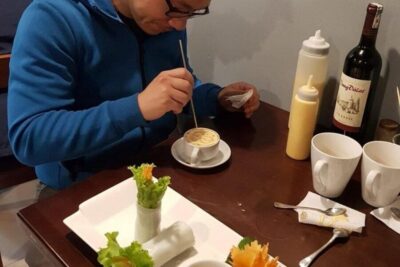
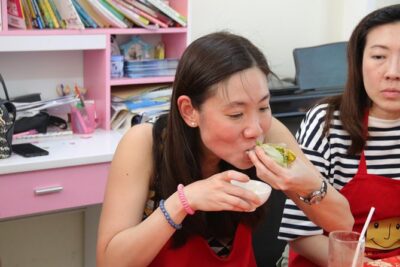
Browse the lists this tour appears in