
REVIEW · BUDAPEST COFFEE TOURS
Castle District tour with Matthias Church Ticket & Cake & Coffee
Budapest’s best views come with a side of royal drama. This 2.5-hour Castle District walk brings you to Fisherman’s Bastion, Buda Castle, and Matthias Church, then adds something refreshingly simple: cake and coffee at a local bakery. I like the small group, capped at 15 people, and the chance to focus on Buda while many city tours center on Pest. I also like that guides such as Fanni and Laszlo bring clear explanations and humor to the route.
The main drawback is the price: $120.93 per person is a serious sum for a short walking tour, especially since several sights are viewed from outside. The included church ticket, local snack, maps, and personal guidance help, but you should book this for the stories and structure, not just for the monuments.
Key points to know before you book
- Fisherman’s Bastion provides the big Budapest views, with free admission to the main lookout areas.
- The Matthias Church ticket is the tour’s main included sight, giving you time inside one of Castle Hill’s finest buildings.
- The group has a maximum of 15 people, a useful middle ground between a private guide and a large city tour.
- Cake and coffee at a local café add a pleasant Hungarian pause to the sightseeing.
- The route covers both royal and civic landmarks, from Buda Castle and Matthias Fountain to Sándor Palace.
- The tour starts and ends at the Castle Hill Funicular, at Clark Ádám tér near the Chain Bridge.
Why Castle Hill works well as a focused half-day tour
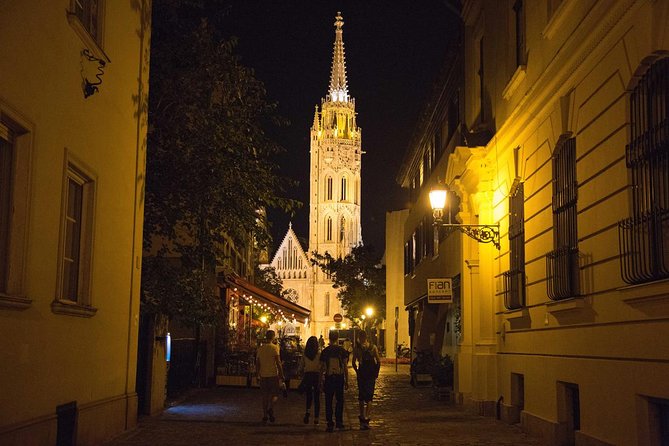
Buda’s Castle District is compact on a map, but it is packed with layers. Medieval kings, Habsburg power, presidents, plague memorials, grand viewpoints, and ornate church interiors all meet on the hill. A guide helps you connect those pieces instead of treating the area as a string of pretty photo stops.
This tour lasts about two and a half hours. That is long enough to get a useful introduction without consuming your entire day in Budapest. You will not see every room or museum in the district, but you will get a guided look at its main public sights and have time for one important interior visit.
I especially like the decision to keep the group small. With no more than 15 people, it should be easier to hear the guide in open squares and gather around a monument without losing half the group. It is not the intimacy of a private tour, but it is far more manageable than a big coach excursion.
The tour is offered in English. It runs in all weather, so bring suitable clothing and shoes. Castle Hill is an outdoor setting, and the experience depends on walking between sights, even if the route is not presented as a strenuous hike.
More Dessert Tours in the world:
- Award Winning Farm Tour: Coffee, Chocolate and Unique Gifts
★ 5.0 · 484 reviews - Vienna Coffee, Cake & Pastries Tour with Local Stories
★ 5.0 · 470 reviews - Buggy Ride Into the jungle with cave coffee & chocolate tasting
★ 5.0 · 465 reviews
Meeting at the funicular below Buda Castle
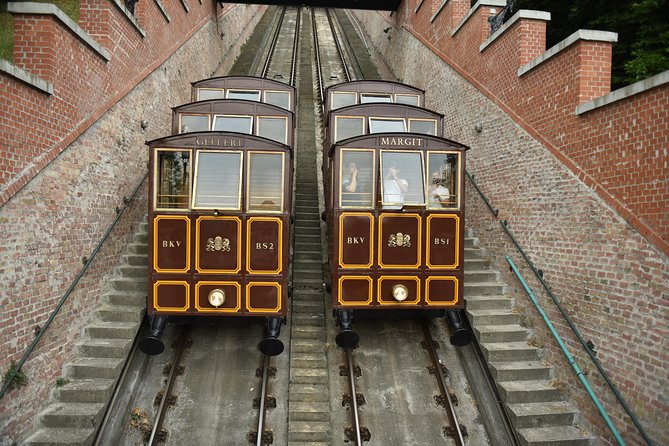
The meeting point is Budapest Castle Hill Funicular at Clark Ádám tér, 1013 Budapest. This places you at river level, near the Széchenyi Chain Bridge and the lower station of the historic funicular.
The funicular links Adam Clark Square with the castle area above. The supplied route includes the Budapest Castle Hill Funicular, but no separate ride time or ticket inclusion is specified. I would treat the funicular as a useful orientation point and meeting landmark, not assume that a funicular ride is part of the paid package unless the operator confirms it.
Starting here gives the tour a clear sense of place. You begin beside the Danube, then move toward the hilltop district where the main sights are gathered. The activity ends back at the same meeting point, which makes it easier to plan a later river walk, Chain Bridge crossing, or onward public transport.
Because the tour returns to the start, avoid scheduling a tight appointment immediately afterward. The duration is approximate, and outdoor walking tours can run slightly long when a guide is answering questions or managing a group.
Fisherman’s Bastion and Budapest’s famous panorama
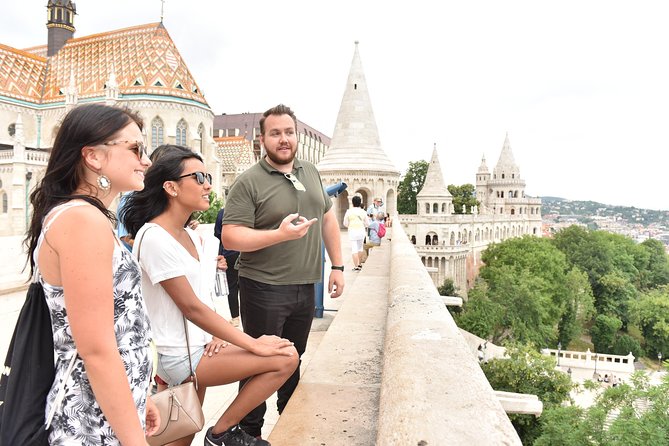
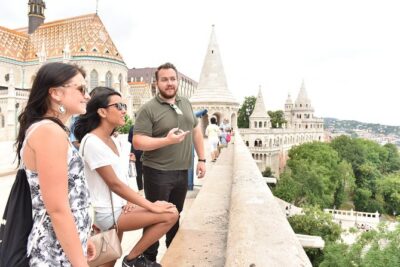
The first listed stop is Fisherman’s Bastion, known in Hungarian as Halászbástya. Its Neo-Romanesque terraces are among the most recognizable features of Castle Hill, and the view over Budapest is the main reason to come.
The stop lasts about 15 minutes, with free admission noted. That is enough for an introduction and a look from the public terraces, but it is not a long photography session. If you want extensive time at the parapets, you may need to return on your own later.
This is a strong opening stop because the panorama gives you a quick visual map of the city. From above, Budapest’s river, bridges, and opposite bank make more sense. Your guide can point out the relationship between Buda’s hilltop position and Pest’s flatter urban side.
The architecture also deserves attention. The pointed towers and pale stone look much older than they are, but the style was designed to evoke a medieval past. That makes the guide’s explanation useful. Without context, the bastion can seem like a decorative photo platform. With context, it becomes part of the way modern Budapest presented its national story.
Buda Castle and the city’s royal center
The Buda Castle stop lasts about 20 minutes and has no admission fee listed. You will see the historical palace complex associated with the Hungarian kings, though this portion of the tour is primarily an outside visit rather than a palace interior tour.
The site was first completed in 1265. The large Baroque palace that occupies much of the area today was built between 1749 and 1769. Those dates alone show why the district can feel confusing at first: medieval origins, later royal rebuilding, and layers of destruction and reconstruction all occupy the same hill.
I like this stop for orientation rather than for a long palace visit. The tour gives you a framework for understanding Buda Castle, then moves on to places where the visual details are more concentrated. If your main goal is to spend hours inside palace museums, this experience will not replace a separate museum visit.
The guide’s role matters here. A short stop at a large complex can otherwise become a vague look at grand buildings. The tour promises stories and history, and the feedback from the experience points to guides Fanni and Laszlo as major strengths. Fanni was praised for her strong command of the subject, while Laszlo was remembered for combining useful information with humor.
More Tickets and Entries in the world:
- Bucharest: Museum of Communism Ticket with Communist Coffee
★ 4.6 · 52 reviews - Castle District tour with Matthias Church Ticket & Cake & Coffee
★ 5.0 · 31 reviews - Castle District tour with Matthias Church Ticket & Cake & Coffee
★ 5.0 · 22 reviews - Castle District tour with Matthias Church Ticket & Cake & Coffee
★ 5.0 · 4 reviews
Matthias Church, the tour’s key interior visit
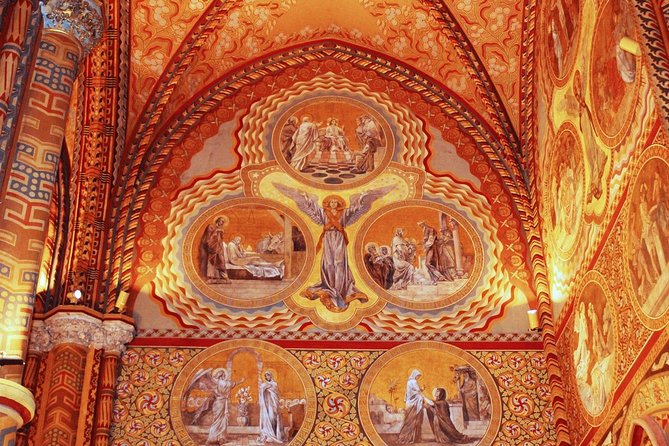
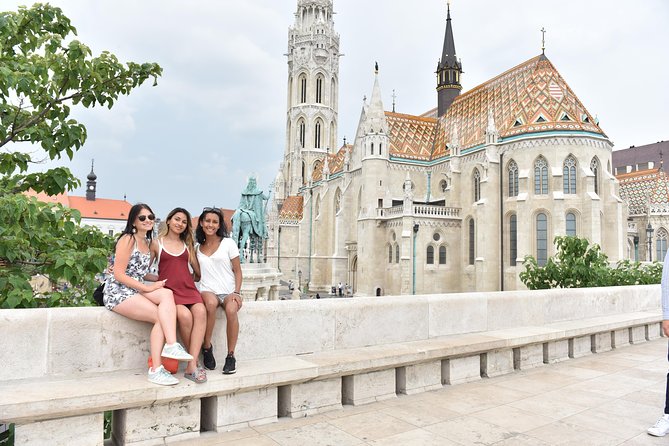
Matthias Church is the most important ticketed stop. The tour includes admission and allows about 30 minutes inside the Church of the Assumption of the Buda Castle, also called Mátyás-templom.
The church sits on Holy Trinity Square, directly in the heart of the district and in front of Fisherman’s Bastion. Its setting makes it easy to pair with the surrounding monuments, but the interior deserves separate attention. The building is also known as the Coronation Church of Buda, a name that signals its connection with major royal events.
Thirty minutes is a sensible amount of time for a guided introduction. You can look at the decoration, take in the unusual interior, and hear why this church matters without turning the tour into a full religious architecture seminar. Since the ticket is included, you avoid one extra decision and one extra purchase during the walk.
This is also where the price becomes easier to assess. Several stops are free, so Matthias Church is the main admission included in the $120.93 cost. The rest of the value comes from the guide, the small group, the route planning, the café stop, and the historical connections between each location.
You should still keep your expectations in check. The ticket does not mean the tour includes every paid attraction in the Castle District. The package specifically notes that additional entrance fees are not included, so ask before entering anything beyond the stated church visit.
Sándor Palace and the modern role of Castle Hill
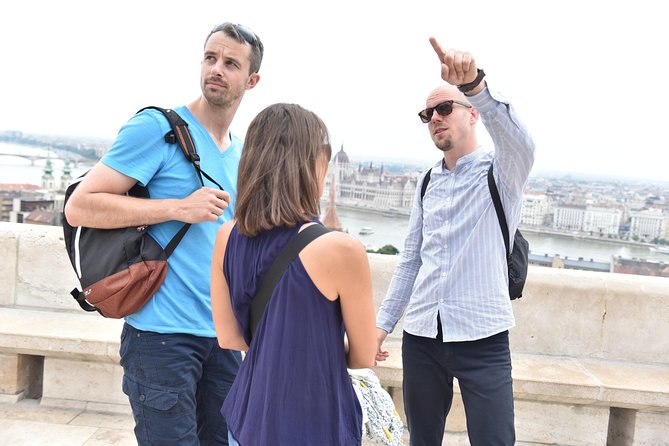
Sándor Palace gets about 15 minutes. It sits beside the Buda Castle complex and has served as the official residence and workplace of Hungary’s president since 2003.
This stop adds a useful modern layer to a district often presented only as a medieval or royal quarter. Castle Hill is not just an old monument zone. It remains tied to the country’s current public life, and Sándor Palace helps make that clear.
The short visit is likely focused on the building’s exterior and setting. No admission is listed, and the route does not promise an interior visit. That is fine for most people, since the point is to understand the palace’s role and position rather than spend a long time inside.
I find this kind of stop valuable because it breaks up the usual castle tour formula. You are not only looking backward at kings and wars. You are also seeing how the district functions as a place of government today.
Holy Trinity Column and the memory of plague
The Holy Trinity Column stands in the middle of Trinity Square, close to Matthias Church and Fisherman’s Bastion. The tour allows about 15 minutes here, with free admission.
The column commemorates people in Buda who died in two outbreaks of the Black Plague. That gives the square a more serious tone than its handsome buildings and open views might suggest.
A guide can make this kind of monument meaningful in a short time. You will see the column, learn what it remembers, and understand that the district’s story includes public fear, loss, and religious responses to disease. It is a useful reminder that grand squares were also places shaped by ordinary suffering.
The stop is not a major attraction in the same way as the church or bastion. Its value comes from the explanation. If you prefer a tour made only of headline sights, 15 minutes here may feel long. If you like small details that add human weight to a city, it earns its place.
Matthias Fountain and a final royal flourish
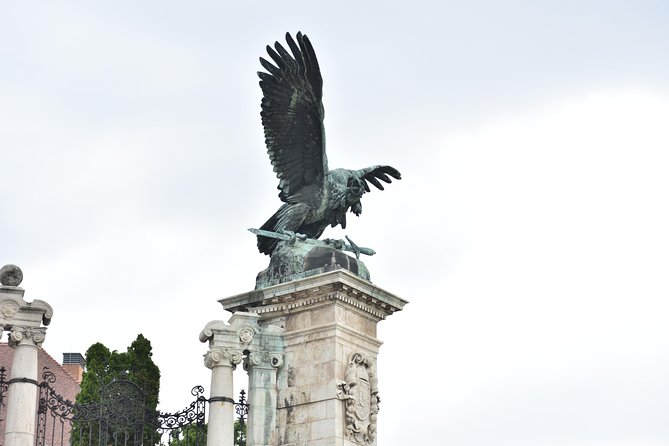
The route also visits Matthias Fountain, called Mátyás kútja in Hungarian. This Neo-Baroque fountain group sits in the western forecourt of Buda Castle and is associated with the work of Alajos Stróbl.
The stop lasts about 15 minutes and is free. The fountain is one of Budapest’s most photographed landmarks, sometimes compared with Rome’s Trevi Fountain. That comparison should be taken lightly, but it signals the fountain’s role as a favorite picture spot.
This is a good final monument because it brings together sculpture, royal imagery, and the palace setting. You get one more strong visual before the tour turns toward the café portion and the return to the meeting point.
Do not expect the fountain stop to be a major historical lecture on its own. Its strength is visual, while the guide supplies the context. Have your camera ready, but leave room to listen. A quick photograph is easy to take later; the explanation about what you are seeing is harder to recreate without a guide.
Cake, coffee, and a slower look at Budapest
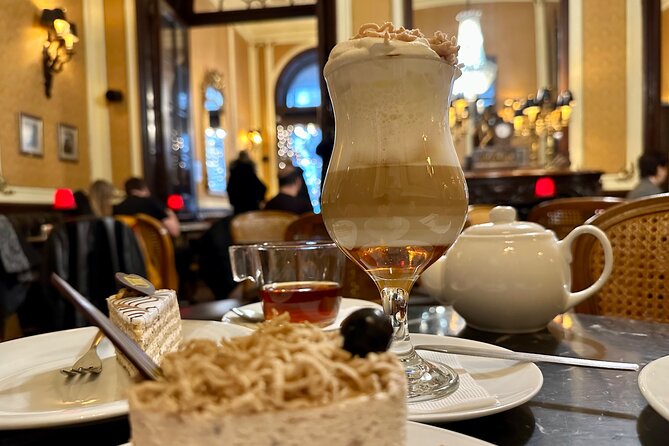
The included café stop is one of the experience’s most appealing touches. You receive coffee and a traditional cake at a local bakery or café, along with coffee or tea and snacks as specified.
This is not just a free drink added to a ticket. It gives the tour a natural pause after several monuments and lets you talk with the guide in a less formal setting. One of the strongest comments about the experience specifically praised the cake and coffee, which suggests the stop is treated as part of the outing rather than as an afterthought.
The description does not name the exact cake, café, or beverage choice. You should not book this expecting a particular Hungarian pastry. Instead, think of it as a chance to sample a traditional sweet while taking a break from the route.
I like this feature because it brings daily life into a tour built around grand buildings. Palaces and churches can make a city feel like a museum. Sitting down with coffee and cake makes the visit more personal and gives you a simple taste of local routine.
Is $120.93 a fair price for two and a half hours?
At $120.93 per person, this is not a budget walking tour. You are paying for a short, guided experience with one included church ticket, a café treat, a small group, and a planned route through several major sights.
The price makes the most sense for you if you value a well-organized introduction and do not want to research Castle Hill on your own. It is also more appealing if you want an English-speaking guide who can link the buildings together and answer questions as you go.
The value is weaker if you mainly want free viewpoints and exterior photographs. Fisherman’s Bastion, Buda Castle, Sándor Palace, Holy Trinity Column, and Matthias Fountain are listed with free admission. A self-guided walk could cover much of that ground for far less.
The small group helps justify some of the cost. A maximum of 15 people gives you a better chance to hear the guide and ask questions than a large group would. The included cake, coffee, maps, and further recommendations add practical value, though they do not transform this into an all-day sightseeing package.
I would compare the price with your priorities. If the church visit, guided stories, and easy structure matter most, the cost may be acceptable. If you are watching every forint or already have a good guidebook, spend your money on individual admissions and explore at your own pace.
Who will get the most from this Castle District walk?
I would recommend this experience to a first-time visitor who wants a clear introduction to Buda. It suits you especially well if you have already seen some of Pest and want a focused look at the hilltop side of the city.
It also works for people who enjoy history in small portions. The route moves every 15 to 30 minutes, so you get a sequence of viewpoints, buildings, memorials, and stories rather than one long lecture.
The tour may suit couples, families, and small groups who want a shared outing with a built-in coffee break. Most people can participate, and service animals are allowed. Since the tour operates in all weather, check the forecast and dress for walking outdoors.
You may want something else if you need a private guide, a longer church visit, extensive museum time, or a full tour of the palace interiors. This is an overview with selected stops, not a complete study of every part of Castle Hill.
Should you book the Castle District tour?
Book it if you want a small English-language group, the included Matthias Church ticket, and a guide-led route through Buda’s main sights. The positive feedback gives special weight to the guides, with Fanni praised for her expertise and Laszlo for his informative, funny approach. The cake and coffee are a welcome bonus.
Skip it if $120.93 feels too high for 2.5 hours or if you prefer exploring free monuments independently. For the right visitor, the tour saves planning time and adds useful stories. For a confident independent walker, the same district can cost much less.
Free cancellation is available up to 24 hours before the start time. That gives you some flexibility, but changes or cancellations inside that 24-hour window are not accepted for a refund.
FAQ
Where does the Castle District tour start?
It starts at the Budapest Castle Hill Funicular at Budapest, Clark Ádám tér, 1013 Hungary.
Where does the tour end?
The activity ends back at the meeting point near the Castle Hill Funicular.
Is admission to Matthias Church included?
Yes. Admission to Matthias Church is included in the tour.
Are the other listed sights included without extra admission?
Fisherman’s Bastion, Buda Castle, Sándor Palace, Holy Trinity Column, and Matthias Fountain are listed with free admission. Additional entrance fees beyond the stated inclusions are not included.
Is cake and coffee included?
Yes. The tour includes coffee and a traditional cake at a local café, along with coffee or tea and snacks.
How large is the group?
The maximum group size is 15 people. The tour is offered in English and includes a mobile ticket.
Just added around the world
- Vietnamese Coffee Making Class in Hoi An★ 5.0 · 4 reviews
- Venice Delights: Coffee & Food Experience Walking Tour★ 5.0 · 2 reviews
- Yerevan: Private Coffee Tour with 2 Café Stops★ 5.0 · 2 reviews
- Vietnamese Coffee 101 Workshop★ 5.0 · 11 reviews
- Ubud: Waterfall, Holy Water Temple,Swing&coffee plantation★ 5.0 · 9 reviews
- Vancouver: Street Art & Craft Coffee Walking Tour w/ Tasting★ 4.8 · 11 reviews
- Turkish Coffee and Traditional Turkish Dessert Cooking★ 4.6 · 8 reviews
- Vienna: Guided Viennese Coffee-House Tour★ 5.0 · 2 reviews
Budapest Coffee Tours, compared.
Castle District tour with Matthias Church Ticket & Cake & Coffee
Read our review →Castle District tour with Matthias Church Ticket & Cake & Coffee
Read our review →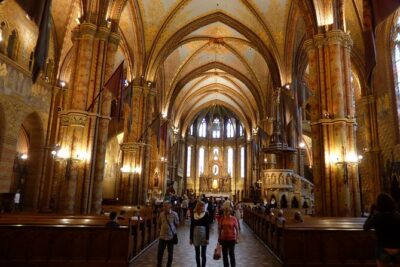
Buda Castle Walking Tour with Matthias church entry, Cake&Coffee
Read our review →
Budapest Urban Walk – Budapest City Tour with Cake & Coffee
Read our review →
Private Budapest Walking Tour with Cake & Coffee
Read our review →Castle District tour with Matthias Church Ticket & Cake & Coffee
Read our review →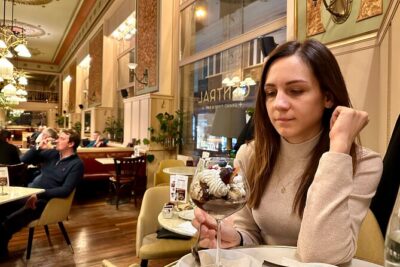
Guilty pleasures – A Budapest Dessert & Coffee House Tour
Read our review →
Budapest Urban Feast – Food Tour with Wine Tasting & Coffee House
Read our review →Browse the lists this tour appears in