
REVIEW · LJUBLJANA COFFEE TOURS
Coffee Sensory Training in Ljubljana
Coffee has more to say than bitter or strong. This seven-hour workshop in Ljubljana teaches you how to identify basic tastes, recognize aromas, compare coffee profiles, and assess a cup using professional methods. I like the internationally recognized CSP Sensory Skills Foundation certificate, and I like that the class is private, so your group can ask questions without competing with a roomful of strangers. The main caution is simple: this is a serious amount of coffee in one day, not a relaxed café tasting.
The course costs $355.04 per person and runs in English from 10:00 am until roughly 5:00 pm. I see the best value for committed coffee drinkers, café workers, and anyone who wants a formal credential. If you only want a pleasant morning cup in Ljubljana, the price and exam may feel like too much.
Key points at a glance
- Seven hours of structured sensory practice: You spend a full day learning how taste and aroma work together, not just sampling coffee casually.
- An exam leads to a recognized certificate: The practical and theoretical tests are part of the experience, making this more than a recreational workshop.
- Private instruction keeps the day personal: Only your group participates, which gives you room to ask Lev detailed coffee questions.
- Taste calibration comes first: You work with basic tastes and aromas before judging subtle differences in coffee.
- Plan for plenty of samples: You are advised to spit coffee out during tasting, and that advice matters.
- Lunch is not included: Coffee, tea, water, and snacks are provided, but you need to arrange your own midday meal.
What this Ljubljana coffee course is really about
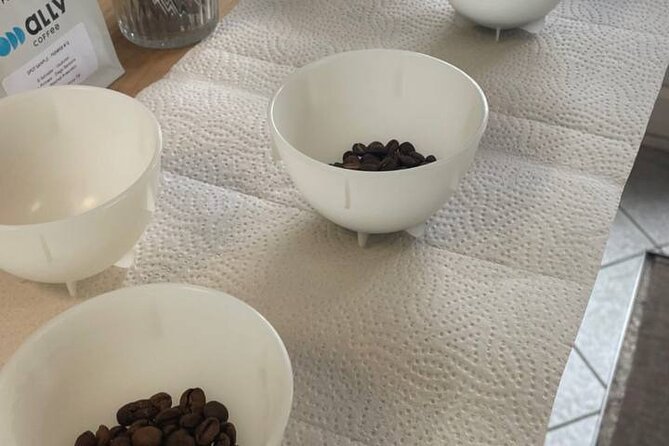
This workshop teaches you to evaluate coffee instead of simply deciding if you like it. That difference matters. Most people can say a coffee tastes fruity, bitter, smooth, or harsh, but sensory training gives those impressions a clearer structure.
You learn to separate basic tastes from aromas and mouthfeel. You also practice noticing small differences between coffees, then describing those differences in a way another person can understand. That is useful at home, in a café, or in professional coffee work.
The course is offered in English, making it practical for international visitors in Ljubljana. The location is Dunajska c. 61, 1000 Ljubljana, and the meeting point is also the end point. It is near public transportation, so you do not need to build a complicated plan around getting there.
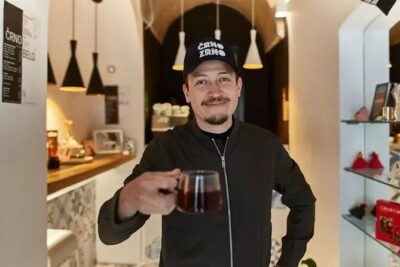
Because this is a private activity, the pace can work well for a couple, a small group of friends, or colleagues. The atmosphere appears to be friendly rather than stiff. One participant particularly enjoyed asking Lev almost anything about coffee and described him as a genius. That kind of open question time can be one of the strongest parts of a workshop like this.
A few more coffee tours around the world worth a look
- Hanoi Coffee Experience: 6 Brews, 9 Recipes & 3 Liquor Tastings
★ 5.0 · 2,945 reviews - Medellin: Coffee Tour with Transport, Snacks and Tastings
★ 4.7 · 1,357 reviews - Istanbul: Turkish Coffee Making and Fortune Telling Workshop
★ 4.9 · 1,308 reviews
Starting at 10:00 am with taste calibration
The day begins at 10:00 am. The first major task is to calibrate your perception of basic tastes. This is an important step because coffee tasting can become vague if you have no shared reference point.
You may think a coffee tastes sour, for example, but sensory work asks you to examine that impression more carefully. Is it a bright acidity, an unpleasant sharpness, or something linked to the coffee’s overall profile? Training your palate with basic tastes helps you make those distinctions.
This part may feel less glamorous than tasting finished coffees, but it gives the rest of the day a firm base. I like that the workshop does not jump straight into dramatic flavor descriptions. It starts with the senses themselves, which is a more useful way to build confidence.
The pace may also surprise you. Sensory training requires attention, repetition, and comparison. You are not simply drinking one cup, chatting, and moving on. You are learning to notice what changes from sample to sample.
For some people, this careful approach will be fascinating. For others, it may feel technical. If you enjoy understanding how your senses work, you will likely appreciate the opening section. If you prefer a social coffee event with little instruction, the formal structure may seem heavy.
Learning the aromas hidden in coffee
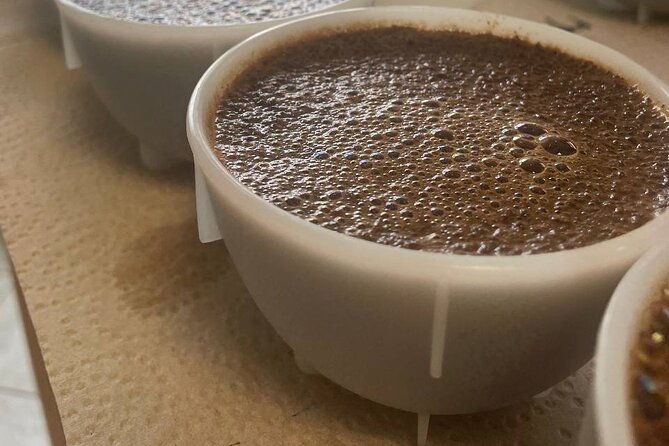
The next part focuses on aroma. Coffee has a broad range of possible aromatic impressions, and the workshop helps you identify what you are smelling rather than reaching for random adjectives.
This is where coffee tasting often becomes more interesting. A cup can suggest fruit, flowers, spices, nuts, or other familiar smells, but those impressions can be faint. The goal is not to invent fancy descriptions. It is to connect what you smell with a clear sensory reference.
The course also trains you to recognize subtle changes in a coffee’s aroma profile. That skill can help you understand why two coffees that look similar may taste very different. It can also help you describe your preferences when buying beans or ordering coffee.
I like this focus because aroma is easy to overlook when you are used to drinking coffee quickly. Taking time to smell and compare changes your attention. You begin to notice that the smell before tasting is part of the coffee experience, not a decorative step.
The instructor’s role matters here. Lev is praised for making the sessions engaging and informative, while also handling detailed questions. Since the group is private, you have a better chance of asking for another explanation when a scent is difficult to place.
Comparing coffee profiles through practical tasting
After the basic sensory work, the class turns toward evaluating coffee profiles. This is the practical heart of the experience.
You will taste different coffees and work on identifying their specific qualities. The training is intended to help you distinguish subtle nuances in flavor and aroma, rather than simply rank the samples from favorite to least favorite.
That distinction is valuable. You do not need to enjoy every coffee to assess it well. A coffee may have a flavor profile you personally dislike while still being balanced, clear, or well defined. Sensory training helps you separate personal preference from evaluation.
You also learn how different sensory impressions fit together. Taste, aroma, and the overall profile are connected, but they are not identical. A coffee can smell one way and taste another. Learning to describe that difference is part of becoming more precise.
This is likely the portion with the most slurping. Slurping spreads coffee across the palate and sends aromas upward, helping you assess the cup more fully. It can feel noisy or awkward at first, but in a sensory setting it serves a purpose.
The quantity is worth taking seriously. One participant found the amount of coffee too much and became dizzy by the end, even after being advised to spit it out. That is useful practical advice: use the spit cups or spitting method consistently, drink water, and do not treat every sample as a full beverage.
Bottled water is included, along with coffee or tea and snacks. Those provisions help, but they do not replace lunch. Since the class lasts about seven hours, I would plan to eat beforehand and bring a sensible plan for the midday gap.
Same place, a different cup:
- Hanoi Coffee Workshop: Taste Salt, Coconut and Egg Coffee
★ 5.0 · 1,286 reviews - Vienna for Food Lovers: Cafés, Markets & Austrian Cuisine
★ 5.0 · 1,063 reviews - Big Island Highlights: Coffee, Volcano, Black Sands & Waterfall
★ 5.0 · 1,054 reviews - Hanoi: Salt Coffee Workshop Awake Your Senses With 6 Brews
★ 5.0 · 792 reviews
The theory and practical exams
The certificate element gives this workshop its professional edge. You sit both a theoretical and practical exam for the Specialty Coffee Certificate CSP Sensory Skills Foundation.
The theory test checks your understanding of sensory concepts. The practical exam asks you to apply what you have learned while evaluating coffee. That combination makes the day more demanding than a standard tasting session.
A certificate can be useful if you work in coffee, want a formal starting point for further training, or need evidence of your sensory skills. It also gives the course a clear purpose. You are not simply collecting pleasant impressions. You are working toward a defined result.
Still, the exam can change the mood of the day. If you are seeking a carefree activity during a city break, the testing component may feel like work. I would not book this expecting a casual coffee-themed outing with a few samples and a souvenir certificate.
The available information does not promise a passing result or describe what happens if you do not pass. You should therefore think of the certificate as an opportunity, not an automatic takeaway. The value lies partly in the training itself, even if the assessment proves challenging.
Why the private format matters
A private workshop is a strong feature for anyone who learns best through questions. Only your group participates, so the session can feel more direct than a large public class.
That format is especially useful for a couple. One participant specifically recommended the experience for two people and wanted to return for more advanced instruction. A pair can compare impressions, discuss what they smell, and ask the instructor to explain confusing points without worrying about holding up a large group.
A private class may also suit professionals who want focused discussion. You can ask about a particular sensory problem or spend more time on a topic that interests you. The exact flexibility is not specified, so you should not assume the itinerary can be redesigned, but the small-group setting should make communication easier.
The mood seems friendly and welcoming rather than intimidating. That matters because sensory language can make beginners feel self-conscious. You may not immediately detect the same aroma as someone else, and a good instructor can help you understand that sensory perception varies.
There is no age limit for drinking coffee, but the provider accepts people over 18 for coffee-related workshops. For booking purposes, plan on this being an adults-only activity.
Judging the $355.04 price
At $355.04 per person, this is an expensive coffee experience by ordinary sightseeing standards. The price makes more sense when you count the seven-hour duration, private instruction, practical tasting, theory work, and certificate assessment.
You are paying for concentrated training rather than refreshments alone. Coffee, tea, bottled water, and snacks are included, but lunch and alcoholic beverages are not. The food provision is functional, not a full meal.
I would consider the price fair for someone who has a serious interest in coffee or wants the CSP Sensory Skills Foundation certificate. A café professional, aspiring barista, coffee buyer, or dedicated home brewer may get lasting value from the skills.
For a casual enthusiast, the calculation is different. You may learn a lot, but you also need to commit a full day, handle a large number of samples, and sit exams. If the certificate has no use for you, the price will feel harder to justify.
The private format improves the value, especially for a couple splitting the experience as a shared activity. It is also more defensible than a short group tasting because the instruction covers sensory basics, aroma recognition, profile evaluation, and assessment.
Practical advice for a comfortable day
Arrive ready to concentrate. The start time is 10:00 am, and the activity begins at Dunajska c. 61. Since the location is near public transportation, check your route in advance and allow enough time to arrive calm rather than rushing in with a mouth full of breakfast coffee.
Think carefully about caffeine. The quantity can be substantial, and the course includes tasting rather than ordinary cup-by-cup drinking. Spitting is not a side detail. Use it, drink water, and pay attention to how you feel.
Avoid loading your palate with strong flavors just before class. The supplied information does not give formal preparation rules, so I would not claim that any particular diet is required. Still, a clean and comfortable start should help you focus on small sensory differences.
Wear something suitable for a long instructional session. The day lasts about seven hours, and the concentration may be tiring even if the activity itself is enjoyable.
Plan lunch independently. Snacks are included, but lunch is not. You do not want hunger competing with aroma recognition or exam concentration.
Finally, remember that your personal taste is not the only measure. You may prefer one sample, while the exercise asks you to identify balance, aroma, and flavor characteristics. Try to stay curious when a coffee is not your favorite.
Who will enjoy this most
I would recommend this workshop to:
- Coffee enthusiasts who want a more precise tasting vocabulary
- Home brewers who want to compare beans with greater confidence
- Café staff and coffee professionals seeking formal sensory training
- Couples looking for a shared activity with a serious learning element
- Visitors who are comfortable spending most of a day on one focused subject
I would be more cautious about recommending it to people who dislike caffeine, have little interest in tasting technique, or want a light activity between sightseeing stops. The exam and the quantity of coffee make this a commitment.
It is also not the best choice if your main goal is lunch, cocktails, or a broad introduction to Ljubljana. The setting is the city, but the subject is coffee from start to finish.
Booking and cancellation details
Confirmation is provided at booking, and the activity uses a mobile ticket. The experience ends back at the meeting point, which makes the day easier to plan.
Free cancellation is available if you cancel at least 24 hours before the 10:00 am start time. Cancellations made less than 24 hours before the start are not refunded, and changes inside that window are not accepted. The cut-off follows local time in Ljubljana.
Should you book Coffee Sensory Training in Ljubljana?
Book it if you want a serious, hands-on introduction to coffee evaluation and value the chance to earn an internationally recognized CSP Sensory Skills Foundation certificate. The private format, strong instruction from Lev, and full-day structure give the experience more substance than a quick tasting.
Skip it if you only want to sample good coffee while sightseeing. At $355.04, with no lunch and a demanding amount of tasting, this is not a casual bargain.
For the right person, the course can change how you drink coffee. You may leave with a sharper palate, better words for what you taste, and a clearer idea of why one cup works for you while another does not. Just pace yourself, spit when advised, and arrive ready to learn.
FAQ
Where does the coffee sensory training start?
The experience starts at Dunajska c. 61, 1000 Ljubljana, Slovenia. It also ends back at the same meeting point.
What time does the course begin?
The start time is 10:00 am.
How long does the experience last?
The course lasts approximately seven hours.
Is the workshop offered in English?
Yes. The activity is offered in English.
Is lunch included?
No. Coffee or tea, bottled water, and snacks are included, but lunch is not.
Who can take the workshop?
The provider accepts people over 18 for its coffee-related workshops. There is no age limit for drinking coffee itself.
Just added around the world
- Vietnamese Coffee Making Class in Hoi An★ 5.0 · 4 reviews
- Venice Delights: Coffee & Food Experience Walking Tour★ 5.0 · 2 reviews
- Yerevan: Private Coffee Tour with 2 Café Stops★ 5.0 · 2 reviews
- Vietnamese Coffee 101 Workshop★ 5.0 · 11 reviews
- Ubud: Waterfall, Holy Water Temple,Swing&coffee plantation★ 5.0 · 9 reviews
- Vancouver: Street Art & Craft Coffee Walking Tour w/ Tasting★ 4.8 · 11 reviews
- Vienna: Guided Viennese Coffee-House Tour★ 5.0 · 2 reviews
- Coffee pleasure walking tour★ 5.0 · 12 reviews
Ljubljana Coffee Tours, compared.
Introduction to the Specialty Coffee world in Ljubljana
Read our review →Browse the lists this tour appears in