
REVIEW · HANOI COFFEE TOURS
Hanoi Coffee Classes
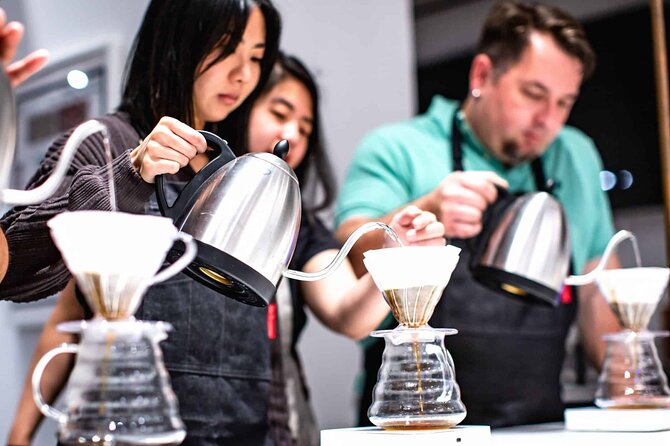
Coffee tells Hanoi’s story one cup at a time. This two-hour class on Phố Hàng Bè turns familiar Vietnamese drinks into hands-on lessons, with an English-speaking barista explaining how to make them and why each one matters. I like the small maximum of eight people and the chance to compare Arabica and Robusta through the same traditional Phin filter.
I also like the range of drinks: Hanoi egg coffee, central Vietnam’s salt coffee, a cold brew with a modern twist, and an unusual peanut butter coffee. The main consideration is that this is a compact tasting and making session, not a full coffee-production course, and pickup outside Hanoi’s Old Quarter costs extra.
Key points at a glance
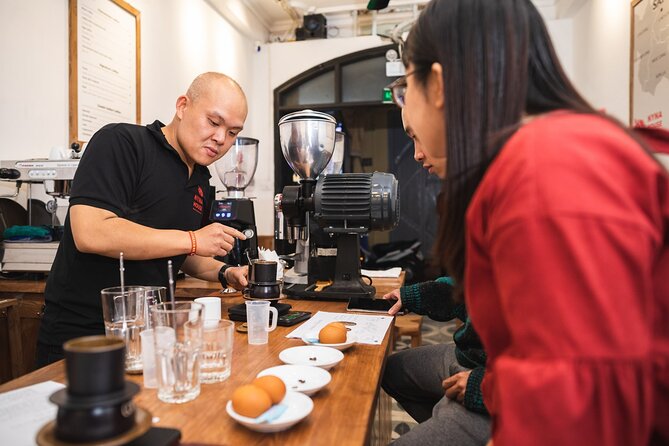
- Four Vietnamese coffee styles in two hours: Make Phin coffee, egg coffee, salt coffee, and cold brew.
- Arabica versus Robusta: Taste both beans through Vietnam’s classic metal filter and compare their character.
- A small class of up to eight: The group limit should allow more direct help from the barista.
- A useful Old Quarter pickup option: Local transportation pickup is included within the Old Quarter.
- A price that makes sense for coffee fans: At $55 per person, the value comes from instruction, several drinks, and a hands-on format.
- A quirky final tasting: Peanut butter coffee adds a playful extra beyond the main program.
What this Hanoi coffee class actually offers
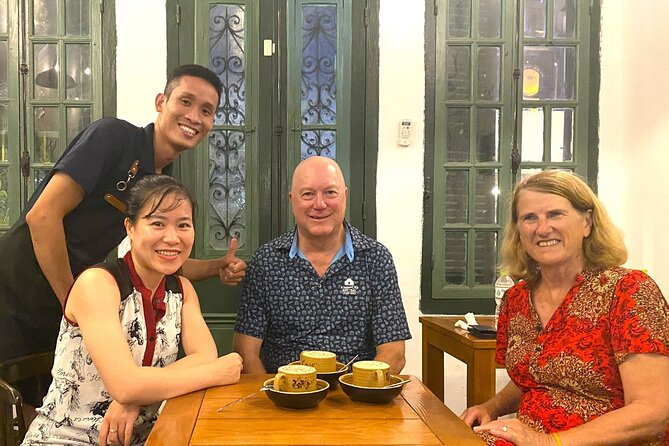
Hanoi is a good place to study Vietnamese coffee because coffee here is not simply a morning drink. It is prepared slowly, served sweet, adjusted with eggs or salt, and shaped by local habits. This class gives you a practical way to see those differences instead of ordering one cup and guessing what makes it distinct.
The session lasts about two hours. That is long enough for several preparations without taking over your entire day. You will work with an English-speaking barista, receive bottled water, and drink everything made during the class.
The setting is on Phố Hàng Bè, in or near Hanoi’s Old Quarter. That location matters. You can fit the class into a morning of walking, an afternoon break, or an evening plan without committing to a full-day activity.
The group limit is eight people. I consider that a useful detail, especially for a class involving filters, whipped mixtures, and several recipes. A large demonstration can leave you watching from the back. This format should give you a better chance to follow the steps and ask for help.
A few more coffee tours around Hanoi worth a look
- Hanoi Coffee Experience: 6 Brews, 9 Recipes & 3 Liquor Tastings
★ 5.0 · 2,945 reviews - Hanoi Coffee Workshop: Taste Salt, Coconut and Egg Coffee
★ 5.0 · 1,286 reviews - Hanoi: Salt Coffee Workshop Awake Your Senses With 6 Brews
★ 5.0 · 792 reviews
Starting with the Phin filter and two beans
The first lesson uses the Phin filter, Vietnam’s familiar individual coffee brewer. It is a small metal filter that sits directly over your cup. Coffee grounds go inside, water is added, and the brew drips slowly below.
This is the right place to begin because the Phin is central to the everyday Vietnamese coffee experience. You are not just tasting a finished drink. You are learning the basic method behind many cups served in Hanoi.
The class uses both Arabica and Robusta beans. You taste each one and compare the results. That side-by-side approach is more useful than a general explanation because you can notice the difference for yourself.
Robusta is strongly associated with Vietnamese coffee and is often chosen for its firm, forceful flavor. Arabica is generally known for a lighter and more aromatic profile. The exact result depends on the beans and preparation, so the value here is the direct comparison rather than a fixed promise about how each cup will taste.
Pay attention to the pacing of the drip. The Phin is not a fast machine, and that slow rhythm is part of the experience. If you are used to automatic coffee makers, you may find the method pleasantly simple, or slightly fussy. Either way, you leave with a clearer idea of what you are ordering at local coffee shops.
Making Hanoi egg coffee
Next comes the drink most closely tied to Hanoi in this class: egg coffee. The recipe is presented as a special preparation from Hanoi Coffee Station, with the barista explaining the technique and story behind it.
Egg coffee is not simply coffee with a raw egg dropped on top. The topping is prepared into a thick, sweet mixture that changes the texture of the drink. The result is closer to a coffee dessert than a standard black coffee, though the coffee underneath still matters.
This is one of the most useful parts of the class for first-time visitors to Hanoi. You get to make the drink yourself, so you can see how much work goes into the creamy layer before tasting it. The class also places egg coffee in the context of northern Vietnamese coffee culture, giving the drink a stronger local connection than a random café stop.
The practical advantage is that you can ask about the consistency as you work. If the mixture is too thin, too sweet, or not airy enough, the barista can guide you. Since the group is capped at eight, the instruction should be more personal than at a large cooking demonstration.
The limitation is that the class description does not provide a detailed recipe or list of ingredients. If you want exact quantities to recreate the drink at home, ask the barista during the session. The experience promises instruction, but it does not promise a printed recipe card.
Exploring central Vietnam through salt coffee
Salt coffee represents central Vietnam in the class. It is a useful contrast with egg coffee because the flavor direction changes completely. Instead of relying on a sweet, creamy topping, the recipe uses salt as part of the coffee’s balance.
You make the drink yourself under the barista’s guidance. That hands-on step matters because salt is easy to overuse. A little can change the taste, while too much can overwhelm the coffee. The class gives you a chance to understand the idea through preparation rather than treating salt coffee as a novelty on a menu.
The broader point is that Vietnamese coffee culture is not one single recipe. Hanoi has its egg coffee tradition, central Vietnam has salt coffee, and modern cafés continue to experiment. The class gives you three regional or stylistic reference points before moving into cold brew.
If you prefer very sweet drinks, salt coffee may be less immediately familiar than egg coffee. If you enjoy tasting how a small ingredient alters a familiar flavor, this may be the most interesting cup of the session.
Same place, a different cup:
- Hanoi: Master the Art of 4-6 Signature Vietnameses Coffees
★ 5.0 · 517 reviews - Hanoi: Vietnamese Street Food Tour with Egg Coffee
★ 4.9 · 315 reviews - Hanoi Cooking Class: Pho/Bun Cha/Banh Xeo…+Free Egg/Salt Coffee
★ 5.0 · 267 reviews - Hanoi: Vietnamese Coffee Workshop with 6 Brews and 8 Recipes
★ 5.0 · 237 reviews
Cold brew with a modern Vietnamese twist
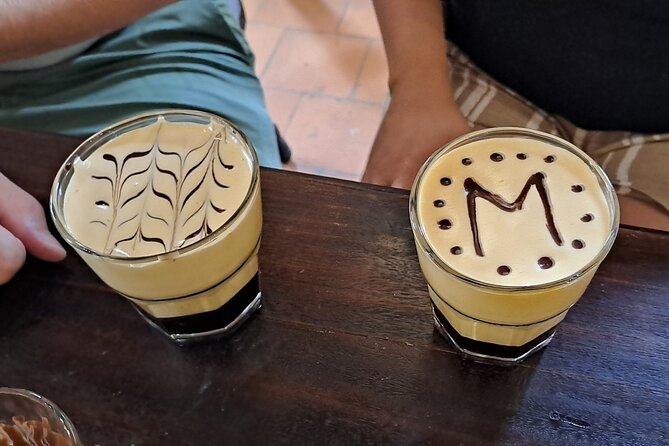
The fourth main drink is cold brew, described as a trendy coffee representing the third-wave side of coffee in Vietnam. You prepare it with a twist in the mix, though the exact ingredients are not specified.
That lack of detail is worth noting. You should expect a modern cold coffee rather than a plain traditional Phin preparation, but you should ask the barista what creates the twist if the details matter to you.
Including cold brew keeps the class from becoming only a history lesson. Vietnamese cafés are not frozen in one old style. Traditional methods continue alongside newer approaches, and this drink shows how local coffee culture is adapting.
The comparison across the four drinks is the real strength. The Phin introduces the basic brewing method. Egg coffee shows Hanoi’s signature style. Salt coffee connects the class with central Vietnam. Cold brew brings in a newer café trend.
The peanut butter coffee bonus
The extra tasting is peanut butter coffee. It is presented as a distinctive bonus rather than one of the four core drinks.
This is a playful way to finish because peanut butter adds a familiar but unexpected flavor. It also gives you one more example of how Vietnamese coffee shops can combine coffee with rich, sweet ingredients.
Do not book the class solely for this drink. The main value is the guided preparation of the Phin, egg, salt, and cold brew coffees. Think of the peanut butter coffee as an extra sample that rounds out the tasting.
How the two-hour schedule may feel
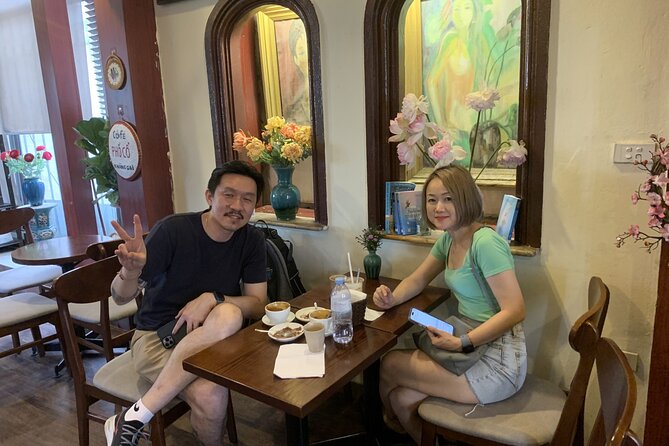
Two hours is a sensible length for this program. You have enough time to prepare and taste several drinks, hear the background to each one, and move between traditional and modern styles.
It is also short enough to pair with other Hanoi plans. You could place it before sightseeing in the Old Quarter, use it as a break during a walking day, or schedule it when you want a fixed activity that does not require a major time commitment.
The pace will likely be active rather than leisurely. Four drinks plus a bonus means you will move from one task to another. If you want long conversations about Vietnamese agriculture, roasting, or café design, this may feel brief.
The overview refers to roasting, grinding, and brewing, but the detailed program focuses most clearly on drink preparation and tasting. I would treat this as a coffee-drink workshop first. It should not be confused with a technical roasting class unless the provider confirms that roasting is part of your specific session.
Is $55 per person good value?
At $55 per person, the class is not the cheapest way to drink coffee in Hanoi. Local cafés can serve a cup for far less. You are paying for the instruction, the chance to prepare the drinks, the English-speaking barista, bottled water, all drinks made during the session, and local pickup within the Old Quarter.
The price makes the most sense if you want more than a tasting. You are learning a method, comparing beans, preparing several recipes, and getting an explanation of the culture behind them. For a coffee enthusiast, that can be a fair use of two hours.
The value is weaker if you only want one egg coffee or a quick café stop. You could spend much less ordering drinks on your own. You also need to pay an additional 490,000 Vietnamese dong per group for pickup and drop-off outside the Old Quarter, so check your location before booking.
Because the class is limited to eight people, the cost may also appeal to you if you prefer a more personal format. A small group can make a hands-on activity easier, though the available information does not promise private instruction.
Pickup, meeting area, and practical details
Pickup is offered within Hanoi’s Old Quarter using local transportation. Pickup and drop-off outside that area are not included and cost 490,000 VND per group.
The experience is near public transportation, which gives you another way to reach the class. Since the activity takes place on Phố Hàng Bè, confirm the meeting instructions after booking, especially if you are staying outside the Old Quarter.
Confirmation is provided when you book. The experience accepts mobile tickets, so you can keep the booking on your phone rather than printing anything.
Most people can take part. Children must be accompanied by an adult. If you are booking for a child, remember that coffee tasting and preparation may not suit every age, even though children are allowed with adult supervision.
Free cancellation is available up to 24 hours before the start time. Changes or cancellations made inside that window are not accepted for a refund, and the cutoff follows Hanoi local time.
Who will enjoy this class most
I would recommend it most strongly to:
- Coffee drinkers who want to understand Vietnamese preparation methods
- First-time visitors who want a local food-and-drink activity in the Old Quarter
- People curious about the difference between Arabica and Robusta
- Anyone who enjoys making a drink rather than simply ordering one
- Couples, friends, or small groups who like guided tastings
- Families with children who can participate with adult supervision
It may not suit you if you dislike sweet coffee, do not want several caffeinated drinks in one sitting, or are looking for a professional roasting course. The program is built around recipes and tasting, not a long technical study of coffee production.
The class also works best for people willing to try unfamiliar combinations. Egg coffee, salt coffee, and peanut butter coffee are not ordinary café orders in many countries. That is precisely the point, but familiar black coffee drinkers should expect a few surprises.
Should you book Hanoi Coffee Classes?
Book this class if you want a compact, hands-on introduction to Vietnamese coffee and like the idea of making four different styles yourself. The small group, Old Quarter setting, English-speaking barista, and included drinks give the $55 price a reasonable basis.
Skip it if you only want an inexpensive cup, need a full roasting and grinding course, or are staying far outside the Old Quarter and do not want to pay the extra transport fee. For most coffee fans, though, this is a practical way to turn a café habit into a better understanding of Hanoi’s coffee culture.
FAQ
How long does the Hanoi coffee class last?
The class lasts approximately two hours.
Where does the class take place?
The activity takes place at Phố Hàng Bè in Hanoi.
What drinks will I make?
You will make coffee with a Vietnamese Phin filter using Arabica and Robusta beans, Hanoi egg coffee, salt coffee, and cold brew with a twist. You will also have a chance to taste peanut butter coffee.
Is pickup included?
Pickup using local transportation is included within Hanoi’s Old Quarter. Pickup and drop-off outside the Old Quarter cost 490,000 VND per group.
How many people can join the class?
The activity has a maximum of eight participants.
Can I cancel for a full refund?
Yes. You can cancel at least 24 hours before the experience start time for a full refund. Cancellations or changes made less than 24 hours before the start time are not accepted for a refund.
Just added around Hanoi
- Vietnamese Coffee 101 Workshop★ 5.0 · 11 reviews
- Private tour: Hanoi city tour-Van Phuc silk village with egg coffee, lunch★ 5.0 · 2 reviews
- Taste of Vietnam’s Coffee Scene – A Guided Experience★ 5.0 · 2 reviews
- 3 Dishes cooking + Egg Coffee bonus & Local Market Tour★ 5.0 · 14 reviews
- hidden gems cafe – learn making coconut and egg coffee★ 5.0 · 2 reviews
- Private Hà Nội Coffee History Tour★ 5.0 · 6 reviews
- Hanoi Private And All Inclusive Coffee Lovers Tour in Vietnam★ 5.0 · 6 reviews
- Hanoi Coffee Workshop Brew Taste and Culture Experience★ 5.0 · 10 reviews
Hanoi Coffee Tours, compared.
Hanoi Coffee Experience: 6 Brews, 9 Recipes & 3 Liquor Tastings
Read our review →
Hanoi Coffee Workshop: Taste Salt, Coconut and Egg Coffee
Read our review →
Salt Coffee Workshop Awake Your Senses With 6 Brews
Read our review →
Master the Art of 4-6 Signature Vietnameses Coffees
Read our review →
Hanoi Cooking Class: Pho/Bun Cha/Banh Xeo…+Free Egg/Salt Coffee
Read our review →
Vietnamese Coffee Workshop with 6 Brews and 8 Recipes
Read our review →
Browse the lists this tour appears in