
REVIEW · JAPAN COFFEE TOURS
Discover Coffee Experience Latte Art Workshop at Tokyo
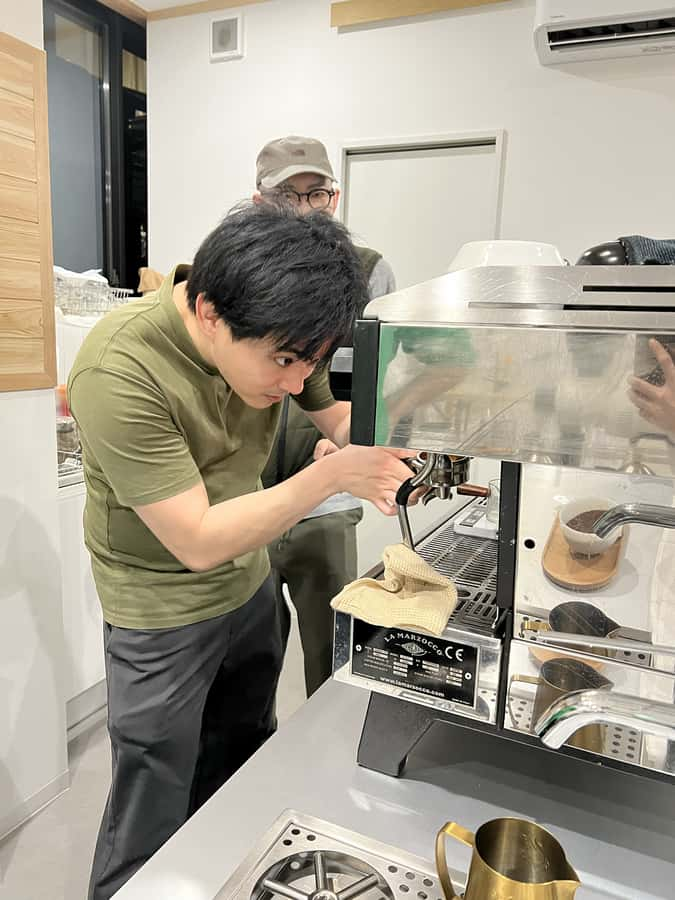
A good latte is a small science lesson. This 90-minute Tokyo workshop turns milk, espresso, and a little wrist control into a practical coffee skill. I like the four-person limit, which gives you room to ask questions, and I love that you taste and assess your own creations rather than simply taking a quick class. The main consideration is price: at $96 per person, this makes sense for serious coffee fans more than casual sightseers.
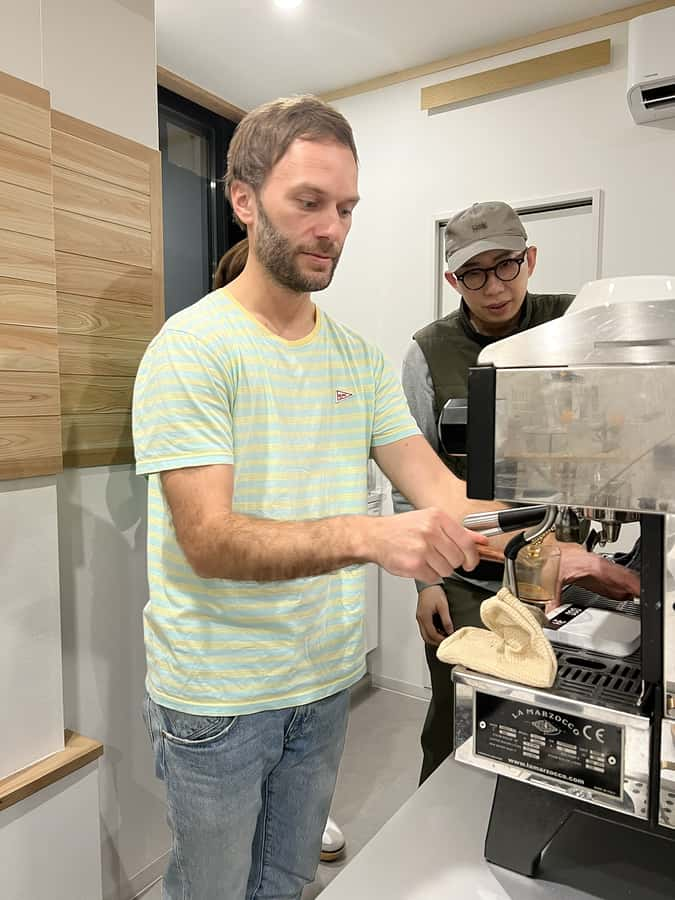
You meet at the front door of Tasse Coffee Roastery Shop in central Tokyo. Instruction is available in English, Japanese, and Chinese, and Wing has earned praise for patient, personal teaching. If you want a complete barista qualification, this is too short, but if you want to understand why a heart or tulip works, the format is focused and useful.
Key points at a glance
- Four-person maximum: Small-group teaching means more time at the espresso machine and more chances to ask specific questions.
- Wing’s patient instruction: The teaching style suits beginners, especially if you arrive with little or no coffee experience.
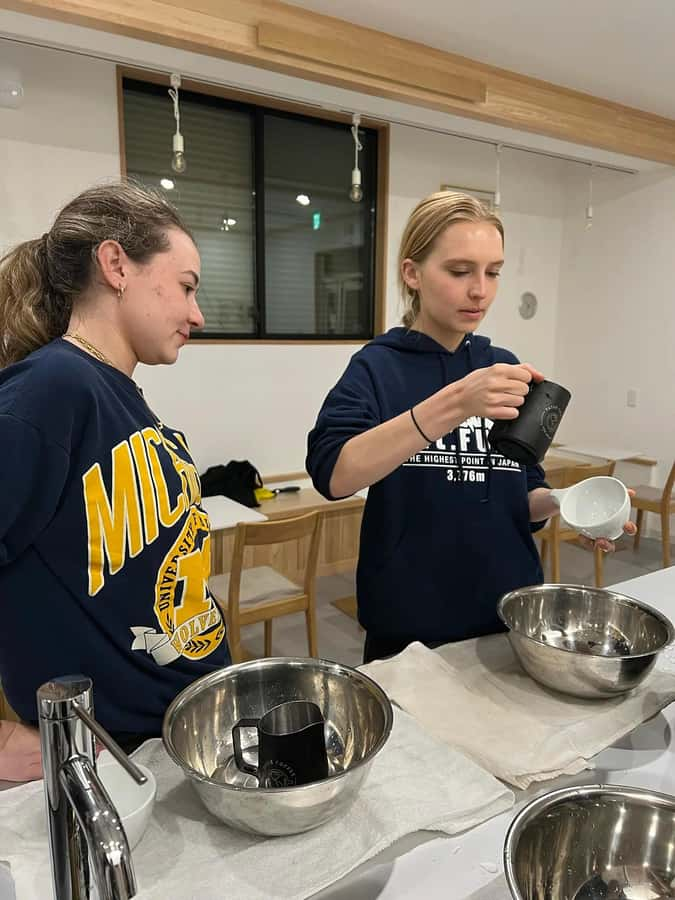
- Milk is the real star: You learn how to steam milk into a smooth, silky texture before trying to pour patterns.
- Classic designs first: The class covers hearts and tulips, with rosetta and more advanced patterns introduced as your technique allows.
- You taste your own work: Flavor and texture are part of the lesson, so the class is not just about making a pretty cup.
- Flexible booking: You can cancel up to 24 hours before the class for a full refund and reserve without paying immediately.
Why this Tokyo coffee class is worth your time
Tokyo has no shortage of coffee shops, but drinking a beautiful latte and making one are two different things. This class lets you see what happens behind the counter. You learn how espresso forms the base, how milk changes under heat, and why the final pour depends on texture as much as artistic skill.
I like this approach because latte art is often treated as decoration. Here, it is linked to the drink itself. Milk that is too thin will not hold a pattern. Milk that is too foamy will sit on top instead of blending with the espresso. The workshop connects appearance with taste, which gives the craft more meaning.
The setting at Tasse Coffee Roastery Shop is described as calm and modern, with the soft sounds of a working coffee shop around you. That matters. You are learning in the place where the tools and methods make sense, not in a large classroom filled with unrelated activities.
The small group also changes the pace. With no more than four participants, you should have a better chance to handle the equipment and receive direct comments on your technique. Emily, from the United States, especially valued being able to ask questions suited to her limited coffee background. That is a useful clue for beginners: you do not need to arrive already speaking barista.
A few more coffee tours around the world worth a look
- Hanoi Coffee Experience: 6 Brews, 9 Recipes & 3 Liquor Tastings
★ 5.0 · 2,945 reviews - Medellin: Coffee Tour with Transport, Snacks and Tastings
★ 4.7 · 1,357 reviews - Istanbul: Turkish Coffee Making and Fortune Telling Workshop
★ 4.9 · 1,308 reviews
Starting with espresso, the base of the cup
The class begins with a short introduction to espresso making. This is not presented as a full espresso certification course, but it gives you the foundation needed for latte art.
That foundation is important. A pattern sits on espresso, so the quality and surface of the coffee affect how the milk behaves. You learn enough about extraction to understand the partnership between coffee and milk, rather than treating the espresso as an afterthought.
I appreciate the compact format here. The focus stays on latte art, but you still get the basic coffee context needed to understand the finished drink. If your main goal is to learn every detail of grinding, dosing, tamping, and extraction, you may want a longer course elsewhere. For this class, the espresso section is a sensible opening lesson.
You then move toward the professional espresso machines and tools. Hands-on use matters because coffee technique is physical. You can read about steam pressure and pouring angles, but your hands have to learn the timing.
Learning silky milk texture before making patterns
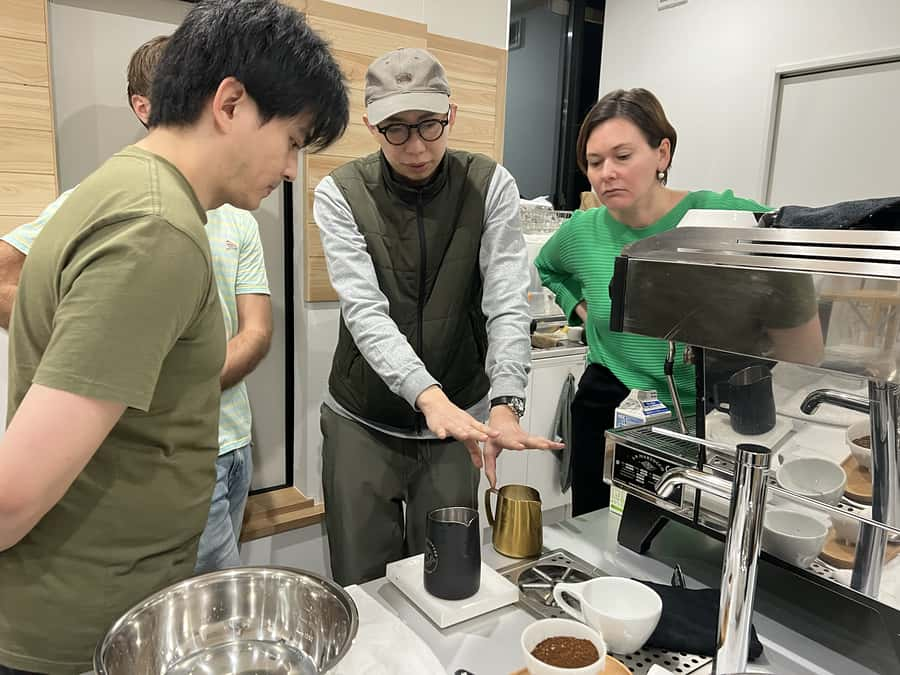
The milk-texturing portion is likely the most useful part of the class. Before you try a heart or tulip, you learn to steam milk until it becomes smooth and velvety.
That sounds simple. It is not. The milk must be heated and aerated in the right way, with enough air to create a fine texture but not so much that it becomes stiff foam. The goal is a pourable surface that blends with espresso and holds a design.
The course also introduces the basics of milk chemistry. You do not need a food science background to benefit from this. Even a short explanation can help you understand why temperature, air, and movement matter.
For you, the practical value is clear. If your first design looks uneven, the problem may not be your hand movement. It may begin with the milk. The class teaches you to look at texture first, which is a better way to improve than simply repeating the same pour.
Wing’s patient style is especially useful at this point. Milk steaming can feel fussy, and small changes in positioning can produce different results. A teacher who lets you ask basic questions without rushing is a real advantage.
Pouring the first heart or tulip
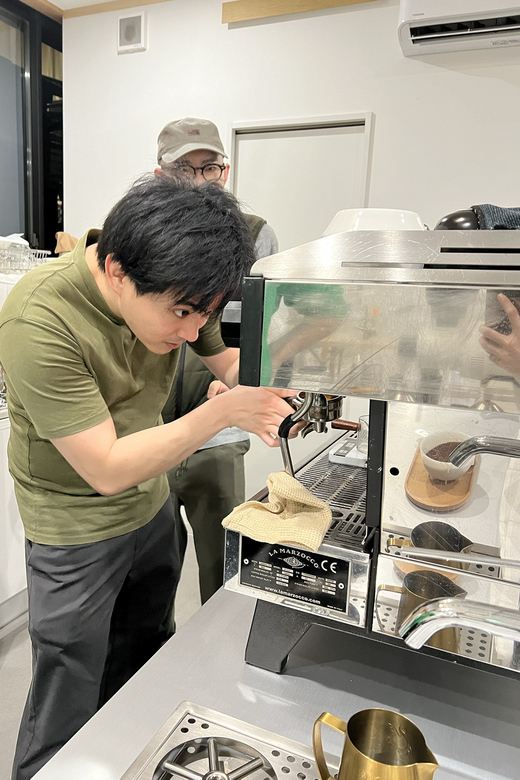
Once the milk is ready, you learn the basic pouring movements. The classic heart and tulip are the main entry points because they teach control, contrast, and timing.
A heart looks simple, but it asks you to manage several things at once. You need to begin with the right height, lower the pitcher at the correct moment, let the white milk spread across the espresso, then finish with a controlled pull through the center.
The tulip adds another layer. It uses repeated shapes, so you begin to see how a pattern is built rather than poured in one motion. If your milk texture is right, the design should appear through the contrast between white milk and dark espresso.
Rosetta patterns and more advanced designs are also part of the instruction, but you should keep your expectations sensible. In 90 minutes, you can learn the principles and practice the movements. You are not likely to leave as a competition-level latte artist after one session.
That is not a fault. The value comes from learning a repeatable method. You can continue practicing at home or in a coffee setting, and you will know what to watch for: the milk texture, pitcher height, flow rate, and final pull.
Same place, a different cup:
- Hanoi Coffee Workshop: Taste Salt, Coconut and Egg Coffee
★ 5.0 · 1,286 reviews - Vienna for Food Lovers: Cafés, Markets & Austrian Cuisine
★ 5.0 · 1,063 reviews - Big Island Highlights: Coffee, Volcano, Black Sands & Waterfall
★ 5.0 · 1,054 reviews - Hanoi: Salt Coffee Workshop Awake Your Senses With 6 Brews
★ 5.0 · 792 reviews
Practice time at a professional machine
The hands-on practice is where the workshop earns its place over a simple demonstration. You do not just watch a barista create a perfect pattern. You get time with the machine and tools yourself.
Expect the process to feel slightly awkward at first. That is normal. The pitcher must be held steadily, the stream must be controlled, and the coffee surface changes quickly. A small group gives the instructor time to point out what is happening while you work.
Individual feedback is listed as part of the practice sessions. Use that time well. Ask why the milk sank, why the design broke apart, or why a heart formed off-center. Specific questions should help you improve faster than general advice.
You may also find that your final pattern is less important than the process. The class is about building control. A lopsided heart can still teach you something useful if you understand what caused it.
The four-person limit is one of the strongest parts of the experience. A larger class could leave you watching other people pour for much of the session. Here, the format is more personal, although the exact amount of machine time for each participant is not specified.
Tasting the result, not just photographing it
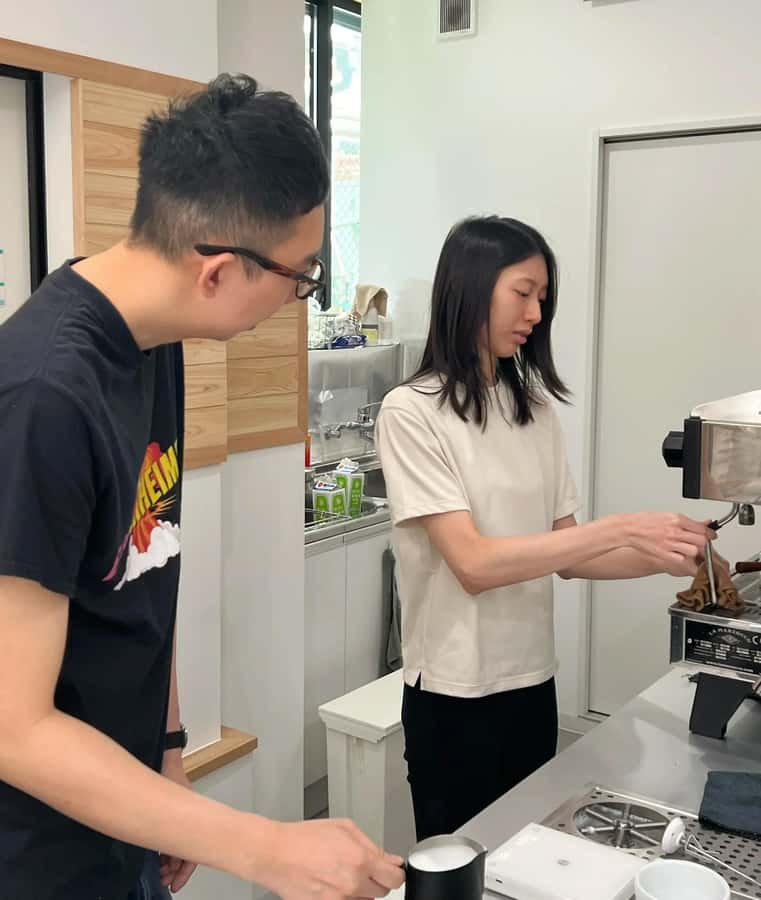
After making your drinks, you taste and evaluate them. This is a welcome part of the class because latte art should not be judged only by appearance.
You look at flavor and texture, then consider how the milk changes the espresso. A well-made latte should feel smooth, not airy or clumsy. The milk should support the coffee rather than bury it.
This tasting also gives you a way to compare results. Two cups may carry different designs but have different textures. A handsome pattern does not automatically mean the drink is well made.
I like that the workshop treats tasting as part of learning. You leave with a better sense of what good milk feels like and how the coffee and milk should work together. That knowledge is useful the next time you order a latte in Tokyo, or try to make one at home.
How much value do you get for $96?
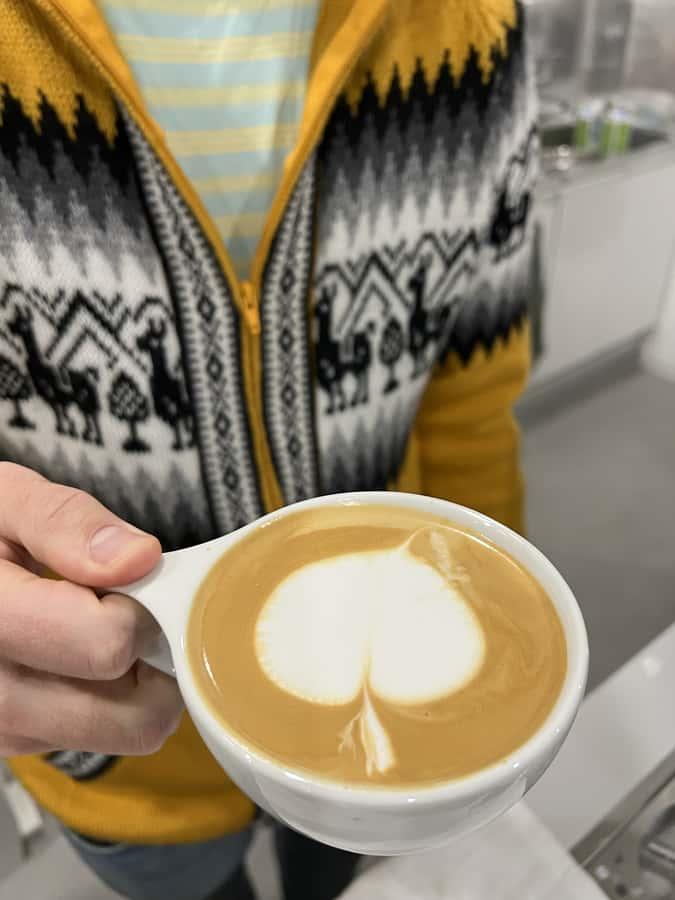
At $96 per person, this is not a cheap coffee stop. You are paying for a 90-minute small-group class, instruction in one of three languages, use of professional equipment, tasting, and all fees and taxes.
The strongest value comes from the personal instruction. If you are already interested in espresso and want to learn a skill that you can keep practicing, the price is easier to justify. The four-person cap also gives the class a more private feel than a large group demonstration.
For a casual coffee drinker, the cost may feel high for a single activity. You might prefer to spend that money sampling several Tokyo coffee shops. The class is best seen as a practical workshop, not merely a cup of coffee with a short talk attached.
I would also weigh the 90-minute length. It is long enough to cover the basics and get hands-on practice, but not long enough to cover every espresso variable in depth. You are paying for focus, access to equipment, and feedback, not a full professional training program.
All fees and taxes are included, so the stated price is easier to assess. You do not need to add a separate class fee at the end.
Who will enjoy this workshop most?
This experience suits you best if you fit one of these profiles:
- You enjoy specialty coffee and want to understand how café drinks are made.
- You are a beginner who prefers patient instruction and a small group.
- You want a hands-on Tokyo activity that is quieter and more focused than a major sightseeing tour.
- You are curious about milk texture, espresso, and the connection between taste and appearance.
- You want to learn a skill you can practice after returning home.
It may not suit you if you want a broad tour of Tokyo coffee culture, a full-day barista course, or a long session focused only on espresso extraction. The workshop has a clear center: milk, pouring, patterns, and tasting.
You should also be comfortable with the possibility that your first pattern will not look perfect. The class gives you instruction and practice, but latte art improves through repetition. Think of this as your introduction to the technique, not the final exam.
Practical details that shape the experience
The meeting point is the front door of Tasse Coffee Roastery Shop. You should check the available starting times when booking, since the exact schedule is not provided here.
Instruction is offered in English, Japanese, and Chinese. That makes the workshop more accessible to international visitors, but the experience remains limited to four participants, so advance planning is sensible if your Tokyo dates are fixed.
The activity lasts 90 minutes. That makes it easy to fit into a day of sightseeing without consuming an entire afternoon. At the same time, you should arrive ready to focus. With espresso basics, milk steaming, pattern instruction, practice, and tasting all included, the session has little room for wasted time.
Cancellation is flexible: you can cancel up to 24 hours in advance for a full refund. You can also reserve now and pay later, which helps if your Tokyo plans are still shifting.
My call: book it if coffee is part of your travel style
I would recommend this workshop to coffee lovers, curious beginners, and anyone who likes taking home a skill instead of another souvenir. The small group, multilingual instruction, and patient teaching style give it a personal feel, while the tasting portion keeps the lesson grounded in good coffee rather than decoration alone.
The $96 price is the main hurdle. If you only want a quick latte and a photo, spend your money at a café. If you want to understand milk texture, use professional equipment, practice hearts and tulips, and receive direct help from an instructor such as Wing, this is a fairer buy.
Book it when you want a calm, focused break from Tokyo sightseeing and have genuine interest in coffee. Skip it if your schedule is tight or you are looking for a full professional barista course. For the right coffee drinker, 90 minutes here can change the way you see every latte afterward.
FAQ
Where does the latte art workshop meet?
The meeting point is the front door at Tasse Coffee Roastery Shop in Tokyo.
How long does the experience last?
The workshop lasts 90 minutes, or 1.5 hours.
How much does the workshop cost?
The price is $96 per person, with all fees and taxes included.
Which languages are available?
Instruction is available in English, Japanese, and Chinese.
How many people can join the workshop?
The group is limited to four participants.
What latte art designs will I learn?
The class covers fundamental pouring techniques, including the heart and tulip. Rosetta and more advanced patterns are also introduced as part of the design instruction.
Can I cancel for a full refund?
Yes. You can cancel up to 24 hours in advance for a full refund.
Just added around the world
- Vietnamese Coffee Making Class in Hoi An★ 5.0 · 4 reviews
- Venice Delights: Coffee & Food Experience Walking Tour★ 5.0 · 2 reviews
- Yerevan: Private Coffee Tour with 2 Café Stops★ 5.0 · 2 reviews
- Vietnamese Coffee 101 Workshop★ 5.0 · 11 reviews
- Ubud: Waterfall, Holy Water Temple,Swing&coffee plantation★ 5.0 · 9 reviews
- Vancouver: Street Art & Craft Coffee Walking Tour w/ Tasting★ 4.8 · 11 reviews
- Vienna: Guided Viennese Coffee-House Tour★ 5.0 · 2 reviews
- Coffee pleasure walking tour★ 5.0 · 12 reviews
Japan Coffee Tours, compared.
Discover Japanese Politics Over a Coffee in Tokyo
Read our review →
Private Akihabara Retro Tokyo Anime Game Maid Cafe Tour w/ pickup
Read our review →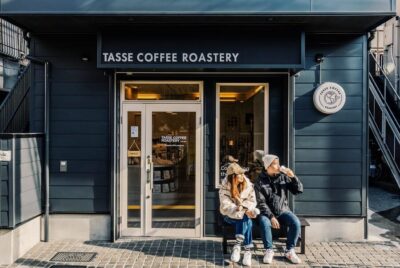
Discover Japanese Coffee Brewing Experience at Tokyo
Read our review →
Private Akihabara Anime Game Maid Cafe Tour w/ free pickup
Read our review →
Tokyo’s Neighborhood Digs: Coffee, Records & Vintage Vibes
Read our review →
Best of Downtown Tokyo: Nature, Coffee, & Japanese Sweets Tasting
Read our review →Browse the lists this tour appears in