REVIEW · FRANCE COFFEE TOURS
Paris Left Bank: Writers, Revolution, and Black Coffee
Ideas still have sharp edges here. This 90-minute walk from Notre-Dame to the Panthéon brings you through medieval lanes, student streets, old church corners, and the literary world around Shakespeare & Company. I like the small-group feel and the way the tour connects famous names such as Hemingway, Picasso, Cyrano de Bergerac, and Dante to actual places. I also like that the guide is a Parisian who studied in the area and can add personal stories instead of repeating only textbook facts.
The main consideration is pace. You cover a lot of ground in 90 minutes, with several ten-minute stops and a finish at the Panthéon. The tour is conducted in English, runs rain or shine, and is not suitable for wheelchair users because of the medieval lanes and walking route.
Key points before you book
- A compact Left Bank route: Walk from the Horseman statue near Notre-Dame to the Panthéon in about 90 minutes.
- Stories tied to real places: Hear about Cyrano de Bergerac, Hemingway, Picasso, Dante, jazz, cinema, and the Sorbonne while standing in the neighborhood where these subjects matter.
- A personal guide matters here: Guides including Yago, Mathieu, Floriane, and others have been praised for combining local knowledge with enthusiasm and personal anecdotes.
- Good value at $23: The price works well if you want historical context without paying for museum admission or a longer formal tour.
- Outdoor and weather-proof: You need comfortable walking shoes and a reusable water bottle. The tour goes ahead in rain or shine.
- A strong finish: The walk ends at the Panthéon, making it easy to continue with the Latin Quarter, Luxembourg Garden, or nearby cafés.
Why this Latin Quarter walk feels different
Paris has plenty of tours built around grand monuments. This one takes a smaller, more thoughtful route. You still see major names, including Notre-Dame, the Sorbonne, the Musée de Cluny area, and the Panthéon, but the focus is on how the neighborhood thinks.
The Latin Quarter is presented as a place shaped by students, writers, religious institutions, artists, and people willing to argue with authority. That gives the walk a useful theme. You are not simply checking off buildings. You are looking at why this part of Paris has attracted scholars and rule-breakers for centuries.
I especially like the idea of exploring the area through its contradictions. The neighborhood was shaped by the Church, yet the university later pushed for freedom from Church control. It has Roman remains and medieval lanes, but also art-house cinema, jazz, bookshops, and student cafés. The black coffee in the title is more than a drink. It points to a style of Parisian student life built around low-cost coffee, strong opinions, and long conversations.
The walk is also designed for people who want some distance from the busiest tourist flow. You remain close to famous sights, but the route includes back streets and courtyards that can be difficult to understand on your own.
A few more coffee tours around the world worth a look
- Hanoi Coffee Experience: 6 Brews, 9 Recipes & 3 Liquor Tastings
★ 5.0 · 2,945 reviews - Medellin: Coffee Tour with Transport, Snacks and Tastings
★ 4.7 · 1,357 reviews - Istanbul: Turkish Coffee Making and Fortune Telling Workshop
★ 4.9 · 1,308 reviews
Meeting the guide beneath Charlemagne
The starting point is the Statue of Charlemagne et ses leudes, the Horseman statue in front of Notre-Dame. Look for a guide wearing a pink vest. This detail matters because the area around Notre-Dame can be crowded and confusing, especially when several groups are gathering near the cathedral.
The tour starts right on time. If you miss the beginning, you can try to catch the group about 20 minutes later at 77 rue Galande, in front of Café Odette. That is a useful backup, but it is not a substitute for arriving early. The walk moves through small streets, so finding the group after it has left may be difficult.
The experience is in English and is described as a small-group tour. That should make it easier to ask questions and hear the guide in narrow streets. The group size is not stated, so I would still arrive several minutes ahead of departure if you want a smooth start.
Square René Viviani and the first view of Notre-Dame
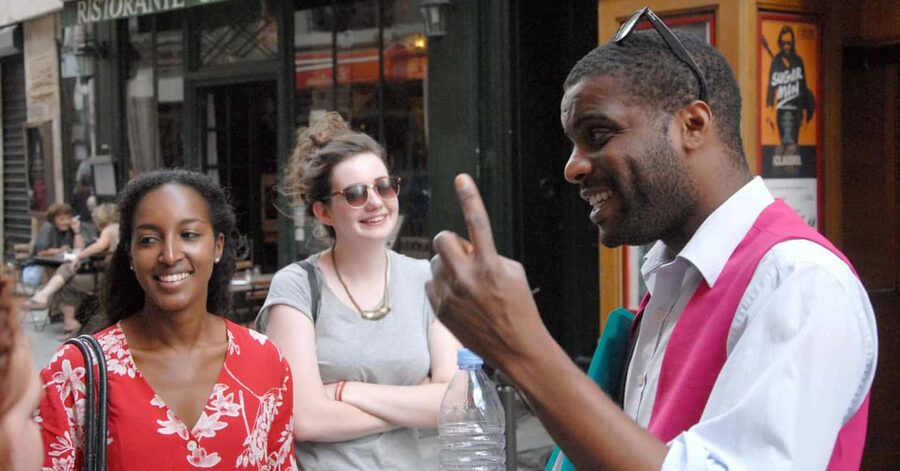
The first listed stop is Square René Viviani, where you spend about 10 minutes. This small green space gives the tour a calm opening after the busy area around the cathedral.
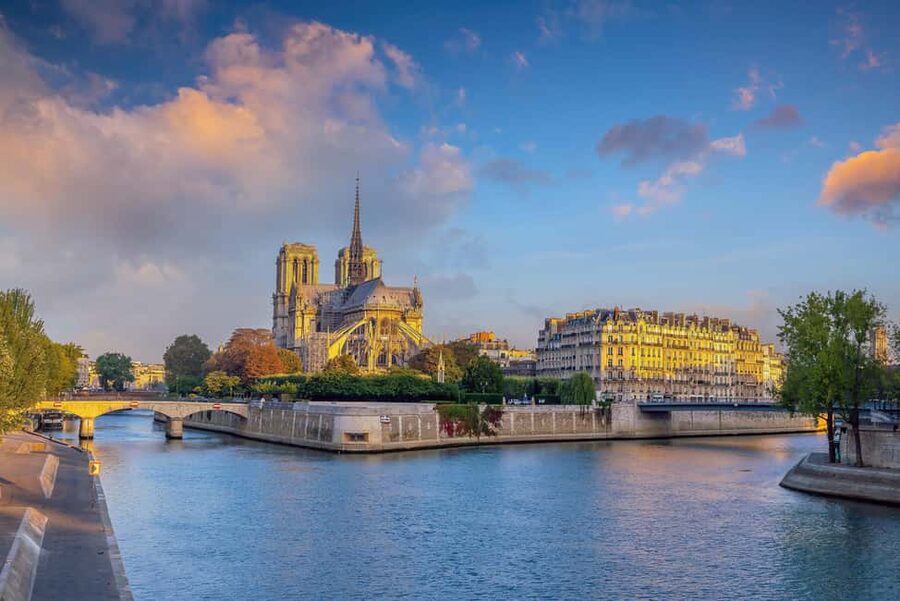
From here, you begin to understand the Left Bank position. The Seine, Île de la Cité, and Notre-Dame are close by, but the Latin Quarter begins to feel different almost immediately. Your guide can use the square to place the neighborhood within medieval Paris and explain how the river connected trade, religion, education, and daily life.
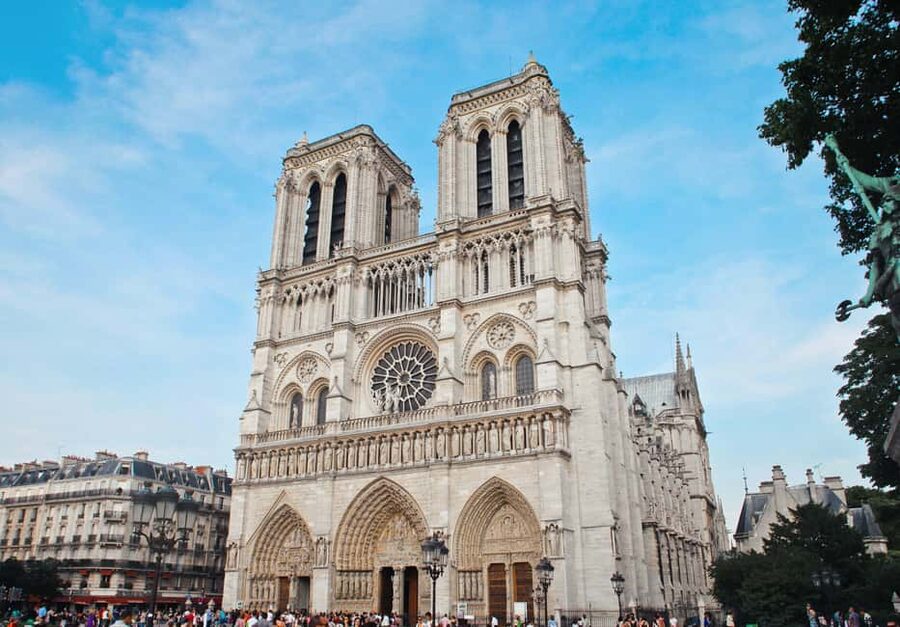
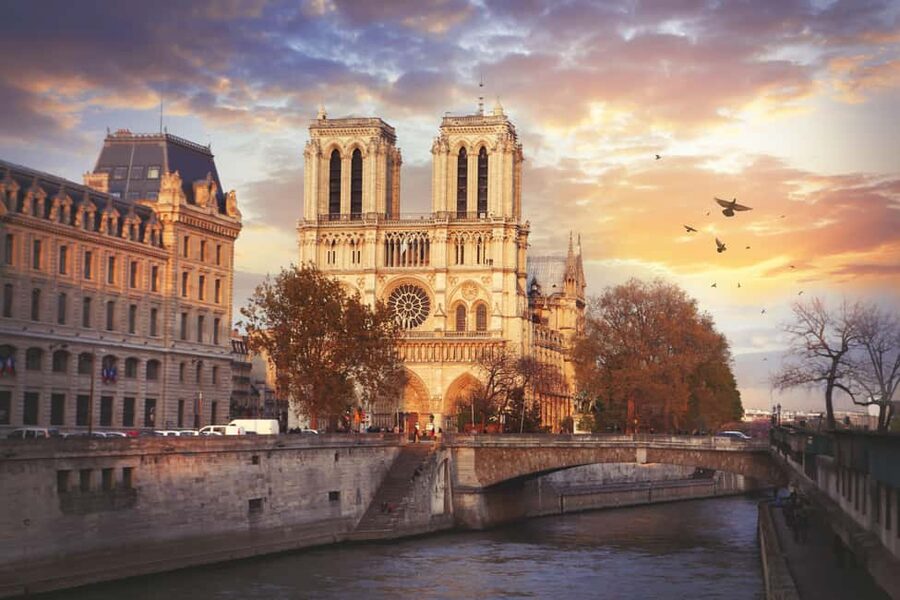
The next stop is Notre-Dame Cathedral, also for about 10 minutes. The tour does not include entry to the cathedral or any other museum or monument, so this is an exterior visit. That keeps the schedule moving and avoids turning the walk into a ticketed sightseeing tour.
You should think of this stop as context rather than a full cathedral tour. The guide may help you see Notre-Dame as part of the wider story of the Left Bank, rather than as an isolated monument. If entering the cathedral is important to you, you will need to arrange that separately.
Shakespeare & Company and the literary Left Bank
Shakespeare & Company is one of the most appealing stops for readers. The bookshop is closely tied to the English-speaking literary life of Paris, and its location makes a natural bridge between medieval streets and modern writers.
You spend roughly 10 minutes here. That is enough for an introduction and a few stories, but not enough for a long browse through the shop. If you want to look around properly, plan to return after the tour.
This is where the stories of Hemingway and other writers become especially useful. The tour does not treat writers as distant names in a guidebook. Instead, it presents the Left Bank as a place where English-speaking artists came to read, argue, write, and build creative lives.
I would recommend this tour to anyone who enjoys literature but does not want a narrow bookish lecture. The walk also covers revolution, religion, university politics, art, cinema, and student life. The literary material is one thread in a larger story.
Same place, a different cup:
- Hanoi Coffee Workshop: Taste Salt, Coconut and Egg Coffee
★ 5.0 · 1,286 reviews - Vienna for Food Lovers: Cafés, Markets & Austrian Cuisine
★ 5.0 · 1,063 reviews - Big Island Highlights: Coffee, Volcano, Black Sands & Waterfall
★ 5.0 · 1,054 reviews - Hanoi: Salt Coffee Workshop Awake Your Senses With 6 Brews
★ 5.0 · 792 reviews
The Sorbonne and the power of an institution
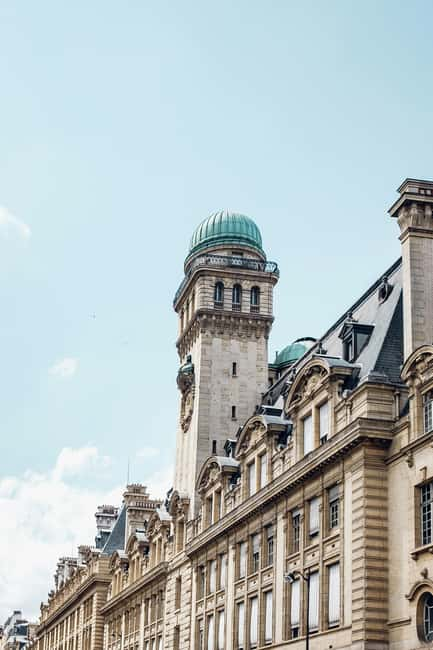
The Sorbonne receives two listed stops, each marked at about 10 minutes. That tells you something about the weight given to the university. This is not a quick photo stop. The guide explains how Europe’s oldest university system developed under Church influence and later broke away from that control.
The value here is the explanation of what the word Sorbonne represents. It is not only a building or a famous name. It carries ideas about scholarship, authority, protest, and intellectual independence. The Latin Quarter becomes easier to understand once you see how education helped shape its identity.
The area also connects to the student rebellions and political arguments that have made the Left Bank famous. You can expect a story-driven explanation rather than a technical university tour. Entry inside the university is not included, and the details provided do not promise interior access.
Guides have brought different strengths to this part of the walk. Mathieu was praised for explaining the district through personal knowledge, while Yago was described as young, dynamic, and deeply enthusiastic about Paris. One guide brought a book with extra photographs, which can help you picture buildings and events that are no longer easy to see.
Medieval Paris around the Musée de Cluny
The route continues toward the Musée National du Moyen Âge, also called the Musée de Cluny, and its Roman bathhouses. The stop is listed as a 10-minute guided visit.
You do not pay museum admission as part of this experience, so you should understand this as an exterior introduction or a brief guided look at the site, not a full museum visit. The museum itself is known for medieval collections and Roman remains, but the tour information only promises time at the location and does not include entry.
This stop adds an older layer to the walk. The Latin Quarter is often described through writers and students, but Roman bathhouses remind you that Paris was already an important settlement long before the Sorbonne or the modern café. I like that the route places these eras close together. In a few blocks, you move from ancient remains to medieval streets, university history, and modern cultural life.
The short timing means you should not expect an extended archaeological explanation. If Roman Paris or medieval art is a major interest, return to the Musée de Cluny separately.
The unnamed corners that make the route worthwhile

Two additional stops are listed without names, one lasting about five minutes and another guided for about three minutes. Since their exact locations are not specified, I would not book this walk expecting a particular unnamed church, courtyard, or café.
Still, short pauses can be important on a walking route like this. They give the guide room to point out details that would be easy to miss, such as a medieval lane, a private courtyard, or a cultural site connected with the neighborhood’s artistic life. The route description also refers to an art-house cinema, the street of the English, hidden courtyards, and traces of jazz and student culture.
One guide brought the group into a beautiful church, which shows how the route can sometimes include an unexpected interior when circumstances allow. I would treat that as a possible bonus, not a guaranteed part of the tour.
Stories of Cyrano, Picasso, Dante, and Hemingway
The personalities connected with this walk are varied enough to keep the history from becoming a list of dates. Cyrano de Bergerac brings theatrical swagger and literary invention. Dante connects the area to medieval scholarship and European writing. Hemingway represents the international literary crowd that found a home in Paris, while Picasso points toward the city’s modern art world.
The guide also brings in jazz and cinema. One especially unusual experience involved fellow participants listening to jazz during the walk, adding a small piece of atmosphere to the discussion of the district’s musical life. That kind of detail can make the neighborhood feel lived in rather than preserved behind glass.
I would value the personal stories most here. The guides are not presented as anonymous voices. Mathieu, Yago, and Floriane have each been praised for enthusiasm, local ties, or strong historical explanations. Those qualities matter because the Latin Quarter can look like a maze of attractive streets unless someone explains why the locations connect.
Finishing at the Panthéon
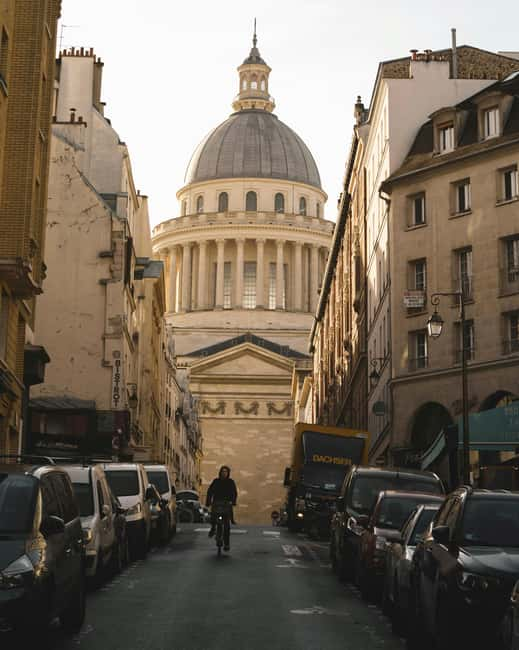
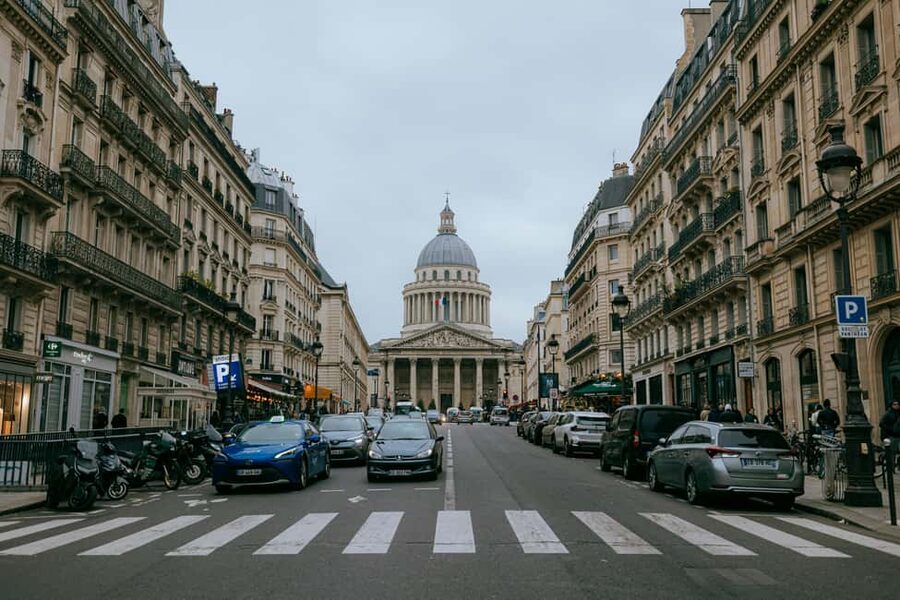
The walk ends at the Panthéon, after moving through the Latin Quarter from the river toward the hill. The finish gives the tour a clear sense of arrival and makes planning the rest of your day simple.
You can continue toward the Luxembourg Garden, remain in the Latin Quarter for food and coffee, or arrange a separate visit to the Panthéon. Admission is not included, so treat the building as the endpoint rather than a guaranteed interior tour.
Ending here also fits the tour’s larger theme. The Panthéon is connected with national memory and public recognition, while the route itself has explored the people and ideas that shaped French and international culture. If you enjoy tours that end with a strong landmark instead of leaving you in an ordinary side street, this is a practical finish.
What $23 gets you
At $23 per person, this is a reasonable price for a live, English-language walk lasting 90 minutes. You are paying mainly for structure and interpretation. The Latin Quarter is easy to enter but harder to understand, and a good guide can connect the cathedral, bookshop, university, Roman baths, and Panthéon into one story.
The price does not include museum or monument entry, drinks, or a tip. That is not a problem if you want a walking introduction rather than a package filled with admissions. It also keeps the tour shorter and more flexible.
The value depends on your interests. If you want to enter Notre-Dame, spend an hour inside the Musée de Cluny, or take a long literary tour, $23 will not cover the complete experience. If you want orientation, local stories, and a useful route through the Left Bank, the price is fair.
Free cancellation up to 24 hours before the start and the option to reserve now and pay later make the booking less rigid. These policies are useful when your Paris schedule is still shifting.
Who should book this walk
I would choose this tour if you are visiting Paris for the first time and want a strong introduction to the Latin Quarter without spending half a day on a formal sightseeing program. It also suits repeat visitors who have seen Notre-Dame and the Panthéon but want a better sense of the streets between them.
Literature lovers will enjoy Shakespeare & Company and the writer stories, but you do not need to be a serious reader. The discussion of religion, university politics, revolution, jazz, cinema, and cafés gives the tour wider appeal.
The route is less suitable if you have limited mobility, dislike walking on uneven or narrow streets, or need frequent indoor breaks. Wheelchair users should choose another experience. Because the tour operates rain or shine, bring a reusable water bottle and dress for the forecast. Stops for water and shade are included, but this remains an outdoor walk.
Should you book Paris Left Bank: Writers, Revolution, and Black Coffee?
Book it if you want the Latin Quarter explained through people and ideas, not just photographed buildings. The best reason to go is the guide’s personal connection to the neighborhood, supported by stories of the Sorbonne, medieval Paris, writers, artists, jazz, and student life.
Skip it if you need extensive monument interiors or a slow museum visit. For most able-bodied walkers who want a compact English tour at a fair price, this is a smart way to begin exploring the Left Bank. Afterward, you will be better prepared to choose your own café, bookshop, museum, or quiet street.
FAQ
How long does the Paris Left Bank tour last?
The tour lasts 90 minutes.
What language is the tour in?
The tour is conducted in English with a live guide.
Where does the tour begin?
Meet beneath the Horseman statue, officially the Statue of Charlemagne et ses leudes, in front of Notre-Dame. The guide wears a pink vest.
Where does the tour finish?
The walk finishes at the Panthéon.
What happens if I miss the start?
You can try to find the group about 20 minutes after departure at 77 rue Galande, in front of Café Odette.
Does the tour operate in bad weather?
Yes. The tour operates rain or shine.
Are museum and monument tickets included?
No. Entry to museums and monuments is not included in the $23 price.
Is the tour suitable for wheelchair users?
No. The experience is not suitable for wheelchair users.
Can I cancel for a refund?
Yes. You can cancel up to 24 hours in advance for a full refund. You can also reserve now and pay later.
Just added around the world
- Vietnamese Coffee Making Class in Hoi An★ 5.0 · 4 reviews
- Yerevan: Private Coffee Tour with 2 Café Stops★ 5.0 · 2 reviews
- Vietnamese Coffee 101 Workshop★ 5.0 · 11 reviews
- Venice Delights: Coffee & Food Experience Walking Tour★ 5.0 · 2 reviews
- Ubud: Waterfall, Holy Water Temple,Swing&coffee plantation★ 5.0 · 9 reviews
- Vancouver: Street Art & Craft Coffee Walking Tour w/ Tasting★ 4.8 · 11 reviews
- Vienna: Guided Viennese Coffee-House Tour★ 5.0 · 2 reviews
- Coffee pleasure walking tour★ 5.0 · 12 reviews
France Coffee Tours, compared.
Cruise, Coffee and Swimming in the Calanques of Frioul
Read our review →
Montmartre & Sacré Coeur : Museum & Coffee In A Tiny Group Tour
Read our review →