
REVIEW · FRANCE COFFEE TOURS
Montmartre & Sacré Coeur : Museum & Coffee In A Tiny Group Tour
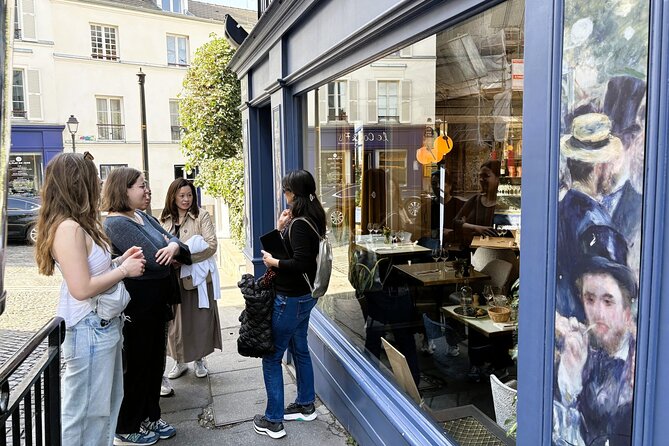
Montmartre rewards slow feet. This three-hour walk pairs the Moulin Rouge, winding Rue Lepic, the neighborhood vineyard, and Sacré-Cœur with a 45-minute visit to the Musée de Montmartre. I like the way the route mixes famous sights with quieter corners, and I like the small maximum of eight people, which leaves room for questions and a more personal pace.
The strongest part is the human storytelling. Guides such as Alice, Hugo, Mathias, and Christina have brought the artists and streets to life with anecdotes about Picasso, Toulouse-Lautrec, Modigliani, Suzanne Valadon, and Maurice Utrillo. The main consideration is the uphill walking, cobbled streets, and final climb around Sacré-Cœur, so this is not the right pick if you want a flat or fully seated tour.
You meet at 10:00 a.m. at 82 Boulevard de Clichy, near the Moulin Rouge, and finish at the foot of the Sacré-Cœur steps. The $94.93 price includes the museum ticket, coffee or tea, and all listed fees, but not private transportation. Bring comfortable shoes, and consider wired headphones if the guide uses an audio system.
Key points at a glance
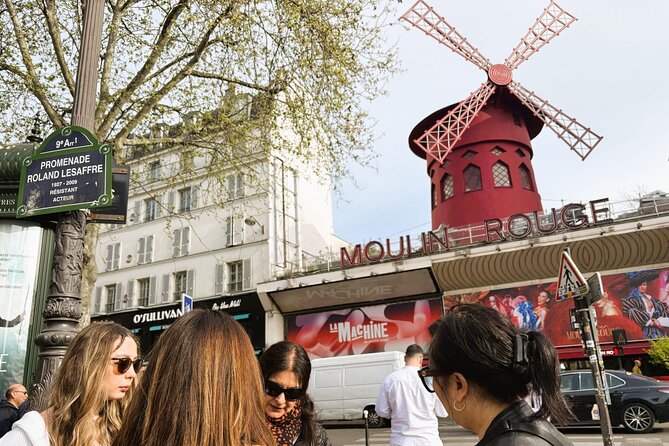
- The tour begins beside the Moulin Rouge: You get the cabaret’s story before moving into Montmartre’s quieter streets.
- The Musée de Montmartre takes 45 minutes: Its former homes, studios, gardens, art, posters, and period objects give the neighborhood a clear cultural setting.
- The group never exceeds eight people: This is small enough for a conversational walk and useful questions.
- Rue Lepic and the vineyard add local character: You see places linked with artists, the Maison Rose, and Montmartre’s old village feel.
- Sacré-Cœur is the finale: The tour ends below the basilica, with time to admire the Paris panorama and choose whether to go inside.
- Coffee or tea is included: That small pause helps break up the walking, though the supplied details do not specify exactly when or where it is served.
Starting with the Moulin Rouge on Boulevard de Clichy
The meeting point at 82 Boulevard de Clichy puts you right beside one of Montmartre’s best-known landmarks. The Moulin Rouge is not just a photo stop. It gives the guide a chance to explain the cabaret tradition and the stories tied to this famous venue.
You will hear about the world-famous cabaret before leaving the busy boulevard. That opening works well because it sets up the contrast at the heart of Montmartre: a loud, famous edge followed by small lanes, old houses, artists’ stories, and sudden views.
I would arrive a little early. The meeting point is on a major street, and a busy city corner is not always the easiest place to spot a guide at exactly 10:00 a.m. Your booking confirmation provides the meeting details, and public transportation is nearby.
The route then turns toward the older parts of the hill. This is where the walk becomes more personal than a simple list of Paris landmarks. Instead of staying on the broadest streets, you follow a route built around stories and overlooked details.
More Museum Visits in the world:
- Dublin: Irish Coffee Masterclass at the Irish Whiskey Museum
★ 4.6 · 279 reviews - 7-Hour Shared Group Santos Tour : Mont Serrat, Coffee Museum and Sightseeing
★ 5.0 · 68 reviews - Bucharest: Museum of Communism Ticket with Communist Coffee
★ 4.6 · 52 reviews
Rue Lepic and the streets where artists worked
Rue Lepic is one of the tour’s most useful stops for understanding Montmartre. It is attractive in its own right, but its real value comes from the artists who once walked and worked nearby.
The street is linked with names such as Modigliani and Toulouse-Lautrec. The guide uses those connections to show how Montmartre became associated with painters, printmakers, performers, and writers. You get more than names on a timeline. You begin to see why this hill has such a strong artistic identity.
The supplied information does not promise a visit inside artists’ former studios or homes along this part of the route. Instead, expect to view the streets and hear the stories attached to them. That distinction matters. If you want a museum-heavy art tour, the Musée de Montmartre provides that part. If you want to understand the neighborhood’s physical setting, Rue Lepic does more of the work.
The walking pace also matters here. The route winds upward through Montmartre, and the hill is part of the experience. You should expect uneven surfaces and some effort. The tour calls for a moderate level of physical fitness, so sensible footwear is more important than stylish footwear.
The vineyard, Maison Rose, and Montmartre’s village side
One of the most appealing sections takes you past Montmartre’s small vineyard and the Maison Rose. These sights help explain why the area can feel separate from the rest of Paris, even though the city’s dense streets surround it.
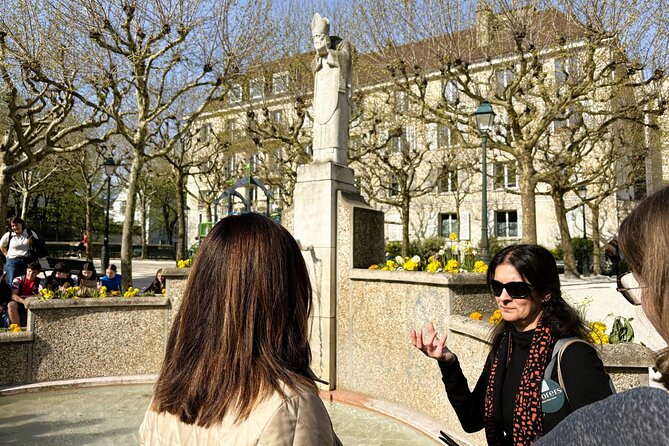
The vineyard is a surprising sight on an urban hill. It is not presented as a major wine attraction, and you should not expect a tasting. Its importance is visual and historical: it points to an older Montmartre, before the area became one of Paris’s most photographed neighborhoods.
The Maison Rose adds another familiar image. Its colorful exterior has become closely tied to Montmartre’s postcard appeal, but a guide can give the stop more meaning than a quick photograph. The surrounding streets and the stories behind them help you see the neighborhood as a place where people lived and worked, not just a backdrop for pictures.
This is also where the guide’s style can make a real difference. Alice is praised for combining art, history, and scenery, while Hugo is known for turning the walk into a story filled with unusual details and a touch of fairy-tale charm. Mathias has been especially good at pointing out places that are easy to miss, even for someone who has already visited Montmartre.
Guide assignments are not guaranteed, so I would not book solely to meet a particular person. Still, the repeated praise for storytelling suggests that the experience depends heavily on who leads your group.
Forty-five minutes inside the Musée de Montmartre
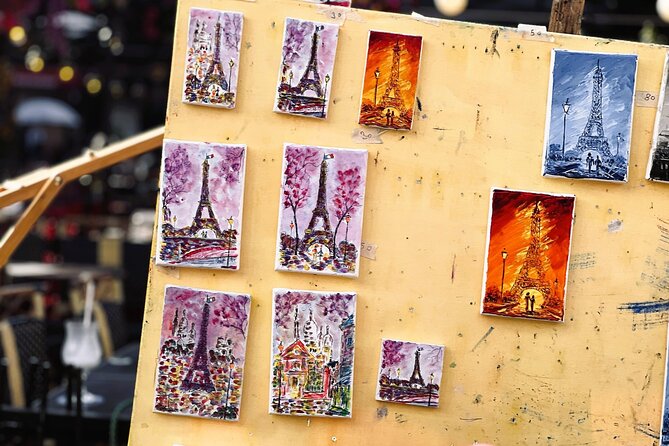
The Musée de Montmartre is the most substantial cultural stop. The included admission is a meaningful part of the price because you are not simply walking past famous addresses. You spend about 45 minutes inside former homes and studios connected with the area’s artistic life.
The museum introduces artists such as Suzanne Valadon, Maurice Utrillo, and Émile Bernard. You can also expect works connected with Toulouse-Lautrec, Modigliani, and others, along with paintings, posters, drawings, and objects from earlier periods.
This visit gives the walk a firmer foundation. Street stories can be entertaining, but museum displays help you connect names, images, and places. You may look at a lane outside and then have a clearer sense of the artists who shaped the neighborhood’s reputation.
The museum is also a good reason to choose this tour over a standard outdoor walk. Montmartre has no shortage of attractive streets, but many short tours stop once they reach a viewpoint. Here, the museum adds context before the final climb to Sacré-Cœur.
At the same time, 45 minutes is not a long museum visit. You will get an introduction rather than a full examination of every room or object. If you already know the collection and want a detailed art lecture, the time may feel brief. For a first visit, the shorter format keeps the tour moving and prevents the museum from swallowing the entire morning.
The Jardins Renoir are part of the museum setting. They add a quiet outdoor pause and reinforce the link between Montmartre’s buildings, gardens, and artists. The tour description does not promise a long garden visit, so think of the gardens as part of the museum experience rather than a separate garden tour.
A few more coffee tours around the world worth a look
- Hanoi Coffee Experience: 6 Brews, 9 Recipes & 3 Liquor Tastings
★ 5.0 · 2,945 reviews - Medellin: Coffee Tour with Transport, Snacks and Tastings
★ 4.7 · 1,357 reviews - Istanbul: Turkish Coffee Making and Fortune Telling Workshop
★ 4.9 · 1,308 reviews - Hanoi Coffee Workshop: Taste Salt, Coconut and Egg Coffee
★ 5.0 · 1,286 reviews
Coffee, conversation, and a small group of eight
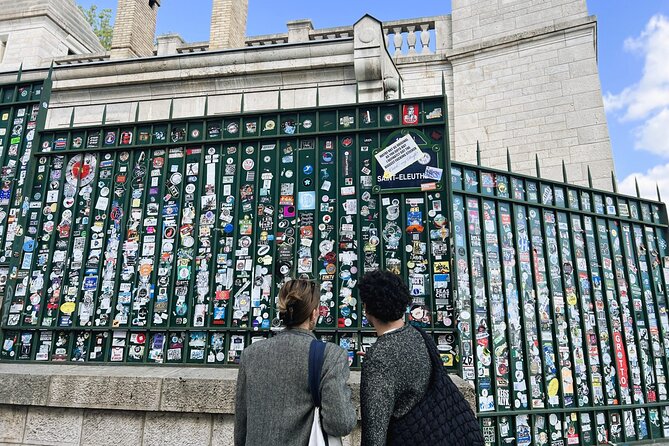
Coffee or tea is included, along with all listed fees. That is a modest feature, but it matters on a walking tour that lasts about three hours. A drink gives you a natural pause and can make the experience feel less like a nonstop march up the hill.
The available details do not say exactly where the drink is served or how long the break lasts. I would treat it as a pleasant inclusion rather than the main reason to book. The museum and guided route carry most of the value.
The group limit is clearer and more important. With no more than eight people, you should have a better chance of hearing the guide on narrow streets and asking questions without holding up a large crowd. A tiny group also makes it easier for the guide to adapt the pace and point out details that fit your interests.
Several past outings have ended up with only one or a few participants. That can make the walk feel close to private, but you should not assume that will happen on your date. The published maximum is eight, which is still a strong size for an urban walking tour.
One practical tip comes from the equipment used on at least one outing: bring your own wired headphones if you have them. The guide may provide single-use earphones, and your own pair can be more comfortable and less wasteful. This is a suggestion, not a stated requirement.
Climbing toward Sacré-Cœur
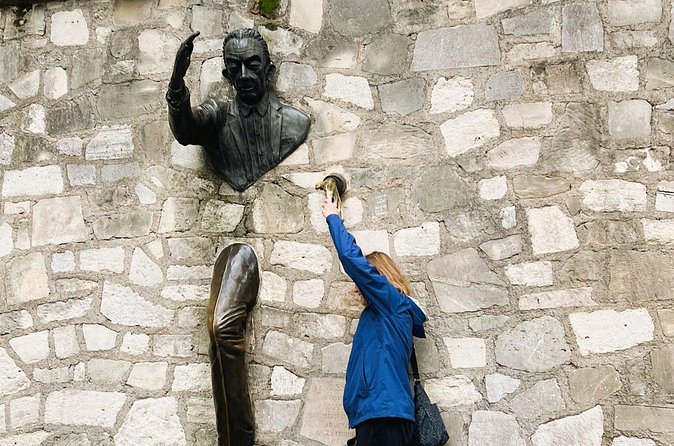
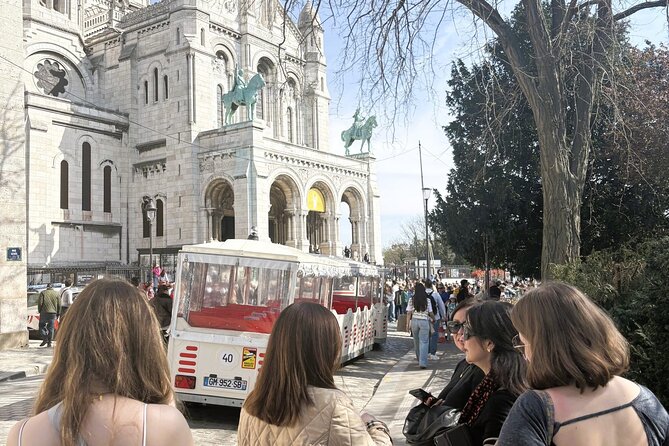
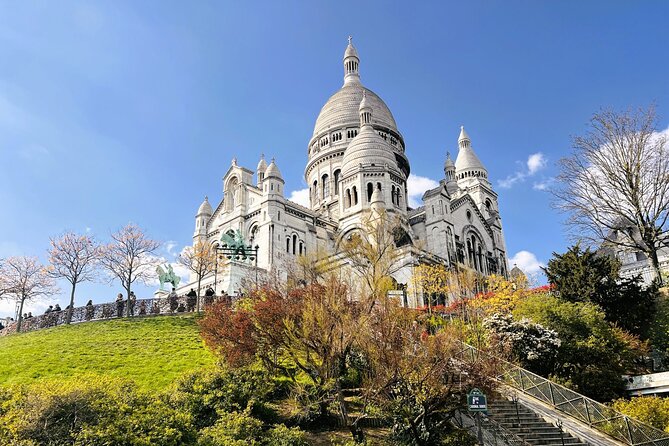
The final part of the walk leads to Sacré-Cœur Basilica, built in white stone on Montmartre’s highest hill. The approach is the natural climax because the route has been moving uphill through the neighborhood from the start.
At the foot of the basilica, the city opens out below you. The view across Paris is one of the experience’s strongest rewards, especially after walking through streets that can feel enclosed and intimate. You get a broad look at the dense rooftops that the earlier lanes kept out of sight.
The tour ends at 35 Rue du Chevalier de la Barre, at the basilica’s foot. Your guide will show you how to enter the basilica if you want to go inside. This wording is important: entry inside is not presented as a guided interior visit, and the supplied details do not say that admission beyond the walking tour is included.
Plan your expectations accordingly. The tour gets you to Sacré-Cœur, explains how to enter, and finishes at the steps. You may then choose to continue on your own. That gives you some freedom, but it also means the guided portion ends before a full basilica visit.
The climb is the main physical drawback. You do not need an athletic background, but the tour asks for moderate fitness. If your knees or balance make hills and steps difficult, Montmartre’s charm may come with too much effort. A walking aid or a slower pace may be worth considering, though the tour’s accessibility details only confirm that service animals are allowed and public transportation is nearby.
How the $94.93 price works out
At $94.93 per person, this is not a bargain-basement Paris walk. The value depends on using the parts that are actually included: a maximum eight-person group, an English-speaking guide, the Musée de Montmartre admission, coffee or tea, and a route that links several major Montmartre sights.
The museum ticket makes the price easier to justify than a simple neighborhood stroll. You are paying for a guide to connect the cabaret, artists, streets, vineyard, museum, and basilica rather than arranging those pieces yourself.
The small group also matters. A large bus tour could bring the price down, but it would not suit Montmartre’s narrow lanes nearly as well. The personal attention described in the available feedback, especially from guides such as Alice, Hugo, Christina, and Mathias, is part of what you are buying.
The value is weaker if you want a long, formal museum visit, private transportation, or a fully guided tour inside Sacré-Cœur. None of those are included. It is strongest for someone who wants a carefully arranged introduction to Montmartre without doing the route planning alone.
Who will enjoy this Montmartre walk most?
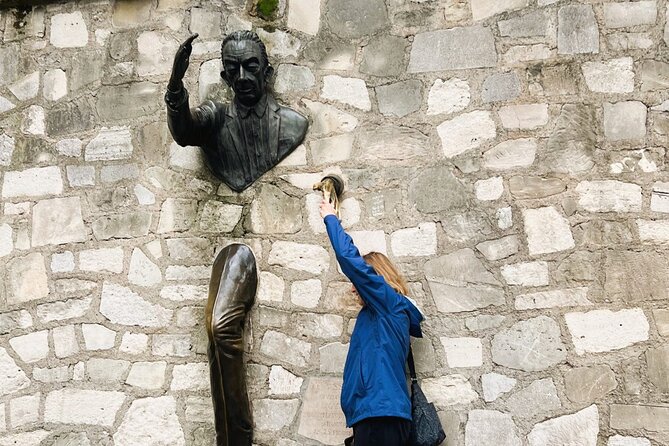
I would recommend it to a first-time Paris visitor who wants art, stories, and scenery in one morning. It also suits someone who has already seen the main Montmartre streets but wants a guide to point out places they previously missed.
The route works particularly well for travelers who enjoy local anecdotes. The available feedback praises entertaining stories, strong English, and guides who adapt to the group. That suggests the experience is less about memorizing dates and more about understanding how the neighborhood developed through its artists and performers.
It may also suit parents and older children who can manage uphill walking. The museum gives the tour structure, while the vineyard, Maison Rose, and basilica provide visual variety. The three-hour length is long enough to feel substantial without taking an entire day.
I would be cautious if your priority is shopping, food tasting, or extensive time inside Sacré-Cœur. Those are not the focus. You should also think twice if you dislike hills, cobblestones, or a fixed group pace.
Cancellation is free up to 24 hours before the start time. Changes or cancellations made less than 24 hours before the 10:00 a.m. start are not refunded, so check your plans before booking.
Should you book this tour?
Book it if you want Montmartre explained as a neighborhood, not just photographed as a postcard. The combination of the Musée de Montmartre, artist-linked streets, the vineyard, coffee, and Sacré-Cœur gives you a well-shaped introduction with plenty of visual variety.
The biggest reasons to choose it are the eight-person limit and the quality of the storytelling. Guides including Alice, Hugo, Mathias, and Christina have made the walk personal, lively, and full of details that are easy to miss alone.
Skip it if you want private transport, a full interior tour of the basilica, or a flat route. For most visitors who can handle the hill, however, the included museum and carefully linked stops make the $94.93 cost reasonable. Montmartre can be confusing on your own, and this tour gives the hill a human voice.
FAQ
How long does the Montmartre and Sacré-Cœur tour last?
The experience lasts approximately three hours.
Where does the tour begin?
It begins at 82 Boulevard de Clichy, 75018 Paris, France, near the Moulin Rouge.
What time does the tour start?
The stated start time is 10:00 a.m.
Where does the tour end?
The tour ends at 35 Rue du Chevalier de la Barre, at the foot of the Sacré-Cœur Basilica steps.
Is admission to the Musée de Montmartre included?
Yes. The Musée de Montmartre entrance ticket is included, with about 45 minutes planned for the visit.
Is coffee or tea included?
Yes. Coffee or tea is included in the listed tour features.
How many people can join the tour?
The group has a maximum of eight travelers.
Is transportation included?
Private transportation is not included. The meeting area is near public transportation.
Just added around the world
- Vietnamese Coffee Making Class in Hoi An★ 5.0 · 4 reviews
- Venice Delights: Coffee & Food Experience Walking Tour★ 5.0 · 2 reviews
- Yerevan: Private Coffee Tour with 2 Café Stops★ 5.0 · 2 reviews
- Vietnamese Coffee 101 Workshop★ 5.0 · 11 reviews
- Ubud: Waterfall, Holy Water Temple,Swing&coffee plantation★ 5.0 · 9 reviews
- Vancouver: Street Art & Craft Coffee Walking Tour w/ Tasting★ 4.8 · 11 reviews
- Vienna: Guided Viennese Coffee-House Tour★ 5.0 · 2 reviews
- Coffee pleasure walking tour★ 5.0 · 12 reviews
France Coffee Tours, compared.

Cruise, Coffee and Swimming in the Calanques of Frioul
Read our review →
Paris Left Bank: Writers, Revolution, and Black Coffee
Read our review →
Paris: Coffee Roasting Workshop in Passage des Panoramas
Read our review →Browse the lists this tour appears in