
REVIEW · HANOI COFFEE TOURS
Hanoi: Master the Art of 4-6 Signature Vietnameses Coffees
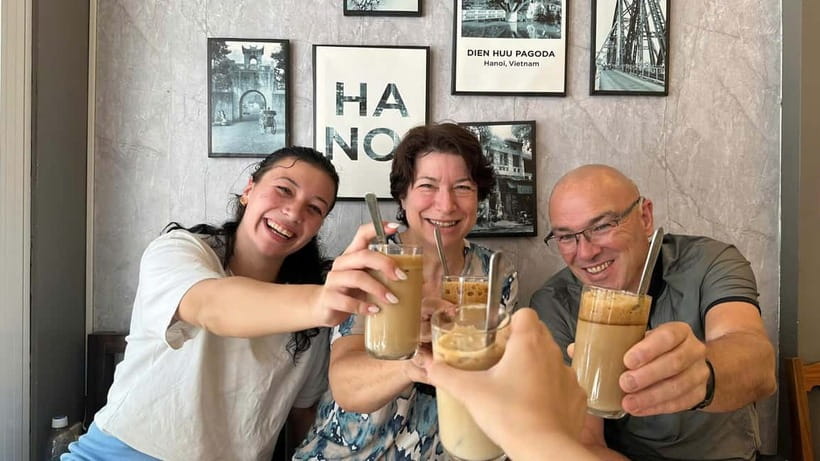
Coffee is a morning ritual in Hanoi. This hands-on class makes it personal, taking you from the Old Quarter into a lived-in local home where you grind, brew, whisk, taste, and adjust four to six Vietnamese coffee styles. The class covers black, brown, egg, white or silver, coconut, and salted coffee, with a Vietnamese instructor explaining both the method and the reason behind each flavor.
I like the small-group format, capped at 10 people, because the class is built around doing rather than watching. I also like the practical recipes and substitutions, which mean you can repeat the drinks at home without buying a professional coffee setup. The main drawback is clear: you drink a lot of coffee in a short time, so this may not suit anyone sensitive to caffeine.
Key points to know before booking
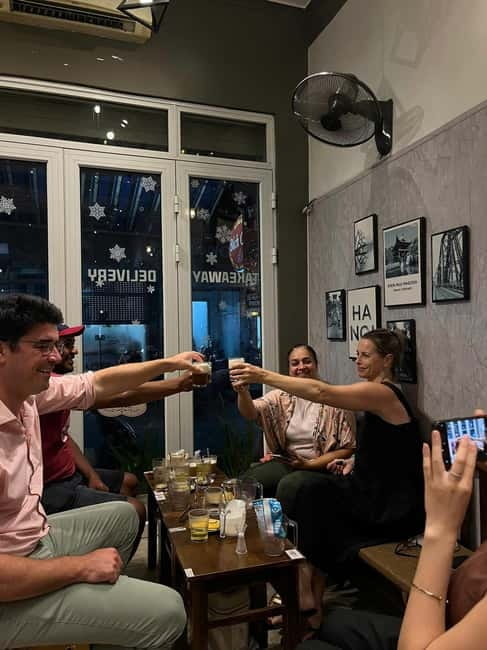
- Six classic Vietnamese coffees: Make black, brown, egg, white or silver, coconut, and salted versions.
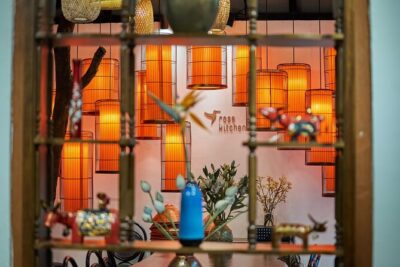
- A real local setting: The class takes place in a lived-in home with ceramic tools, everyday sounds, and a peaceful Old Quarter location.
- Hands-on from start to finish: You grind, use the phin filter, whisk, mix, taste, and change the balance to suit your preference.
- Useful take-home skills: Full recipes and home-friendly substitutions help you recreate the drinks after leaving Hanoi.
- Friendly local guidance: Instructors including Jade, Eddie, Daisy, Tyler, Jessica, Mint, and Ngoc explain coffee customs, history, and local places to eat and drink.
- Good value at $22: In one to two hours, you taste several drinks, learn a Vietnamese brewing method, and receive a practical cultural introduction.
Entering a lived-in Old Quarter home
The meeting point is a cozy café in a quiet corner of Hanoi’s Old Quarter, near the Opera House and French Quarter. It is also within reach of the Red River and Vinh Tuy Bridge, though the description gives no exact walking time from those landmarks, so you should check the meeting instructions before setting out.
The café leads into a home where people actually live. That distinction matters. You are not sitting in a polished demonstration kitchen while someone else does the work. You hear voices outside, see daily life moving around you, and handle the ceramic tools yourself.
The setting gives the class an easy pace. There are no grand displays or formal stage presentations. Instead, you settle in, meet your instructor, and begin with the ingredients and equipment laid out in front of you.
Air conditioning, clean restrooms, a dishwasher, and sterilized utensils make the space comfortable and practical. A pet-friendly garden area is available, and childcare can be arranged. Babies under one year are not suitable for the activity, and the experience is not intended for people over 95.
A few more coffee tours around Hanoi worth a look
- Hanoi Coffee Experience: 6 Brews, 9 Recipes & 3 Liquor Tastings
★ 5.0 · 2,945 reviews - Hanoi Coffee Workshop: Taste Salt, Coconut and Egg Coffee
★ 5.0 · 1,286 reviews - Hanoi: Salt Coffee Workshop Awake Your Senses With 6 Brews
★ 5.0 · 792 reviews
The first cups: black and brown coffee
The session begins with the foundations of Vietnamese coffee. You learn how the local phin filter works and how to manage the strength, bitterness, sweetness, and amount of condensed milk.
Black coffee is the simplest test of the beans and brewing technique. It is also the cup most likely to surprise people who usually avoid black coffee. One participant who normally does not like it found the black version enjoyable here. That points to one of the class’s strengths: you are shown how to control the extraction rather than simply being handed a strong drink.
The brown coffee combines brewed coffee with sweetened condensed milk. This is the familiar Vietnamese iced coffee style, though the class focuses on the process and balance rather than just serving a finished glass.
You can adjust the result. If you prefer your coffee sweeter, stronger, or less bitter, the instructor explains how to change the recipe while keeping the drink recognizable. That makes the lesson more useful than a fixed formula.
The phin is small, slow, and simple. It does not require an espresso machine or complicated equipment. You learn how pressure, coffee quantity, water, and timing affect the cup. The technique is easy to carry home, provided you can find Vietnamese coffee and a phin filter.
Egg coffee: Hanoi in a glass
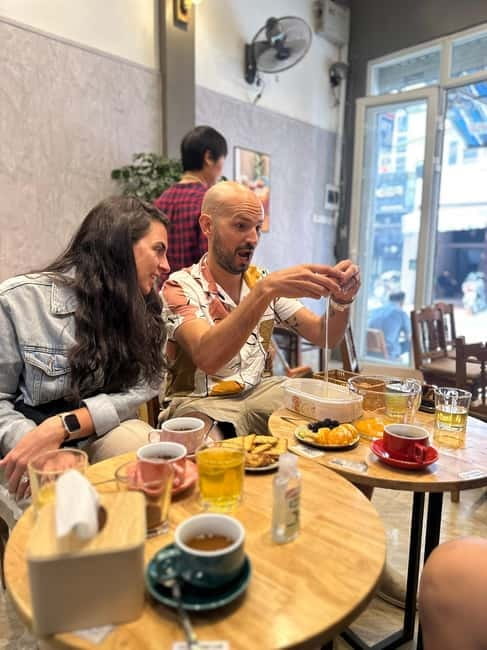
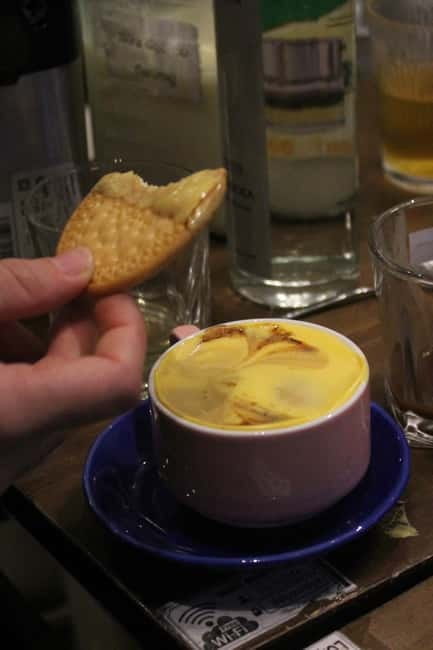
Egg coffee is one of Hanoi’s best-known specialties, and the class gives it proper attention. You learn to whisk the egg mixture into a smooth topping, then pair it with strong coffee.
The important part is texture. The egg mixture needs enough air to become light and creamy rather than heavy. Your instructor demonstrates the method, then gives you a chance to prepare it yourself.
The session also explains how egg coffee developed within Hanoi’s coffee culture and what makes the drink different from a simple coffee dessert. Guides such as Jade and Daisy are praised for connecting each cup with stories about the city, old cafés, changing tastes, and family traditions.
I would place egg coffee near the middle of the class. It gives you a clear change from the first two cups and shows how Vietnamese coffee can move from bold and bitter to soft, sweet, and almost custard-like.
If you are sensitive to sweetness, you can ask for adjustments. The class is designed around tasting and modifying, not forcing everyone to follow one exact level of sugar.
White or silver coffee, coconut, and salted coffee
The remaining drinks add more variety. White or silver coffee brings a different combination of coffee and milk, while coconut coffee adds a smooth, creamy sweetness. Salted coffee uses salt as a flavor tool, not as a gimmick. A small amount can soften bitterness and make the coffee taste fuller.
Coconut coffee is a frequent favorite. Its appeal is easy to understand: the coffee remains present, but coconut makes the drink smoother and slightly sweet. One participant described it as rich, smooth, and a little sweet, calling it the best cup of the session.
Salted coffee may be the most useful lesson for home experimentation. It shows how a tiny ingredient can change the balance of a strong coffee. The class explains how locals taste and adjust their drinks, so you are encouraged to compare the cups rather than simply collect them.
The number of coffees can vary between four and six. The advertised set includes all six, but the experience description allows four to six signature drinks. Ask at the beginning if you want to confirm exactly which recipes your session will include.
Same place, a different cup:
- Hanoi: Vietnamese Street Food Tour with Egg Coffee
★ 4.9 · 315 reviews - Hanoi Cooking Class: Pho/Bun Cha/Banh Xeo…+Free Egg/Salt Coffee
★ 5.0 · 267 reviews - Hanoi: Vietnamese Coffee Workshop with 6 Brews and 8 Recipes
★ 5.0 · 237 reviews - Ha Noi Egg Coffee Class
★ 5.0 · 227 reviews
Why the ingredients matter
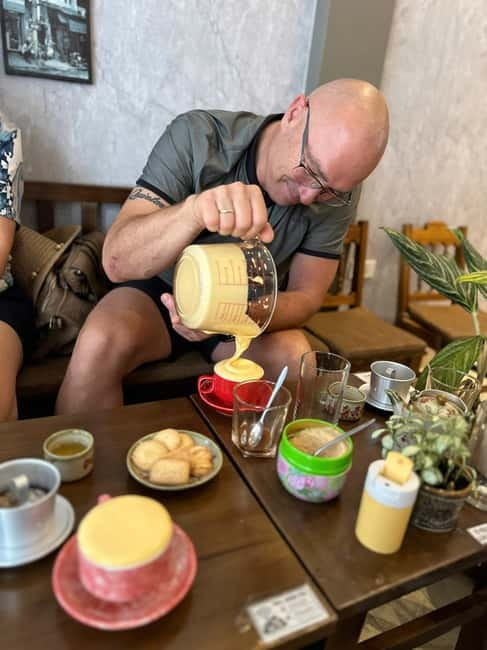
The coffee comes from Vietnam’s Central Highlands, an important growing area for the country’s coffee trade. The beans are selected after tastings in different parts of Vietnam, and the coffee can change with the season and harvest.
That seasonal point is useful. You are not being taught a single universal flavor and told it will always taste the same. Coffee changes, and brewing decisions need to change with it.
Fresh eggs, milk, and coconut are prepared daily. Nothing is pre-made or artificial. You can see and handle the ingredients as you work, which makes the recipes easier to understand and repeat.
The instructor also explains substitutes that work in an ordinary home kitchen. This is especially helpful if you do not live near a Vietnamese grocery store. The exact substitutes depend on the recipe, so listen carefully and ask questions while the ingredients are in front of you.
The instructors make the difference
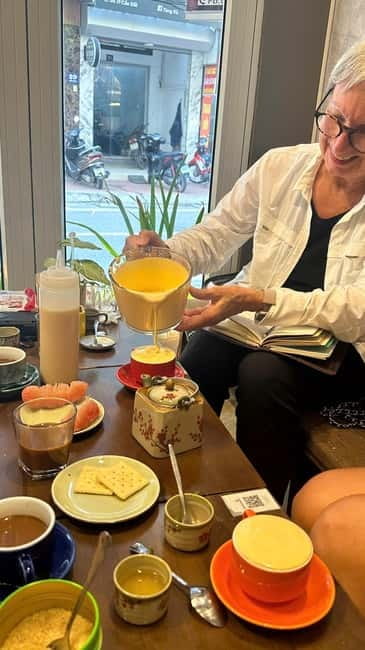
The hosts grew up in Hanoi’s Old Quarter and learned coffee through family, chefs, street cafés, and years of tasting. Their role is not limited to measuring ingredients. They explain why each coffee tastes the way it does and what it says about daily life in Hanoi.
Several instructors are named in the feedback. Jade is repeatedly praised for her warmth, clear explanations, history stories, and local food and café suggestions. Eddie is described as patient and careful, especially when showing all six coffee styles. Daisy is noted for making the class easygoing and for connecting each drink with an interesting story.
Other sessions may be led by Tyler, Jessica, Mint, Ngoc, or another member of the team. The teaching style appears consistent: friendly, clear, and focused on participation. English and Vietnamese are available.
A nice extra is the local advice. Some instructors provide a map or a short guide to restaurants, markets, bars, and coffee shops that are less obvious to visitors. This can be useful after class, especially if you are still finding your way around Hanoi.
A class built around tasting, not just brewing
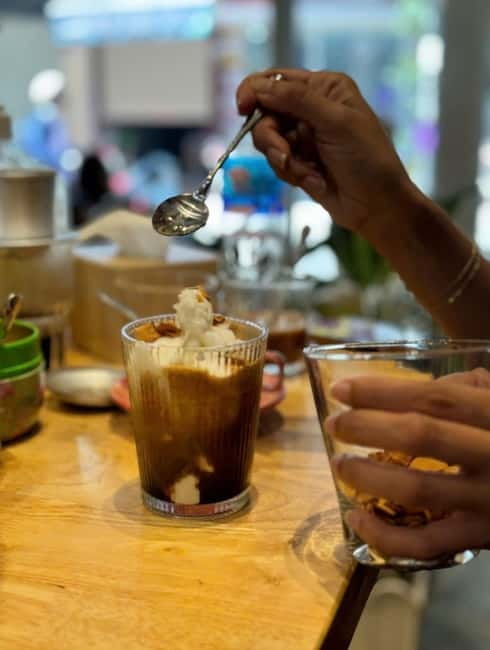
The best feature here is the way tasting is treated as part of the lesson. You do not simply follow six recipes and accept the result. You compare bitterness, strength, creaminess, sweetness, and texture.
That approach gives you a better feel for Vietnamese coffee. You learn that strong coffee does not have to be harsh, that salt can soften bitterness, and that condensed milk changes both flavor and body.
The class also encourages conversation with the other people at your table. With a maximum of 10 participants, the instructor can answer questions and check each person’s technique. Some time slots may be much smaller. One session became a private class for two people, while another had just one participant.
That flexibility is helpful, but the group size may depend on the date and time you choose. If you strongly prefer a private lesson, check availability rather than assuming it will be guaranteed.
What you take home
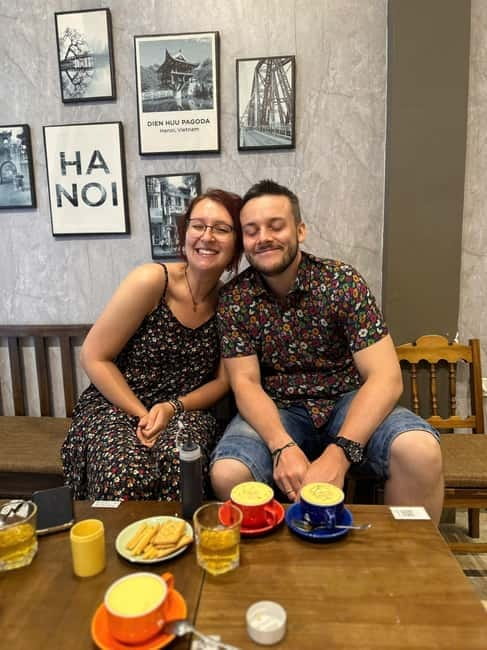
You receive the full recipes and additional guidance after the session. This is more useful than a souvenir cup because the instructions give you a way to repeat the experience.
A phin filter may also be available to buy. One participant purchased filters to use at home after learning the correct technique. If you want to continue brewing Vietnamese coffee, this is a sensible souvenir that takes little space in your luggage.
The recipes are designed to work without fancy equipment. You will still need suitable coffee and ingredients, but you do not need a full café setup. The class explains practical ways to control strength and flavor with ordinary tools.
The instructor also takes photos. Since the instructor is the photographer, you do not need to arrange a separate photo session or spend the workshop holding your phone.
Price, timing, and caffeine
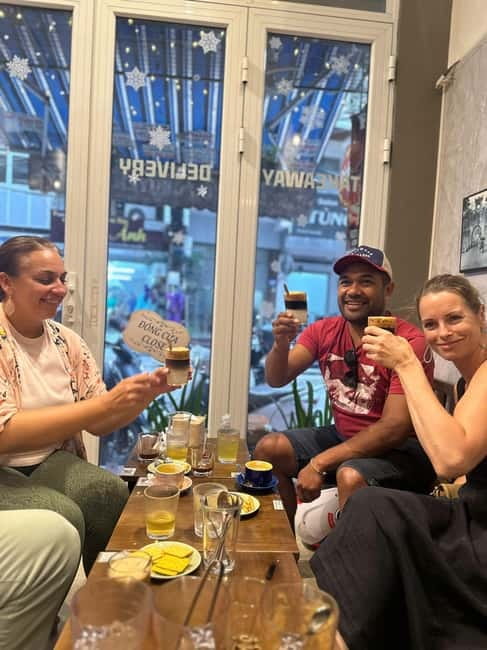
At $22 per person, this is good value if you want more than a single café visit. A standard coffee in Hanoi costs far less, but a café visit does not normally include instruction, several different recipes, a local host, full directions, and time to practice.
The session lasts one to two hours. The shorter version may suit you if you have a packed sightseeing schedule, while the longer session gives you more time to ask questions and make all six drinks.
I would book this in the morning if possible. You may drink several coffees, and one participant specifically advised planning for a serious caffeine boost. Avoid placing it right before sleep or beside another coffee-heavy activity unless your body handles caffeine very well.
The booking terms are traveler-friendly. You can cancel up to 24 hours ahead for a full refund, and you can reserve now and pay later. Starting times depend on availability.
Who should book this Hanoi coffee class?
This experience suits coffee lovers, curious cooks, and first-time visitors who want a gentle introduction to Vietnamese food culture. It also works well for couples, solo visitors, families with older children, and anyone looking for a quieter activity away from Hanoi’s traffic.
You do not need previous brewing experience. The instructors guide each step, and the focus is on learning by doing.
I would be more cautious if you dislike sweet drinks, avoid eggs or coconut, or cannot drink several caffeinated samples. The class centers on tasting, so dietary restrictions could limit what you can try. Ask the provider about your needs before booking.
It is also a good early-trip activity. You learn the basics before spending the rest of your visit sampling coffee around Hanoi, and the local café and restaurant tips can help shape the days that follow.
Should you book it?
Yes, if you want a practical cultural activity rather than another short café stop. For $22, you get several drinks, personal instruction, a local setting, recipes, and a useful introduction to Hanoi’s coffee habits.
Book it in the morning, arrive ready to participate, and expect plenty of caffeine. If you prefer quiet tasting over hands-on work, or if you only want one coffee, you may be happier at a traditional café. For everyone else, this is a friendly, good-value way to understand why Vietnamese coffee is prepared, balanced, and enjoyed the way it is.
FAQ
How many Vietnamese coffees will I make?
The experience includes four to six coffees. The advertised styles are black, brown, egg, white or silver, coconut, and salted coffee.
Where does the coffee class meet?
It meets at a cozy local café in a peaceful corner of Hanoi’s Old Quarter, near the Hanoi Opera House and French Quarter.
How long does the coffee workshop last?
The activity lasts one to two hours. Starting times depend on availability.
Is the class taught in English?
Yes. Instruction is available in Vietnamese and English.
What is included in the $22 price?
The price includes the coffees and teas, a local instructor, recipes and additional guidance, photography by the instructor, air conditioning, clean restrooms, and sterilized utensils.
Can I cancel or pay later?
Yes. You can cancel up to 24 hours in advance for a full refund. You can also reserve your place and pay later.
Just added around Hanoi
- Vietnamese Coffee 101 Workshop★ 5.0 · 11 reviews
- Private tour: Hanoi city tour-Van Phuc silk village with egg coffee, lunch★ 5.0 · 2 reviews
- Taste of Vietnam’s Coffee Scene – A Guided Experience★ 5.0 · 2 reviews
- 3 Dishes cooking + Egg Coffee bonus & Local Market Tour★ 5.0 · 14 reviews
- hidden gems cafe – learn making coconut and egg coffee★ 5.0 · 2 reviews
- Private Hà Nội Coffee History Tour★ 5.0 · 6 reviews
- Hanoi Private And All Inclusive Coffee Lovers Tour in Vietnam★ 5.0 · 6 reviews
- Hanoi Coffee Workshop Brew Taste and Culture Experience★ 5.0 · 10 reviews
Hanoi Coffee Tours, compared.
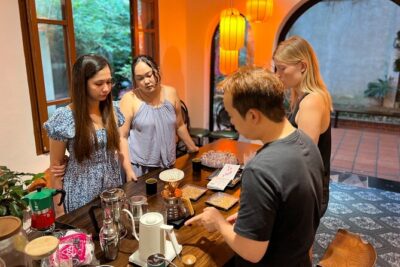
Hanoi Coffee Experience: 6 Brews, 9 Recipes & 3 Liquor Tastings
Read our review →
Hanoi Coffee Workshop: Taste Salt, Coconut and Egg Coffee
Read our review →
Salt Coffee Workshop Awake Your Senses With 6 Brews
Read our review →
Hanoi Cooking Class: Pho/Bun Cha/Banh Xeo…+Free Egg/Salt Coffee
Read our review →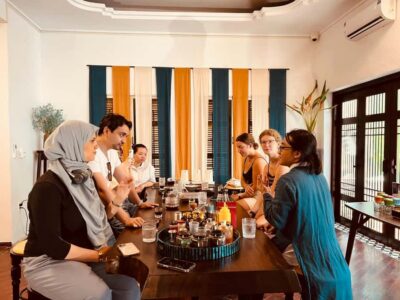
Vietnamese Coffee Workshop with 6 Brews and 8 Recipes
Read our review →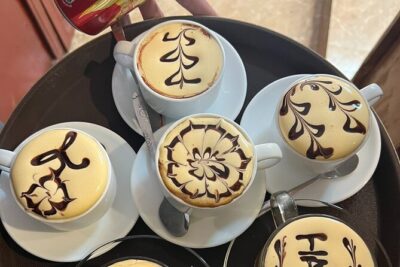

Hanoi Coffee Workshop: Master 6 Signature Vietnamese Coffee
Read our review →Browse the lists this tour appears in