
REVIEW · KIGALI COFFEE TOURS
Specialty Coffee Masterclass
Coffee tells Rwanda’s story. At Question Coffee Gishushu, you move from coffee history to cherry picking, guided tasting, and your own custom blend, all in about two hours. I love the hands-on flow, especially picking coffee cherries in the garden, and I like that the tasting goes beyond simply sipping and saying good or bad. You compare aroma, flavor, aftertaste, acidity, and mouthfeel.
The small group limit of 12 should help keep the class personal, and guides such as Patrice, Peggy, and Keziah have been praised for making the subject clear and fun. The main consideration is the price: at $50 per person, this costs more than an ordinary café visit, so it makes the most sense if you want a proper introduction to Rwandan coffee rather than just a cup.
Key points to know before booking
- You pick coffee cherries in the garden: This turns coffee from an abstract product into a crop you can see and handle.
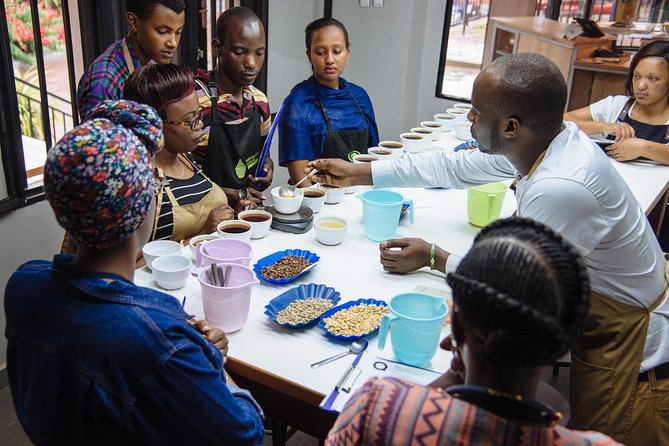
- Five Rwandan coffees may be part of the tasting: You compare aroma, flavor, acidity, aftertaste, and mouthfeel rather than tasting blindly.
- Your guide shapes the experience: Patrice, Peggy, and Keziah have each been praised for clear explanations, good English, and a relaxed teaching style.
- You make a personal blend: Your favorite flavors guide the final mix, and the experience includes a bag of beans based on your choices.
- The group is capped at 12 people: That is small enough for questions and individual tasting help.
- The class stays at one Kigali location: You meet and finish at Question Coffee Gishushu, so no long road trip is needed.
Starting with Rwanda’s coffee story
The class begins at Question Coffee Gishushu, at 8 KG 8 Ave in Kigali. The setting is useful because the experience does not ask you to spend hours traveling to a distant farm. You can learn about the coffee supply chain while remaining in the city, then walk straight into the practical parts of the class.
The opening history session gives you a frame for everything that follows. You learn how coffee is grown and produced in Rwanda before handling the fruit itself. That order matters. A coffee cherry can look like a small red fruit, but the cup you drink later depends on growing conditions, harvesting, processing, roasting, and blending.
I appreciate this kind of introduction because it helps you pay attention during the tasting. Instead of hearing a list of coffee terms with no context, you have already seen where the process begins. The session is short, so do not expect a full academic course on Rwandan agriculture or export history. It is an accessible starting point, designed to make the rest of the class easier to understand.
The teaching style appears to be one of the strongest parts of the experience. Peggy has been praised for explaining history, production, tasting, and smell in a way that makes sense. Keziah has been described as fun and well informed, while Patrice is noted for an easygoing manner and good English. Guides can change, but the pattern is clear: you should expect instruction that is friendly rather than stiff.
More Specialty Coffee Tours in the world:
- Cartagena: Colombian Specialty Coffee Tasting
★ 4.4 · 130 reviews - Coffee Farm Tour with Roasting & Tasting Workshop – Da Lat
★ 5.0 · 126 reviews - Private Coffee Roasting Class
★ 5.0 · 101 reviews
Picking cherries in the on-site garden
The class then moves from the café setting to the coffee trees. You pick your own cherries on the grounds, which is a small activity with a big payoff. Most coffee drinkers see roasted beans in a bag or ground coffee in a filter. Here, you get a direct look at the fruit before it becomes the drink in your cup.
This is also the most child-friendly and photo-friendly part of the class, though the experience is still aimed at anyone interested in coffee. You learn how the crop is grown and harvested, and you get a better sense of the labor behind a morning cup.
Keep your expectations sensible. The garden visit does not replace a full farm tour, and the information provided does not promise a large working plantation or a long walk through coffee country. Its value is the connection between the lesson and the object in front of you. You do not just hear that coffee grows as a cherry. You pick one.
That practical step helps explain why the experience feels different from a standard café tasting. The class covers the supply chain without requiring you to leave Kigali. For a short activity, that is an efficient use of time.
Tasting five coffees from across Rwanda
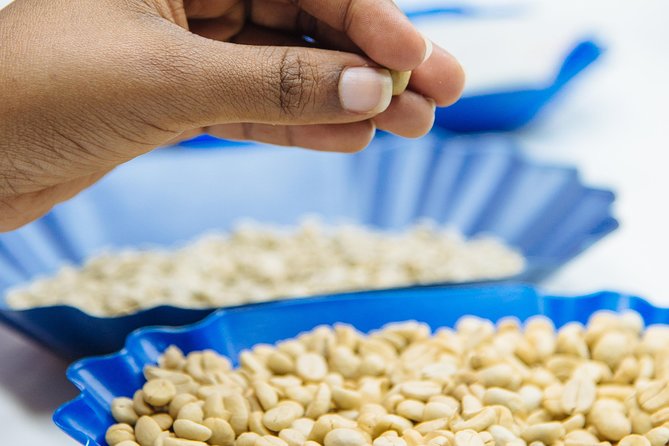
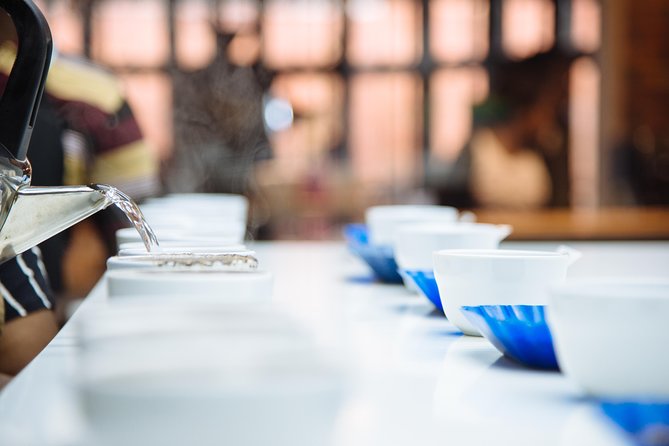
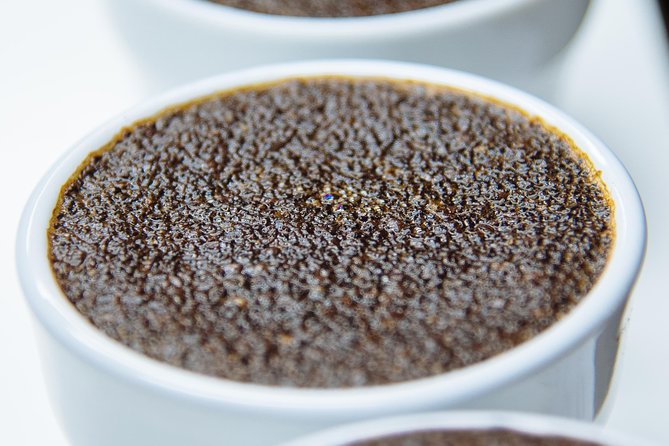
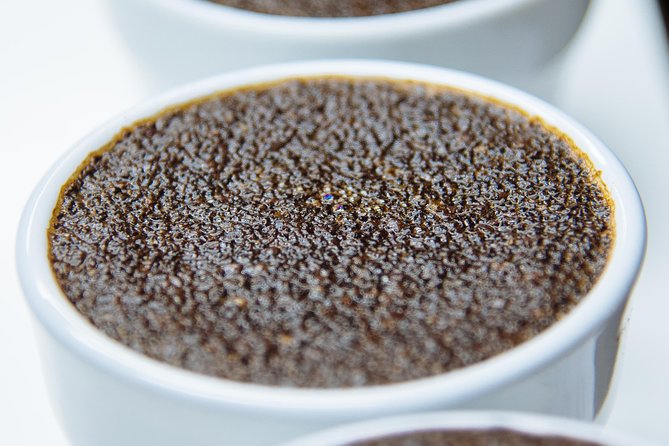
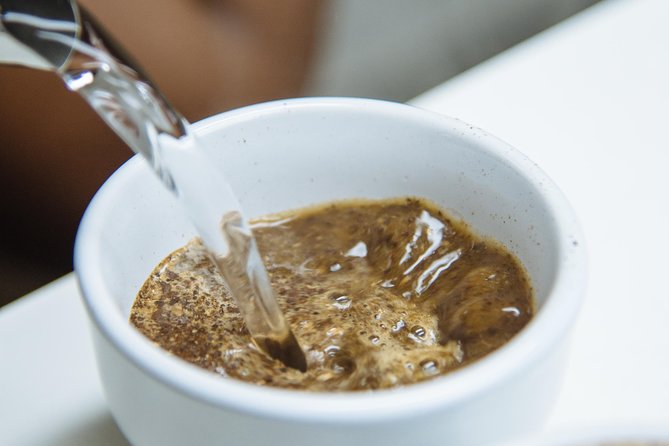
The tasting is the heart of the class. You sample four or five coffees, with one account specifically describing five different Rwandan coffees. The exact number may vary, but you should expect several coffees from different growing areas or blends rather than one standard house roast.
The tasting asks you to judge more than strength. You look at:
- Aroma
- Flavor
- Aftertaste
- Acidity
- Mouthfeel
That list gives you a simple vocabulary for figuring out what you actually like. Acidity does not mean the coffee has gone bad. In coffee tasting, it can describe a bright, lively quality. Mouthfeel refers to the way the coffee feels in your mouth, from light to fuller and smoother. Aftertaste helps you notice what remains once you swallow.
You may find that your favorite coffee is not the strongest one. One blend might smell especially good, another might have a longer finish, and a third may feel more balanced. The class gives you time to compare those differences instead of rushing through a single sample.
This is where the guide matters most. A good instructor can help you put words to a reaction that begins as I like this one. Peggy’s teaching has been praised for making the tasting process clear, and Patrice has been described as easygoing and comfortable in English. That helps if you are new to coffee tasting and do not know how to describe a cup.
The tasting format also gives the experience value beyond the coffee itself. You leave with a better way to order and buy coffee. You may not become a professional taster in two hours, but you can learn which flavors suit your palate and why.
Creating a custom blend to take home
After tasting the coffees, you create a blend based on your favorite qualities. This is the class’s most personal touch. Rather than being handed a generic souvenir, you help decide what goes into your final coffee.
The result is a bag of beans mixed to match the coffees you enjoyed most. It is a practical ending because the lesson continues after you leave. You can brew the blend later and remember which aroma, flavor, or mouthfeel led you to choose it.
I would pay attention to your notes during the tasting. If you are choosing between four or five coffees, it is easy to forget which one had the best finish or which one smelled most appealing. Use the tasting criteria as a guide rather than choosing only the strongest cup.
The custom blend is also part of the price calculation. At $50, you are paying for a guided class, several tastings, access to the coffee-growing process, and a take-home product. If you only want a good Rwandan coffee, a café purchase will be cheaper. If you want to understand your preferences and make something personal, the price is easier to justify.
The activity lasts about two hours, which is long enough for several stages without taking over your day in Kigali. You can fit it into a wider city schedule, though it is worth allowing a little extra time around the stated duration if you do not want to hurry to your next appointment.
More Coffee Making Classes in the world:
- Istanbul: Turkish Coffee Making and Fortune Telling Workshop
★ 4.9 · 1,308 reviews - Hanoi Coffee Workshop: Taste Salt, Coconut and Egg Coffee
★ 5.0 · 1,286 reviews - Hanoi: Salt Coffee Workshop Awake Your Senses With 6 Brews
★ 5.0 · 792 reviews - Cappadocia: Sand-Brewed Turkish Coffee Workshop
★ 4.9 · 745 reviews
Why the group size matters
The maximum group size is 12. That is not a private lesson, but it is small enough to support questions and conversation. Coffee tasting works better when you can ask why one cup seems sharper or heavier than another, and when the guide has time to explain the answer.
A small group also keeps the cherry-picking portion manageable. You are less likely to feel like one person in a crowd moving through a scripted demonstration. The experience is still shared, but it should have room for individual reactions.
If you are visiting with friends, the class gives you something to compare. You may all taste the same coffees and choose different favorites. That makes the custom blend more interesting, especially if your group prefers different styles.
The group limit does not guarantee a private experience. If having the guide entirely to yourself is important, this may not be the right format. For most people, though, 12 is a reasonable balance between social energy and personal attention.
Meeting in Kigali and planning the visit
You meet at Question Coffee Gishushu, 8 KG 8 Ave, Kigali, and the activity ends at the same location. That simple arrangement removes the need to coordinate a separate return transfer.
The location is near public transportation, which is useful if you are building your day around Kigali without a private vehicle. The supplied details do not specify a hotel pickup service, so you should plan to reach the meeting point on your own.
A mobile ticket is accepted, and confirmation is sent within 48 hours of booking, subject to availability. Since the class is often booked about 14 days ahead, I would reserve before arriving in Kigali, especially if your schedule is tight or you want a particular date.
The health requirements provided for the experience include negative COVID-19 test results and a mask. Requirements can change, so check the current instructions before you go. This is a practical point, not a reason to avoid the class, but you should not leave it until the morning of your booking.
Free cancellation is available if you cancel at least 24 hours before the start time. A cancellation made less than 24 hours ahead is not refundable, and changes inside that window are not accepted. The cut-off follows Kigali’s local time.
Who will get the most from this class
You will get the most from this experience if you already enjoy coffee and want to understand why Rwandan coffees taste different. It also suits curious first-time tasters because the guide explains the terms and gives you a clear way to compare each sample.
It is a good choice for:
- Coffee drinkers who want more than a café stop
- Visitors with about two hours free in Kigali
- Couples, friends, and small groups
- People who like hands-on activities
- Anyone looking for a useful edible souvenir
- Visitors interested in local farming and production
It may be less suitable if you dislike coffee, want a full-day farm visit, or prefer an unstructured café experience. The class is organized around teaching and comparison. You should be ready to smell, taste, discuss, and make choices.
Families may also find the cherry-picking portion appealing, though the provided information does not give a minimum age or child pricing. Check those details before booking if you are traveling with children.
Is $50 a fair price in Kigali?
The price is $50 per person. That is a premium over ordering coffee at Question Coffee or another café, but the comparison is not quite fair. You are paying for an instructor-led activity, several Rwandan coffees, the garden harvest, the tasting lesson, the custom blending process, and a bag of beans to take home.
The strongest value comes from the teaching. If the class only served five cups, the price would feel harder to defend. Because it explains production and gives you a method for judging coffee, it offers something you can use after the visit.
The take-home blend adds a physical souvenir, but I would not book solely for the beans. The real benefit is learning how to identify what you like. The blend is the tasty reminder.
For a coffee enthusiast, $50 is reasonable if you want a focused Kigali experience. For a casual drinker, it may be more than you need. In that case, visit a café, order a Rwandan coffee, and spend the difference on another activity.
Final recommendation
I would book the Specialty Coffee Masterclass if coffee is part of the reason you are excited about Rwanda. The combination of cherry picking, several regional coffees, clear tasting guidance, and a custom blend gives you a fuller picture than a normal café visit.
The best reason to go is the complete progression from fruit to cup. The best practical reason is that it all happens in Kigali in about two hours. The main caution is value: at $50, you should want the lesson as much as the drink.
Book ahead by roughly two weeks, confirm the current health requirements, and arrive ready to compare flavors rather than simply search for the strongest coffee. If that sounds like your kind of afternoon, this is a smart, focused addition to a Kigali visit.
FAQ
How long does the Specialty Coffee Masterclass last?
The class lasts approximately two hours.
Where does the activity begin and end?
It begins at Question Coffee Gishushu, 8 KG 8 Ave, Kigali, Rwanda, and ends back at the same meeting point.
How many people can join the class?
The activity has a maximum group size of 12 people.
What will I do during the class?
You receive a short coffee history and background lesson, pick coffee cherries from the garden, taste several Rwandan coffees, and create a custom blend.
Does the experience include coffee to take home?
The experience includes a bag of coffee beans mixed from the coffees you enjoyed most, as described in the experience details and participant accounts.
What is the cancellation policy?
You can cancel for a full refund up to 24 hours before the experience starts. Cancellations or changes made less than 24 hours before the start time are not accepted for a refund.
Just added around the world
- Vietnamese Coffee Making Class in Hoi An★ 5.0 · 4 reviews
- Venice Delights: Coffee & Food Experience Walking Tour★ 5.0 · 2 reviews
- Yerevan: Private Coffee Tour with 2 Café Stops★ 5.0 · 2 reviews
- Vietnamese Coffee 101 Workshop★ 5.0 · 11 reviews
- Ubud: Waterfall, Holy Water Temple,Swing&coffee plantation★ 5.0 · 9 reviews
- Vancouver: Street Art & Craft Coffee Walking Tour w/ Tasting★ 4.8 · 11 reviews
- Vienna: Guided Viennese Coffee-House Tour★ 5.0 · 2 reviews
- Coffee pleasure walking tour★ 5.0 · 12 reviews
Kigali Coffee Tours, compared.


Local Community Tour(Cultural, Coffee,Village walk,Local food)
Read our review →
1-Day Lake Kivu Karongi Boat Cruise & Coffee farming with Lunch
Read our review →Browse the lists this tour appears in