

REVIEW · KIGALI COFFEE TOURS
Kigali: Traditional Coffee Experience ( Bean to Brew)
Coffee tells Rwanda’s story one step at a time. At Umurishyo Arts Gallery, this hands-on Kigali experience takes you through coffee preparation, from opening the fruit and roasting the beans to pounding and drinking the finished brew. I like the direct, practical format, and I like that your $50 helps support local businesses and a community project. The main consideration is that the setting is a cultural center in the city, not necessarily a large working coffee plantation.
You can expect about 150 minutes to three hours, depending on the pace of the session and the conversations that follow. Guides speak English, French, and Swahili, and names connected with past sessions include Deborah, Gilbert, John, and Chaplan. The experience is a particularly good match for curious coffee drinkers, though people with food allergies should avoid it.
Key points to know before you book

- Coffee is made by hand: You may handle several stages, from opening the coffee fruit to roasting, pounding, brewing, and tasting.
- The setting is urban and cultural: Umurishyo Arts Gallery offers more than coffee, with traditional arts, music, dance, games, and crafts.
- Traditional and modern methods are included: The session compares older roasting techniques with a more modern approach.
- The coffee tasting has local character: Expect local blends and preparations such as black coffee and coffee flavored with ginger.
- Your money has a social purpose: The center’s income supports local businesses and an NGO that helps children return to school.
- Plan your own way there: Transportation to the meeting point and personal spending are not included.
Starting at Umurishyo Arts Gallery

The meeting point, Umurishyo Arts Gallery, sets the tone better than a standard coffee shop would. This is a cultural center in Kigali, and the coffee session forms part of a wider look at Rwandan customs and daily life.
You may be welcomed with drums before the coffee work begins. That small opening matters. It shifts the activity from a simple tasting into a social exchange, where coffee sits alongside music, craft, conversation, and tradition.
One useful point to keep clear is the setting. The description presents a field-to-cup journey and includes a guided look at coffee fields, while one session took place entirely at the city-based cultural center rather than at a plantation. Another participant did pick fresh coffee beans. The exact arrangement may depend on the day, so do not book this expecting a guaranteed visit to a large farm.
That is not necessarily a weakness. The cultural center gives you a wider view of Rwanda than a plantation-only visit would. You can learn about coffee while also seeing traditional activities and local crafts in one convenient Kigali location.
More Specialty Coffee Tours in the world:
- Cartagena: Colombian Specialty Coffee Tasting
★ 4.4 · 130 reviews - Coffee Farm Tour with Roasting & Tasting Workshop – Da Lat
★ 5.0 · 126 reviews - Private Coffee Roasting Class
★ 5.0 · 101 reviews
Opening the coffee fruit by hand
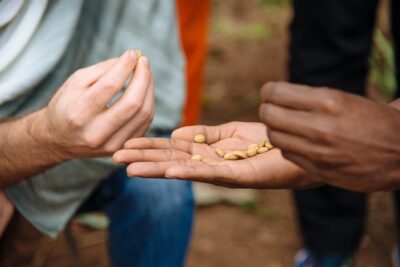
The process begins with the coffee fruit itself. You are shown how the fruit is opened before the beans are prepared for the next stages. This is the kind of task that makes coffee less anonymous.
At home, most of us meet coffee as ground powder in a sealed packet. Here, you can connect that powder with a real plant and a chain of work that begins with cultivation. Guides explain how coffee is grown and how local communities use sustainable practices.
The session is practical rather than purely instructional. You are encouraged to take part, not just watch. If you are cautious at first, as one participant was, you might do less than expected. My advice is simple: roll up your sleeves early. The fun comes from trying the work yourself, even when your first attempts are not graceful.
The quality of the explanation depends partly on your guide. Gilbert was praised for showing people around the center and explaining coffee, music, dance, and traditional life. John was described as patient and a good storyteller during the from-scratch preparation. Deborah also received specific praise for her hands-on teaching. You may have a different guide, but the activity appears designed around personal instruction rather than a lecture delivered to a large crowd.
Comparing traditional and modern roasting

Roasting is the heart of the session. You are introduced to both traditional and modern methods, which lets you compare the tools, pace, and feel of each approach.
The traditional method is especially appealing because it connects the drink in your cup with older ways of preparing food and drink. You can see that coffee is not only an industrial product. It can also be a social task, made slowly and with shared effort.
The modern method gives useful contrast. It helps explain why commercial coffee preparation can be faster and more consistent, while traditional roasting offers a closer connection to the people and place behind the beans.
Do not expect a professional barista workshop with technical charts, tasting wheels, or a formal examination of acidity. The appeal here is different. You handle the ingredients, watch the transformation, and ask questions as the process unfolds.
The roasting stage can also be a good moment to ask about Rwanda’s coffee trade and the work done by farming communities. The guides explain the path from cultivation to cup, including the role of sustainable practices. The available information does not specify individual farm locations, roast profiles, or bean varieties, so you should treat this as a cultural learning session rather than a specialist coffee course.
Pounding beans and brewing the final cup
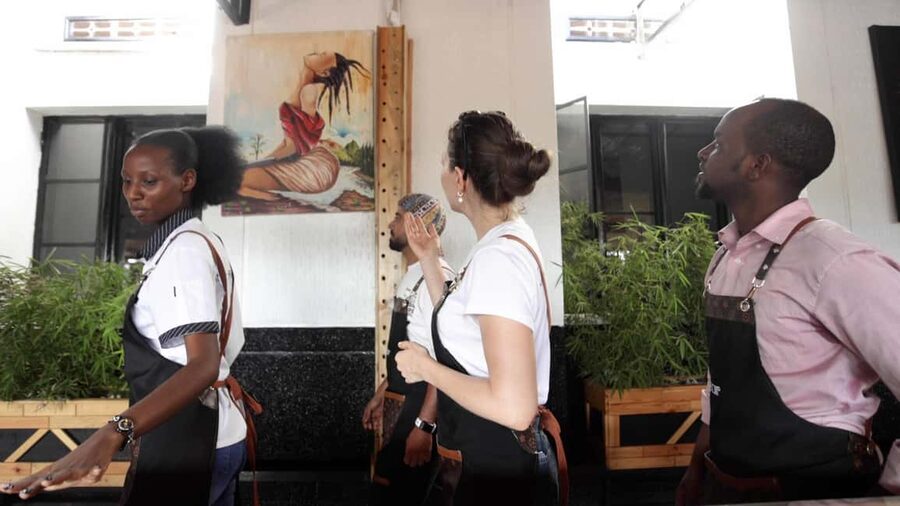
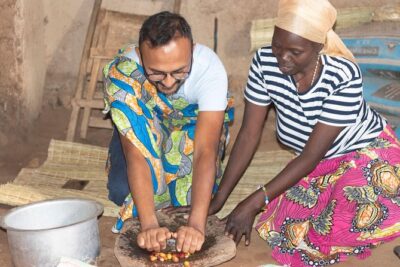
After roasting, the beans are pounded before brewing. This is one of the most memorable parts because it is physical, simple, and very different from pressing a button on a machine.
The work gives you a clearer idea of the time behind a traditional cup. Each stage is small, but together they require patience. You may find the pounding more tiring than expected, especially if you are eager to reach the tasting.
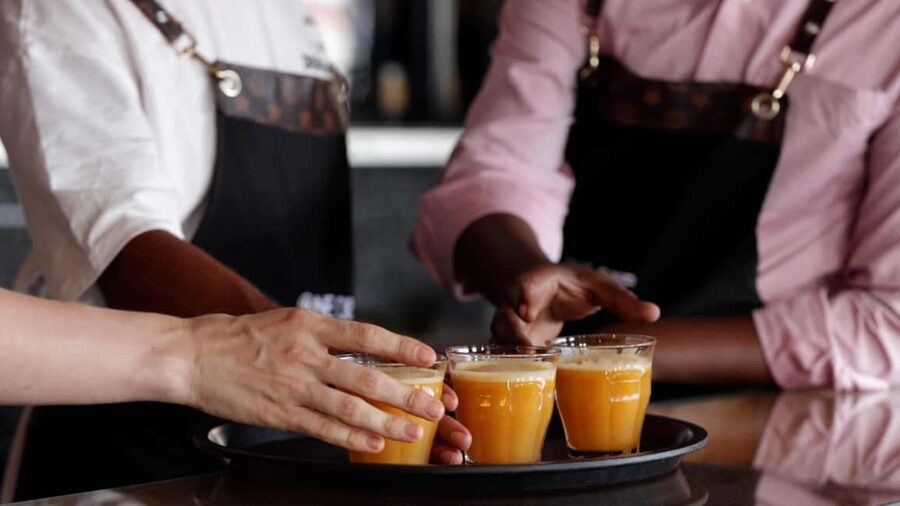
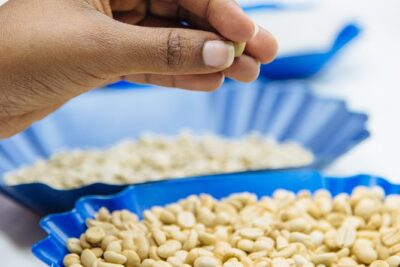
That wait pays off when you drink coffee made from the beans you helped process. The tasting can include black coffee and a version prepared with ginger. The ginger preparation adds another local touch without turning the session into a complicated food event.
Coffee lovers will get the most from this section, but you do not need expert knowledge. You only need a willingness to taste and compare. Ask how the flavor changes between the traditional preparation, modern roasting, and any local blends served at the end.
People with food allergies should not book this activity. The experience centers on coffee and may include ginger, but the supplied information does not provide a full ingredient list or allergy procedure.
A few more coffee tours around the world worth a look
- Hanoi Coffee Experience: 6 Brews, 9 Recipes & 3 Liquor Tastings
★ 5.0 · 2,945 reviews - Medellin: Coffee Tour with Transport, Snacks and Tastings
★ 4.7 · 1,357 reviews - Istanbul: Turkish Coffee Making and Fortune Telling Workshop
★ 4.9 · 1,308 reviews - Hanoi Coffee Workshop: Taste Salt, Coconut and Egg Coffee
★ 5.0 · 1,286 reviews
A tasting with conversation, not just a sample
The final coffee session takes place in a Kigali coffee shop or at the center, depending on how the activity is arranged. You taste local blends and speak with the people who run or guide the experience.
That conversation is part of the value. Coffee becomes a way to ask about Rwandan customs, local business, community projects, and everyday life. One participant stayed longer to learn the traditional game Igisoro and even joined a football game at the center. Those extra moments are not guaranteed parts of the schedule, but they show the social side of the place.
Another useful possibility is a short visit around Kimironko market with Chaplan. Treat this as an added possibility rather than a promised part of every booking, since the core activity is the coffee experience.
The center’s background also adds meaning to the price. The owners opened it to help fund an NGO. Income from the center supports efforts to get children off the streets and back into school, and some crafts sold there are made by those children. Your payment is not simply buying a drink and a demonstration. It also helps keep a local cultural and social project operating.
That does not mean you should overlook the standard questions about value. At $50 per person, this costs more than ordering coffee in Kigali. You are paying for guided instruction, hands-on work, cultural activities, a tasting, and the time of several local people. For a small group and a session that runs close to three hours, the price is reasonable for someone who wants participation rather than a quick cup.
If you only want to sample Rwandan coffee, the price may feel high. If you want to understand how the bean becomes a drink and support a community center while doing so, the cost is easier to justify.
What the cultural setting adds
The art gallery makes this experience broader than a coffee class. You might see or learn about traditional music, dance, crafts, and games while you are there.
That range helps if you are traveling with someone who is not a serious coffee fan. A companion can still enjoy the cultural side, the local conversations, or the craftwork. The setting also gives you an opportunity to buy handmade items, though personal spending is not included in the $50 price.
The center’s approach feels more personal than a polished commercial attraction. You may notice that the session is shaped by conversation and the personality of the guide. That can be a strength if you enjoy asking questions and following unexpected topics. It can be less ideal if you want a tightly timed, highly standardized tour.
Small-group conditions have been reported for at least some sessions, but a fixed maximum group size is not provided. You should ask at booking if group size matters to you.
Timing, languages, and practical planning
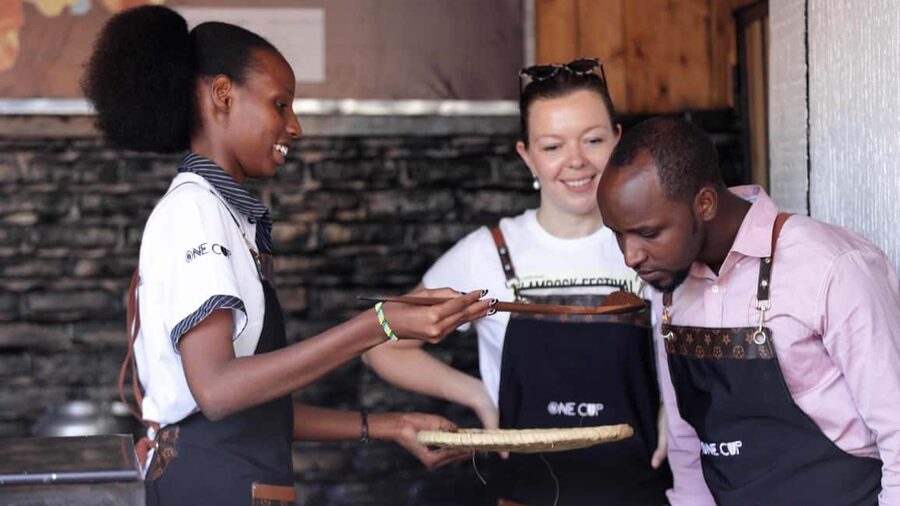
The stated duration is 150 minutes to three hours. That range is important. Allow the longer amount if you want time for coffee, conversation, cultural activities, or a possible walk around the center.
Starting times depend on availability. Since transport to the meeting point is not included, plan your route to Umurishyo Arts Gallery in advance. The supplied details do not give a hotel pickup service, so do not assume one.
Instruction is available in English, French, and Swahili. That makes the activity suitable for a broad range of visitors, though you should select your preferred language when arranging the booking.
The activity is not built around luxury comforts or formal coffee certification. It is a working cultural visit. Wear something suitable for hands-on tasks, and be ready to roast, pound, handle coffee fruit, and possibly spend extra time standing. This advice follows the nature of the activity, not a stated dress code.
You can cancel up to 24 hours before the activity for a full refund. The reserve-now, pay-later option also helps if your Kigali schedule is still shifting.
Who will enjoy this coffee experience most
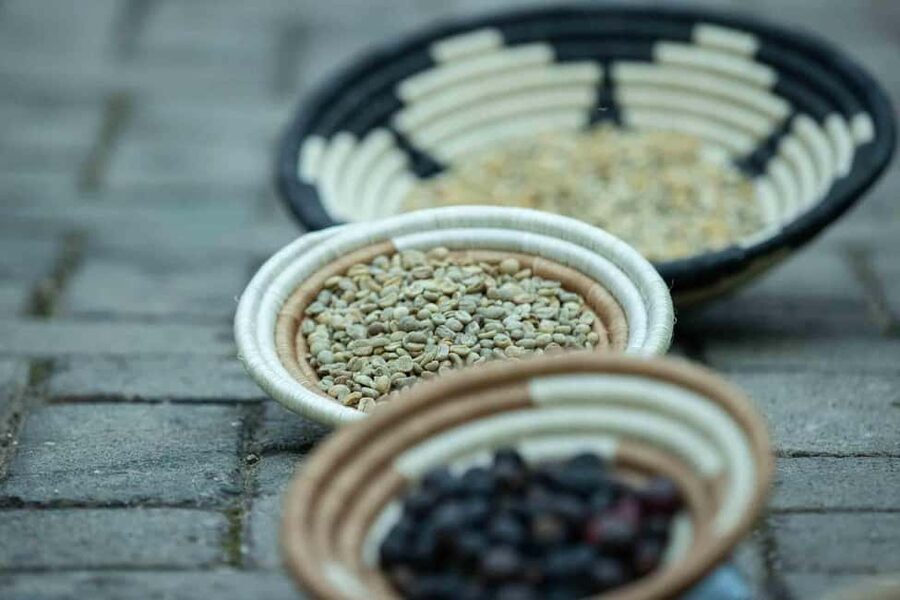
I would put this near the top of the list for:
- Coffee drinkers who want to see and handle the full preparation process
- First-time visitors seeking a local cultural activity in Kigali
- People who prefer a small, conversational experience to a formal tour
- Visitors interested in community projects and local enterprise
- Couples, solo visitors, and small groups willing to participate
- Anyone curious about traditional food preparation, music, games, and crafts
I would think twice if you want a guaranteed plantation visit, a technical barista course, or a quick activity with no hands-on work. The experience can also be a poor fit if you have food allergies.
The strongest praise centers on the guides’ patience, the chance to make coffee from the beginning, and the friendly atmosphere. The specific names attached to past sessions include Deborah, Gilbert, John, and Chaplan, but your guide may be someone else.
Should you book it?
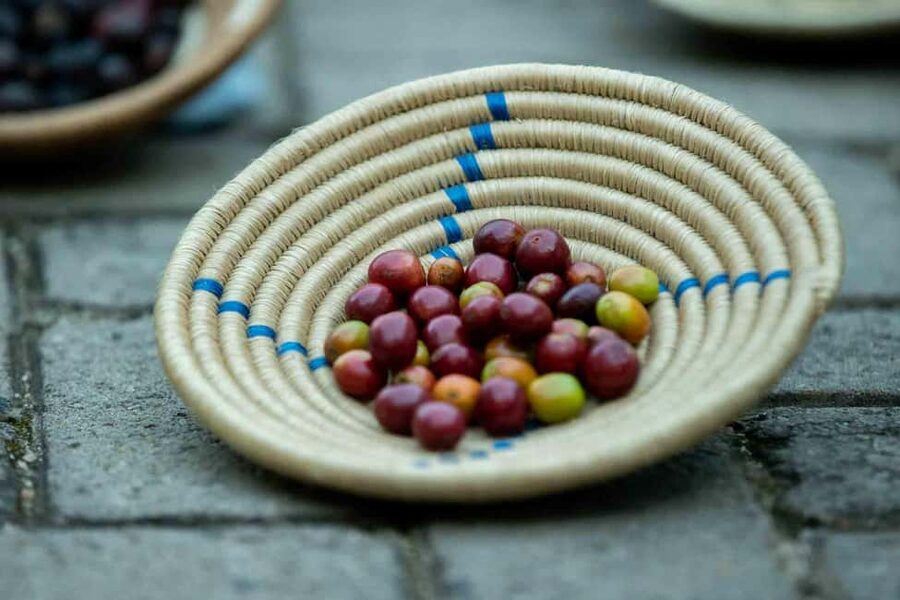
Book this experience if you want coffee to be more than a tasting note. You will handle the fruit, roasting, pounding, and brewing, then drink the result while speaking with local people. The cultural center setting adds music, crafts, traditional games, and a clear connection to community support.
Just keep your expectations precise. This is not guaranteed to be a full plantation excursion, and the schedule can run from two and a half hours to three hours. At $50, it offers good value for a participatory cultural activity, especially when the social purpose of the center matters to you.
If your ideal morning is a quiet cup with no explanation, choose a café. If you want to understand how Rwanda’s coffee reaches your cup, and you are happy to do some of the work yourself, this is a strong Kigali choice.
FAQ
Where does the coffee experience meet?
The meeting point is Umurishyo Arts Gallery in Kigali Province, Rwanda.
How long does the activity last?
The stated duration is between 150 minutes and three hours.
How much does the experience cost?
The price is $50 per person.
Is transportation included?
No. Transportation to the meeting point is not included.
Which languages are available?
The instructors speak English, French, and Swahili.
Will I visit a coffee plantation?
The experience includes a coffee field component in its description, but the exact setup can vary. One session took place at the city-based cultural center rather than at a plantation, while another included picking fresh coffee beans.
What coffee-making steps are included?
You can take part in opening the coffee fruit, roasting beans using traditional and modern methods, pounding the beans, brewing coffee, and tasting the result.
What will I taste?
The tasting features local blends. Coffee may include black coffee and a preparation with ginger.
Is the activity suitable for people with food allergies?
No. People with food allergies are listed as unsuitable for this activity.
Can I cancel for a refund?
Yes. You can cancel up to 24 hours in advance for a full refund.
Can I reserve now and pay later?
Yes. The reserve-now, pay-later option lets you book without paying at the time of reservation.
Just added around the world
- Vietnamese Coffee Making Class in Hoi An★ 5.0 · 4 reviews
- Venice Delights: Coffee & Food Experience Walking Tour★ 5.0 · 2 reviews
- Yerevan: Private Coffee Tour with 2 Café Stops★ 5.0 · 2 reviews
- Vietnamese Coffee 101 Workshop★ 5.0 · 11 reviews
- Ubud: Waterfall, Holy Water Temple,Swing&coffee plantation★ 5.0 · 9 reviews
- Vancouver: Street Art & Craft Coffee Walking Tour w/ Tasting★ 4.8 · 11 reviews
- Vienna: Guided Viennese Coffee-House Tour★ 5.0 · 2 reviews
- Coffee pleasure walking tour★ 5.0 · 12 reviews
Kigali Coffee Tours, compared.

Local Community Tour(Cultural, Coffee,Village walk,Local food)
Read our review →

1-Day Lake Kivu Karongi Boat Cruise & Coffee farming with Lunch
Read our review →Browse the lists this tour appears in