
REVIEW · ROME COFFEE TOURS
Specialty Coffee Workshop & Tasting Experience in Rome
Coffee can change how you see Rome. This 1.5-hour workshop takes you beyond the quick bar-side espresso, explaining green beans, processing, extraction, aroma, and taste. I like the small group of up to 10 people, which gives the session a personal feel, and I like that you taste several espresso and filter coffees instead of hearing only a lecture.
The workshop costs $70 per person, so it is not a cheap caffeine stop. Still, I think the price makes sense if you care about coffee and want a guided tasting rather than another rushed cup. The main drawback is simple: coffee drinkers looking for a full meal, a long café visit, or a tour of Rome will need to make other plans.
Key points at a glance
- Taste 6 to 8 coffees: You can expect about 3 to 4 espresso samples and 3 to 4 filter coffees, depending on the group’s pace.
- Compare brewing methods: Espresso and filter brewing show how the same basic ingredient can produce very different aromas and flavors.
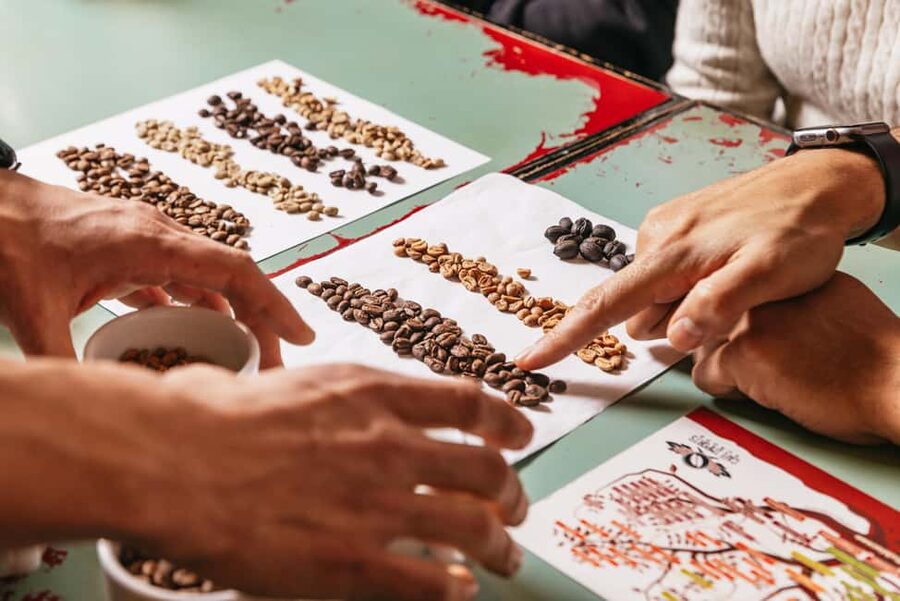
- Start with green beans: You learn how coffee begins as a raw product and how processing affects the cup.
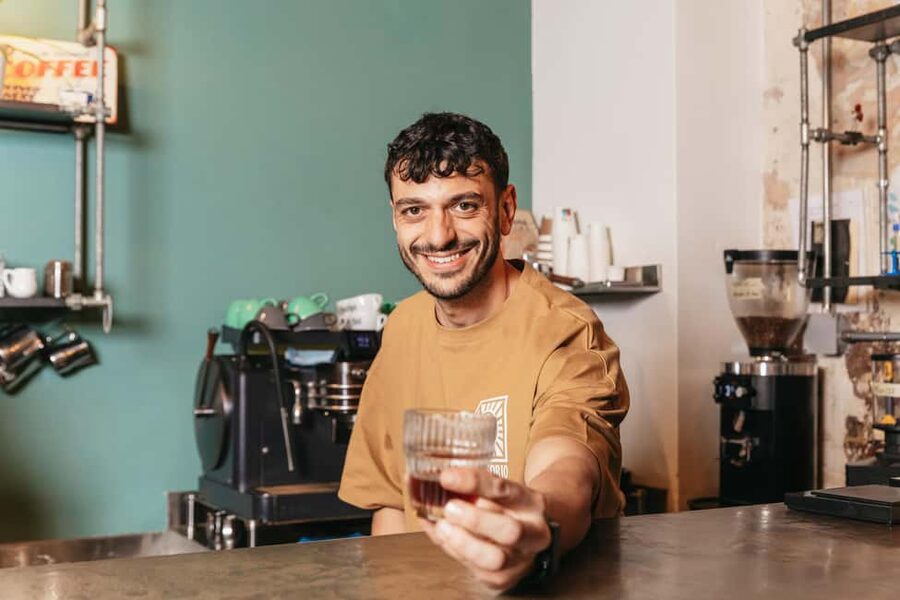
- Meet Matteo: One highly praised guide is Matteo, who brings warmth, clear explanations, and an easy way with groups.
- Central Rome location: The coffee shop is about a 20-minute walk from the Trevi Fountain.
- Small and accessible: The activity is limited to 10 participants and is wheelchair accessible.
What happens during the 90-minute Rome coffee workshop
This is not a coffee-making class where you spend the whole time pulling your own shots. It is a guided tasting and teaching session, with the focus on understanding what reaches your cup.
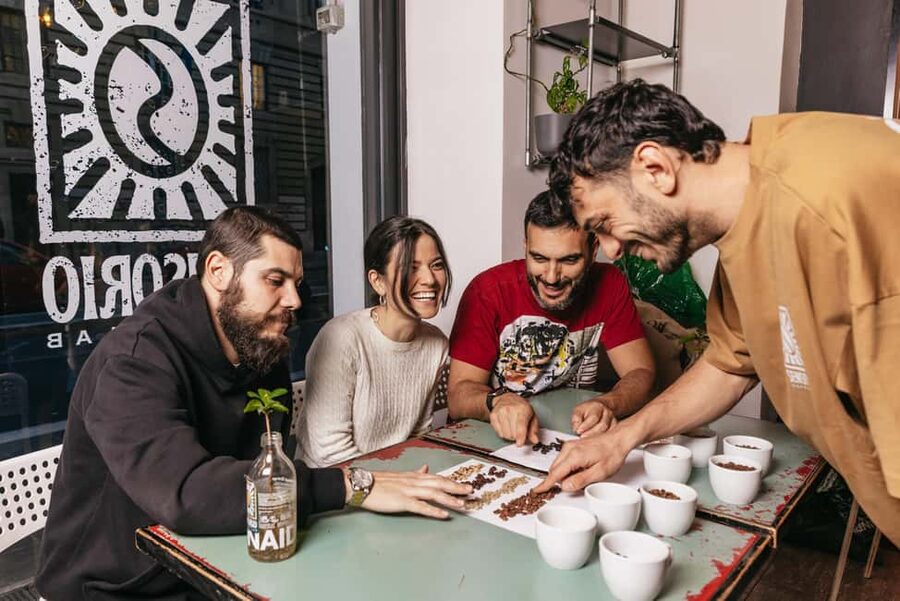
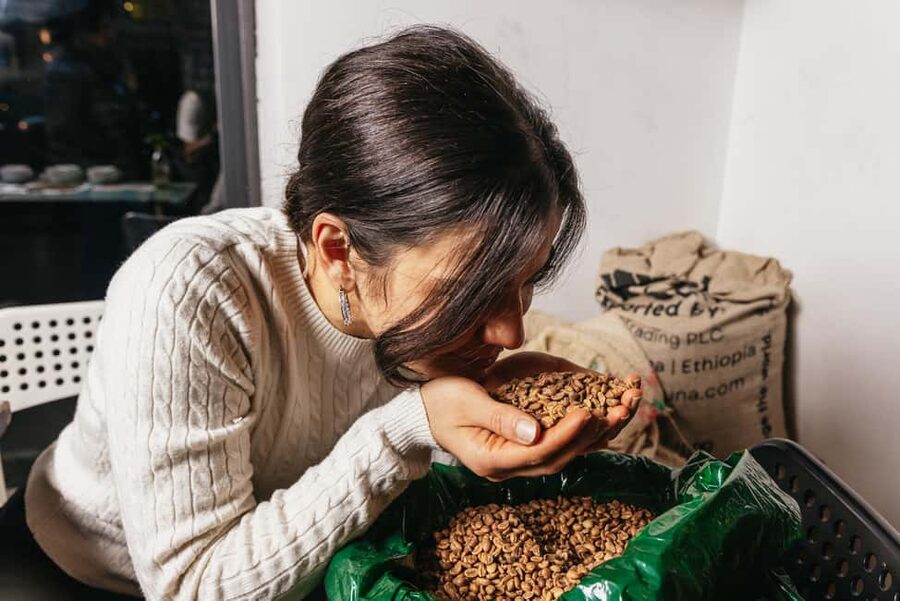
You begin with coffee in its raw form: green beans. That starting point matters because most casual coffee drinkers meet coffee only after roasting. Here, you learn how the bean’s processing can affect taste before brewing even begins.
I like this approach because it gives you a framework for the tastings that follow. Instead of simply hearing that one coffee is fruity and another is bitter, you can connect those differences to the bean, its treatment, and the method used to extract it.
The guide then explains how coffee changes as it moves through the brewing process. You look at the role of extraction, aroma, and flavor. The goal is not to turn you into a professional coffee grader in 90 minutes. It is to help you notice more clearly what is good, what is flawed, and what you personally enjoy.
More Specialty Coffee Tours in Italy:
- The Specialty Coffee Roastery Tasting Experience in Turin
★ 5.0 · 2 reviews - Cartagena: Colombian Specialty Coffee Tasting
★ 4.4 · 130 reviews - Coffee Farm Tour with Roasting & Tasting Workshop – Da Lat
★ 5.0 · 126 reviews
Green beans explain more than the cup
The green bean section is one of the most useful parts for beginners. Coffee is often treated as a finished product, but its flavor begins well before espresso powder reaches a machine.
You learn about the raw materials and how processing influences the final drink. The supplied information does not specify a particular farm, growing region, or processing style for every sample, so you should not expect a geography lesson covering every coffee-producing country. Instead, the focus is on the basic chain from bean to cup.
That practical foundation helps you understand why two coffees can taste different even when they are prepared in similar ways. It also gives you better questions to ask later, either in a Roman café or at home.
I find this especially useful for anyone who usually orders coffee by strength alone. Strong does not always mean better, and bitter does not automatically mean authentic. The workshop gives you language for separating boldness from balance and identifying the traits you actually like.
Three to four espressos, tasted side by side
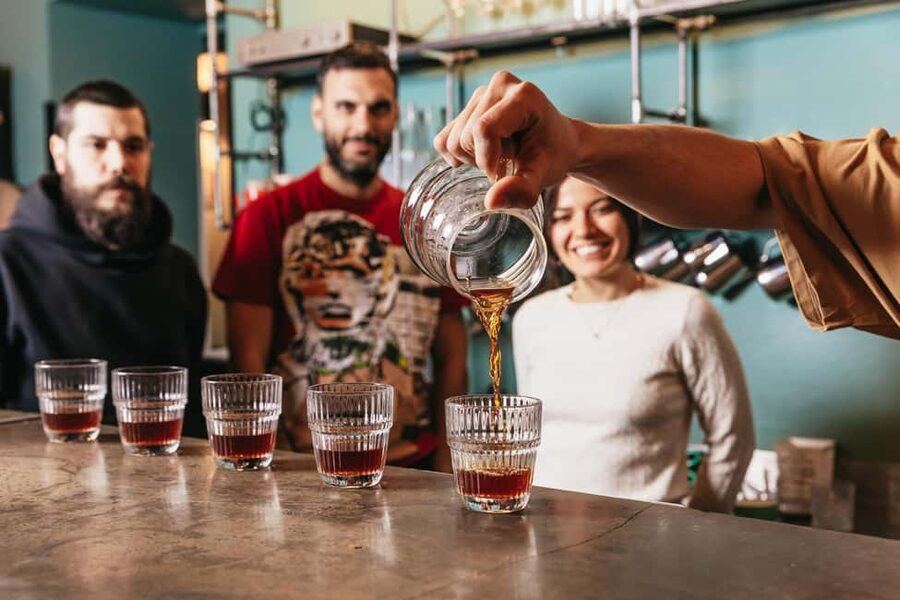
The espresso portion includes approximately 3 to 4 tastings. That is enough variety to make comparisons meaningful without turning the session into an exhausting run of tiny cups.
Espresso is a concentrated drink, so small differences can feel sharp. You may notice changes in aroma, body, acidity, sweetness, or bitterness. The guide helps you identify positive and negative attributes rather than simply ranking each cup as good or bad.
This is where a hands-on tasting beats a standard coffee talk. I can hear a description of crema or extraction, but tasting several espressos close together makes the ideas easier to grasp.
One particularly useful detail is the chance to compare commercial and specialty coffee. The purpose is not to declare every commercial blend poor. It is to show how bean quality, processing, roasting, and brewing choices can affect the result.
A published account of the session described tasting three different espressos, followed by a pour-over. That combination gives you a clear contrast between a short, concentrated extraction and a slower filter method.
If you normally add sugar or milk to espresso, you may want to taste at least some samples without additions. The workshop is designed to help you identify the coffee itself. You can always sweeten your next café order later.
Filter coffee reveals another side of the bean
The second major part includes approximately 3 to 4 filter coffees. The exact number can change according to the group’s pace and interest, so the session is not locked to a rigid tasting schedule.
Filter coffee usually gives you more time to notice aroma and lighter flavor details. It can also make differences between coffees easier to detect because the drink is less concentrated than espresso.
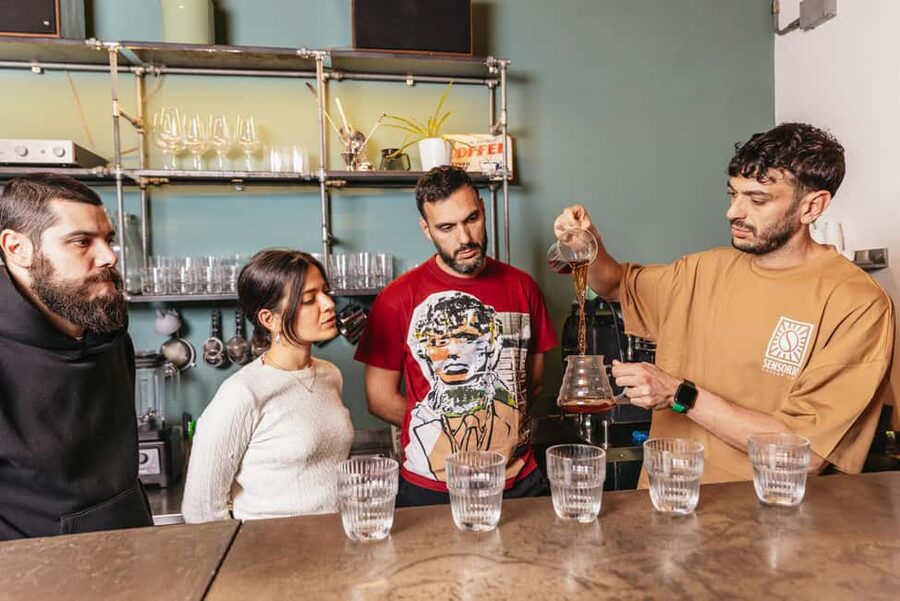
The session includes a look at how a pour-over is made. A published account described seeing the process and enjoying one pour-over after the espresso tastings. That practical demonstration helps connect technique with taste.
You learn that brewing is not just about putting hot water through coffee. The method affects how flavors and aromas come forward. A coffee that seems sharp or delicate as a filter brew may feel very different as espresso.
The workshop does not promise that one method will be declared the winner. That is a strength. You are encouraged to understand what each method shows, then decide what suits your own preferences.
More Coffee Making Classes in Italy:
- Istanbul: Turkish Coffee Making and Fortune Telling Workshop
★ 4.9 · 1,308 reviews - Hanoi Coffee Workshop: Taste Salt, Coconut and Egg Coffee
★ 5.0 · 1,286 reviews - Hanoi: Salt Coffee Workshop Awake Your Senses With 6 Brews
★ 5.0 · 792 reviews - Cappadocia: Sand-Brewed Turkish Coffee Workshop
★ 4.9 · 745 reviews
Why the tasting format works
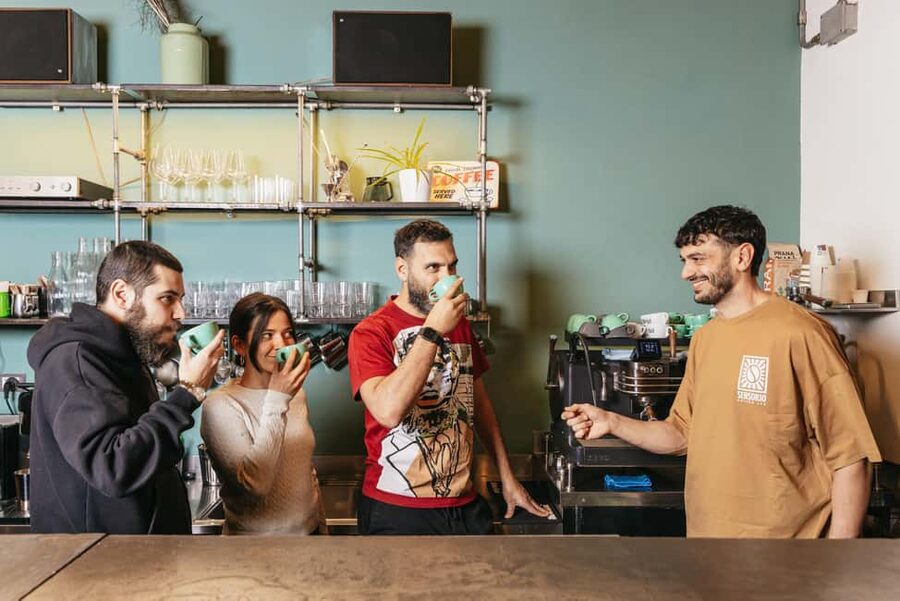
Six to eight samples in 90 minutes may sound like a lot, but the coffees are served as tastings rather than full café portions. The format lets you compare without committing to several large drinks.
The number of samples can vary from 3 to 4 espresso coffees and 3 to 4 filter coffees. If the group asks many questions, the pace may slow. I see that as a useful tradeoff, especially because the experience is meant to be interactive rather than rushed.
The small group limit of 10 also matters. A large class could make it hard to see the brewing process or ask about specific flavors. With fewer people, you have a better chance of following the explanation and taking part in the discussion.
The guide’s job is important here. Matteo is specifically praised for being kind, engaging, and clear. He reportedly explains the subject in a way that creates genuine interest without making the workshop feel like a technical exam.
That warmth can make a difference if you are new to specialty coffee. You do not need an experienced palate to participate. You only need to pay attention to what you smell and taste.
Making sense of flavor, aroma, and defects
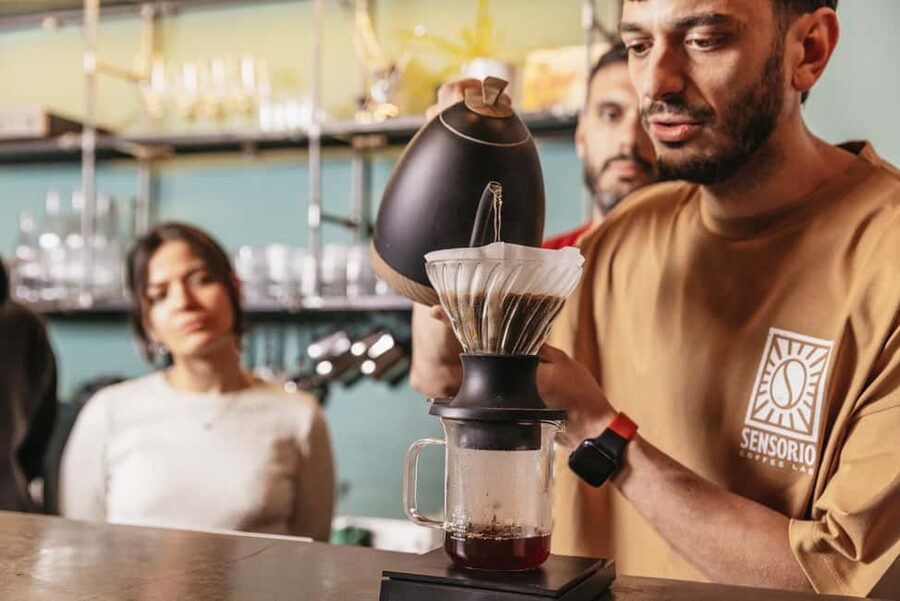
The goal is not to memorize a list of tasting notes. It is to notice patterns.
During the workshop, you learn how brewing methods can change aroma, flavor, and overall quality. You also learn to identify both positive and negative traits in the cup. That may help you understand why one coffee tastes clean and pleasant while another seems harsh or unbalanced.
For me, the value is in gaining a repeatable way to taste. You can consider the smell first, then the flavor, then the texture and finish. The session provides guidance for making those observations, rather than leaving you to guess what you are supposed to notice.
Do not worry if you cannot identify every described flavor. Coffee tasting notes are suggestions, not a test. You may notice something different from the person beside you, and that does not mean you are wrong.
The workshop should be particularly useful if you buy beans for home brewing. You will have a better sense of how a coffee may behave in espresso equipment compared with a filter setup. If you rarely make coffee yourself, you can still use the ideas when ordering at cafés.
The Rome location and timing
The coffee shop is in central Rome, about a 20-minute walk from the Trevi Fountain. That makes it easy to combine with sightseeing in the historic center, though you should allow enough time to arrive without hurrying.
Transportation to the venue is not included, and meals are not included either. That is not a serious problem for a workshop of this length, but it matters when planning your day. Treat the activity as a focused coffee appointment, not as breakfast or a food tour.
I would schedule it before or after nearby sightseeing rather than trying to fit it between two timed attractions. Rome’s streets can slow you down, and the workshop works best when you arrive ready to listen and taste.
Starting times vary, so check the available schedule when booking. The duration is 1.5 hours, which makes it easy to place in a morning or afternoon itinerary.
Is $70 a fair price?
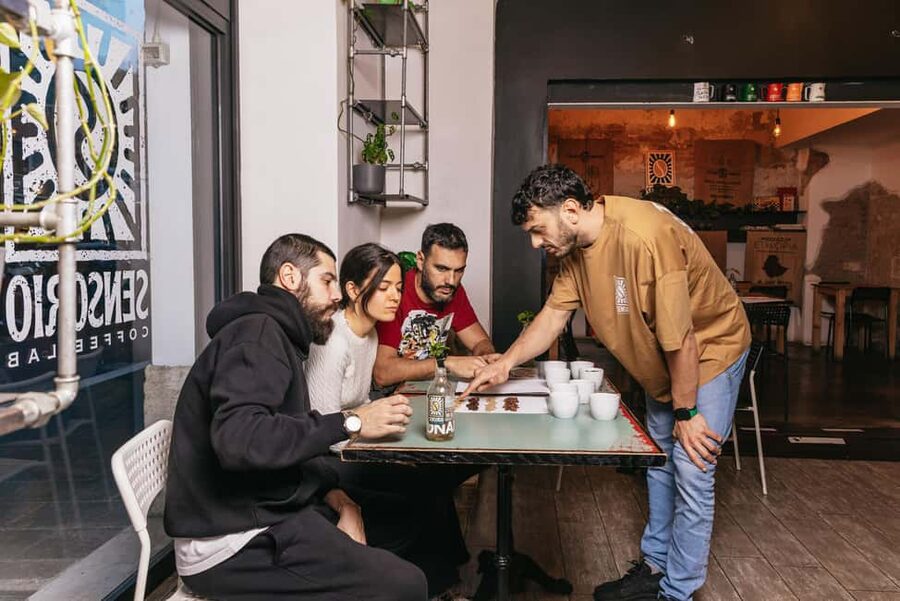
At $70 per person, this is a premium coffee experience. You are paying for the guide’s instruction, the selection of multiple coffees, the brewing demonstrations, and the chance to compare drinks in a structured setting.
You are not paying for a meal, transportation, or a long visit to several cafés. If you simply want a quick espresso, the price is far too high. Rome offers plenty of ordinary coffee stops for a few euros.
The value improves if you are curious about specialty coffee, planning to buy better beans, or already own brewing equipment. Six to eight samples at separate cafés could cost more, and you would not receive the same explanation of how the cups differ.
I also think the price works for a special-interest activity during a longer Rome trip. Most sightseeing focuses on monuments, churches, and art. This gives you a closer look at a daily ritual that is central to Italian life, while also showing how specialty coffee differs from the quick standing espresso many visitors know.
Still, you should book it for the learning and tasting, not because it is a bargain.
Who will enjoy this coffee experience most?
I would recommend it to coffee lovers who want more than a strong drink and a busy café atmosphere. It suits people who enjoy comparing ingredients, techniques, and flavor.
It also works well for beginners. You do not need previous training, and the session explains the basics from green beans onward. The guide’s friendly teaching style should help newcomers feel comfortable asking questions.
Families can consider it if older children or teenagers already have an interest in coffee. One account describes a parent attending with a son who was especially interested in the subject and enjoyed the tasting. The activity is not described as a children’s program, so parents should decide based on the child’s attention span and interest.
I would be less likely to recommend it if you dislike unsweetened coffee, want a full meal, or prefer active sightseeing. It is a seated, focused tasting session, and much of the enjoyment comes from paying close attention.
Useful booking details before you go
The activity is conducted in Italian and English. Confirm that your preferred language is available when selecting your time.
The group is limited to 10 participants, which keeps the session relatively intimate. The coffee shop is wheelchair accessible, an important practical point for visitors who need step-free access.
You can cancel up to 24 hours in advance for a full refund. The reserve now and pay later option also gives you some flexibility while your Rome plans are still changing.
The experience is operated by Slow Travel. The current score is 5 out of 5 from four published ratings, with strong praise for the atmosphere, the teaching, and the quality of the coffee discussion. That is a small sample, so I would treat it as encouraging rather than final proof, but the repeated praise for the interactive format is useful.
Should you book the Rome specialty coffee workshop?
Book it if you want to understand why coffee tastes the way it does. The combination of green bean basics, espresso comparisons, filter brewing, and 6 to 8 samples gives you more substance than a simple café stop.
I especially like the contrast between 3 to 4 espressos and 3 to 4 filter coffees. You get to taste the effect of technique, not just hear about it. Matteo’s warm teaching style is another reason the session sounds welcoming for beginners.
Skip it if you are looking for lunch, a broad Rome tour, or the cheapest possible coffee. At $70, this is a specialist activity. For coffee-minded visitors, though, it offers a thoughtful break from monument-hopping and a useful skill you can carry into every café that follows.
FAQ
Where does the coffee workshop take place?
The coffee shop is in Rome city center, about a 20-minute walk from the Trevi Fountain.
How long does the experience last?
The workshop lasts 1.5 hours.
How many coffees will I taste?
You can expect approximately 3 to 4 espresso tastings and 3 to 4 filter tastings, for about 6 to 8 samples in total. The exact number can vary with the group’s pace and engagement.
Which brewing methods are included?
The workshop includes espresso and filter brewing, with a pour-over process included in the session.
Is the workshop offered in English?
Yes. The available languages are English and Italian.
How many people are in the group?
The activity is limited to 10 participants.
Is the venue wheelchair accessible?
Yes, the experience is listed as wheelchair accessible.
Is transportation included?
No. Transportation to the venue is not included.
Can I cancel for a refund?
Yes. You can cancel up to 24 hours in advance for a full refund.
More Food and Drink Tours in Italy
- Rome Pantheon: Award Winning Gelato Tiramisu & Espresso Food Tour
★ 5.0 · 99 reviews - Trastevere Breakfast to Lunch Food Tour: Coffee, Maritozzi & Wine
★ 5.0 · 14 reviews - Rome: Private Espresso, Gelato and Tiramisu Food Tour
★ 5.0 · 3 reviews - Venice Delights: Coffee & Food Experience Walking Tour
★ 5.0 · 2 reviews
More Coffee Tastings in Italy
- Rome: Espresso, Gelato and Tiramisù Tasting Tour
★ 4.9 · 74 reviews - The Best of Polignano a Mare Walking Tour and Special Coffee Tasting
★ 5.0 · 6 reviews - Orvieto: Classic Wine Tasting at Madonna del Latte
★ 5.0 · 3 reviews - Hanoi Coffee Experience: 6 Brews, 9 Recipes & 3 Liquor Tastings
★ 5.0 · 2,945 reviews
Just added around Italy
- Venice Delights: Coffee & Food Experience Walking Tour★ 5.0 · 2 reviews
- Rome: Private Espresso, Gelato and Tiramisu Food Tour★ 5.0 · 3 reviews
- NAPLES Highlights Walking Tour + Veiled Christ Chapel and Original Espresso★ 5.0 · 2 reviews
- Milan Coffee & History Crawl with a Licensed Tour Guide★ 5.0 · 10 reviews
- The Best of Polignano a Mare Walking Tour and Special Coffee Tasting★ 5.0 · 6 reviews
- The Specialty Coffee Roastery Tasting Experience in Turin★ 5.0 · 2 reviews
- Sunrise Kayak Tour / Snorkeling and Italian Coffee Included★ 5.0 · 3 reviews
- Venice: Sunrise Walking Tour with Espresso★ 4.6 · 12 reviews
Rome Coffee Tours, compared.
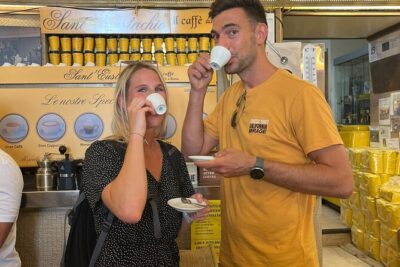
Rome Pantheon: Award Winning Gelato Tiramisu & Espresso Food Tour
Read our review →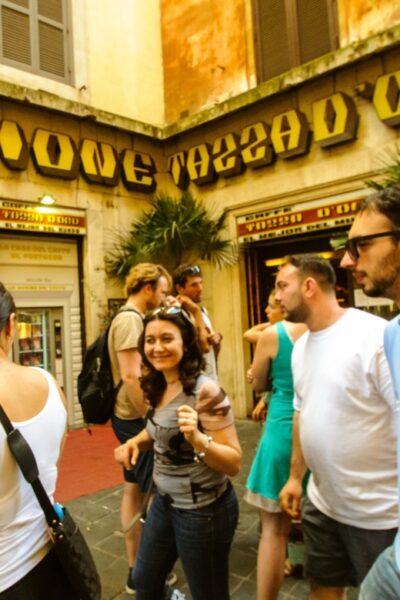
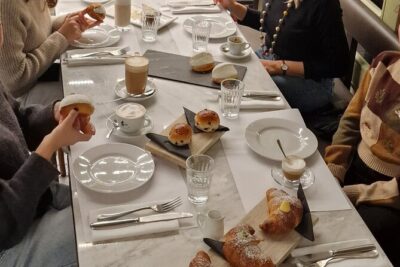
Trastevere Breakfast to Lunch Food Tour: Coffee, Maritozzi & Wine
Read our review →
Pasta Cooking Class with Wine, Coffee, and Limoncello
Read our review →
Browse the lists this tour appears in